|

GBP/USD analysis: scope to extend its recovery to 1.3200

GBP/USD Current price: 1.3150

  • NIESR GDP estimate next relevant release.
  • Brexit jitters ignored for the day, but to weigh on Pound anyway.
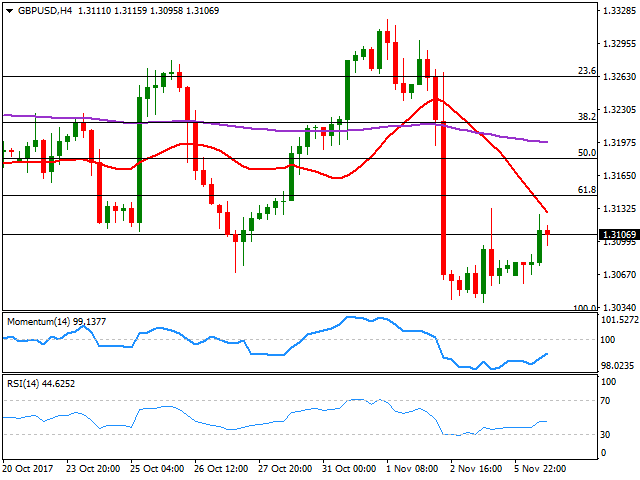
The Pound was among the best performers against the greenback this Monday, with the GBP/USD pair trimming its Friday losses and back to the 1.3150 by the end of the day. The pair also recovered half of the post-BOE decline when it neared the critical 1.3000 threshold. There were no macroeconomic releases in the UK, but political headlines hit the wires. UK PM May spoke before an official business lobby group but beyond her pledged to get the "best deal possible" when it comes to trade in the post-Brexit era, urging British businesses to be realistic about how long it will take to reach that deal, there were no new details. This Tuesday, the Pound could be affected by the NIESR GDP estimate for the three months to October, previously at 0.4%. Short term, the 4 hours chart suggests that the pair can extend its current recovery, although the longer-term perspective is bearish for Pound. Technical indicators in the mentioned time frame entered positive territory maintaining their strong upward slopes, while the price surpassed its 20 SMA that anyway maintains a bearish slope. The 50% retracement of the latest daily decline stands at 1.3165, being then the immediate resistance, ahead of the 1.3200 figure, where the pair has the 200 EMA and the 61.8% retracement of the same side.

Support levels: 1.3125 1.3085 1.3040

Resistance levels: 1.3165 1.3200 1.32545

View Live Chart for the GBP/USD

Author

Valeria Bednarik

Valeria Bednarik was born and lives in Buenos Aires, Argentina. Her passion for math and numbers pushed her into studying economics in her younger years.


More from Valeria Bednarik
Share:

Editor's Picks

GBP/USD clings to small gains near 1.3450 after UK jobs data

GBP/USD trades in positive territory at around 1.3450 in the European session on Tuesday. The UK ILO Unemployment Rate remained at 4.9% in the three months to May, compared with expectations of 5%, but failed to provide any impetus to the British Pound's renewed uptick. Traders stay cautious amid US-Iran uncertainty and the UK political transition.

EUR/USD keeps range above 1.1400 after German ZEW

EUR/USD is keeping its range above 1.1400 in Tuesday's European session, as the US Dollar (USD) retreats following Monday's rebound. Nevertheless, the uncertainty around the US-Iran conflict limits the pair's upside. Meanwhile, the Euro (EUR) pays little heed to the strong German sentiment data, as traders await Thursday's European Central Bank policy announcements, which could drive the Euro's near-term valuation.

Gold extends recovery toward $4,100

Gold gains traction following Monday's choppy action and advances toward $4,100 on Tuesday. However, the uncertainty surrounding the conflict in the Middle East and growing expectations for a hawkish Federal Reserve policy outlook could make it difficult for the precious metal to gather bullish momentum in the near term.

Bitcoin extends advance as ETF inflows, Iran war mediators' proposal lift risk mood

Bitcoin extends its gains, trading above $65,800 after closing above the key technical hurdle the previous day. The bullish price action is further supported by the return of institutional demand, with spot Exchange Traded Funds continuing their inflows on Monday. In addition, the renewed hopes for peace between the US and Iran have lifted risk sentiment, providing an additional tailwind for the Crypto King.

Buy the dip on the Dow Jones and S&P? Forex Trading Gold descending triangle

Trading during a war, a pandemic, during trade disputes, and other geopolitical events, especially when some major players are sociopathic, can be quite challenging. The Iran war is no exception. The Iran war is no exception.

US Dollar mid-year outlook: Exceptional currency, exceptional risks?
The US Dollar enters the second half of 2026 in a markedly different position from a year ago. The King currency has recovered, reflecting persistent US inflation, changing expectations for Fed policy, geopolitical tensions and renewed demand for defensive assets.