|

GBP/USD analysis: holding within familiar levels, but risk of a bearish breakout increased

GBP/USD Current price: 1.3509

  • UK employment data failed to impress, GBP/USD extended yearly slump.
  • Dollar favored by soaring yields and interest rates' differentials.
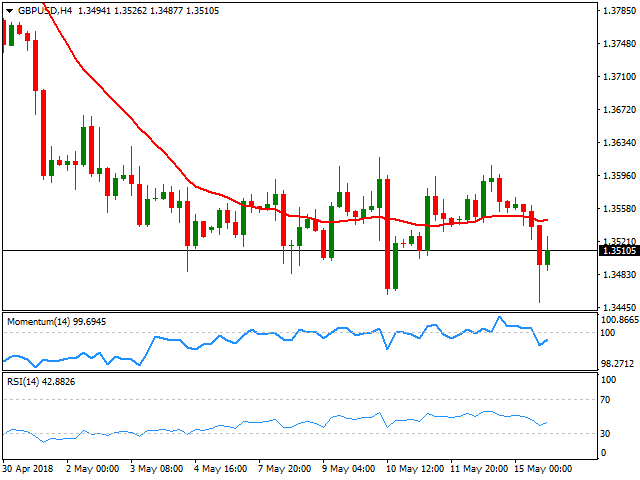
The GBP/USD pair fell this Tuesday to 1.3450, surpassing its January's low by a few pips before bouncing some. UK employment data was mixed, as the unemployment rate remained steady as expected at 4.2% in the three months to March, while wages' growth also met forecasts. The number of people claiming for unemployment benefits, however, rose sharply in April, up 31.2K against market's expectations of 7.8K. The positive wages' growth, however, fell short of indicating inflationary pressures, therefore not enough to change the BOE's outlook on interest rates. The UK macroeconomic calendar has nothing to offer this Wednesday. Despite the lower low for the year, the GBP/USD pair managed to bounce back to settle around the 1.3500 level, still within familiar levels. Technically, and considering resurgent dollar's demand, the risk is leaned to the downside, given that in the 4 hours chart, the pair is developing below a still horizontal 20 SMA, while technical indicators are posting modest bounces within bearish territory. Speculative interest is at this point not sure whether to push the greenback higher or not but keeps it near recent highs, somehow favoring a dollar continuation rally on the back of interest rates´ differentials.

Support levels: 1.3550 1.3500 1.3460  

Resistance levels: 1.3610 1.3660 1.3700

View Live Chart for the GBP/USD

Author

Valeria Bednarik

Valeria Bednarik was born and lives in Buenos Aires, Argentina. Her passion for math and numbers pushed her into studying economics in her younger years.


More from Valeria Bednarik
Share:

Editor's Picks

GBP/USD: Daily gains remain capped by 1.3650

GBP/USD leaves behind Monday’s pessimism and advances marginally on Tuesday. Cable’s humble gains, however, appear to have met quite a decent resistance in the 1.3650 zone for now, in a context of a slight selling pressure hovering around the Greenback.

EUR/USD struggles to regain pace; gyrates around 1.1670

EUR/USD clinches humble gains around 1.1670 following Tuesday’s close on Wall Street. Indeed, marginal losses in the US Dollar encourages spot to set aside two dauly pullbacks in a row and maintain the 1.1700 barrier on the cross-hairs for now. Moving forward, US inflation tracked by the PCE and another revision of Q2 GDP data should keep investors entertained on Wednesday.

Gold struggles near $4,650 ahead of US PCE inflation data

Gold struggles around $4,650 early Wednesday after the previous day's two-way swings as traders await the US PCE data for cues about the Fed's interest rate path. The outlook could drive the US Dollar and the non-yielding bullion. Meanwhile, renewed hopes for a US-Iran peace deal, weak Oil prices, sliding US bond yields and diminishing odds of an immediate tightening by the Fed undermine the USD, which could likely limit Gold's downside.

Bitcoin posts strongest weekly gain since November 2024 as market activity surges
Bitcoin (BTC) has posted its strongest one-week gain since the November 2024 US presidential election, climbing 23% over the past week as spot market activity and institutional demand returned sharply, according to a Tuesday report from K33. The rally pushed Bitcoin from around $63,000 to over $80,000 by late Monday.
America’s self‑inflicted trade wound
I’m conflicted about the trade war that the U.S. has started with Canada. Let’s be clear: any representation that Canada has been taking unfair advantage of the U.S. or that they have been treating us badly for years is a bogus characterization. In reality, the shoe is on the other foot. It’s the U.S. that has been behaving badly.
Canada hits US goods with tariffs; The rate market sees a problem
On September 8, Canada begins charging its own importers 15%, 25% and 50% on roughly 700 lines of American goods. The measure is billed as dollar for dollar, and on the arithmetic of covered trade it is. What it is not is a tax on the United States.














