|

GBP/USD analysis: bearish pressure eases, but upside capped by 1.2890

GBP/USD Current price: 1.2858

  • UK Construction PMI fell to 52.9 in August, down from 55.8 in July.
  • EU may introduce some changes to the Irish border backstop.
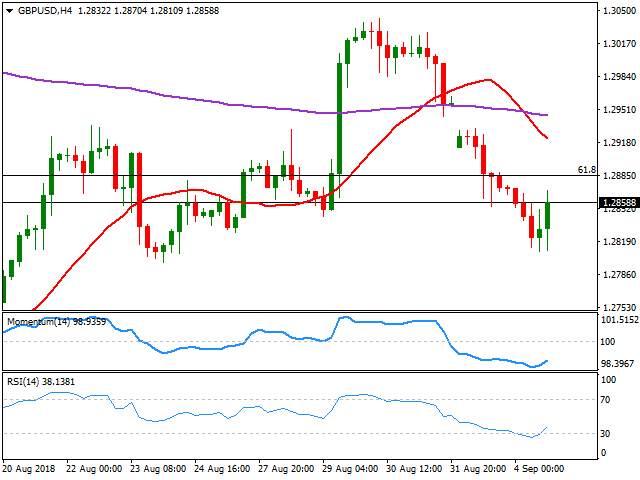
The GBP/USD pair plunged to 1.2809 its lowest since August 23, on persistent fears about a no-deal Brexit and a huge disappointment from the August Construction PMI, as the index fell to 52.9, well below the expected 55.0 and the previous 55.8. Within the Inflation Report hearings, BOE's Governor Carney said he would do whatever he can to promote a smooth Brexit, but also added that the MPC doesn't have a forecast for a no-deal Brexit scenario. The Pound bounced mid-US afternoon on the back of comments from Danuta Hubner, chair of the European Parliament's constitutional affairs committee, who stated that they were open to introduce some changes to the backstop solution so that it would be politically acceptable for the United Kingdom. The pair´s recovery, however, stalled below the key 1.2890 region, where the pair has the 61.8% retracement of the 2016/18 rally. This Wednesday, the UK Markit Services PMI will be out, foreseen at 53.9 from the previous 53.5. Meanwhile, the short-term picture for the pair is still bearish, as, in the 4 hours chart, the price remains well below a bearish 20 SMA, which crossed below the 200 EMA, while technical indicators recovered from extreme oversold readings, but remain nearby.

Support levels: 1.2845 1.2800 1.2770

Resistance levels: 1.2890 1.2920 1.2955

View Live Chart for the GBP/USD

Author

Valeria Bednarik

Valeria Bednarik was born and lives in Buenos Aires, Argentina. Her passion for math and numbers pushed her into studying economics in her younger years.


More from Valeria Bednarik
Share:

Editor's Picks

AUD/USD languishes near two-month low amid renewed Iran tensions

AUD/USD holds above 0.7000 during the Asian session on Wednesday, though it remains close to a nearly two-month low set the previous day. Fresh US strikes on Iran temper hopes for a peace deal and benefit the safe-haven US Dollar. Furthermore, inflationary concerns continue to fuel hawkish Fed expectations, lending additional support to the buck ahead of the US CPI report. Adding to this, reduced bets on an RBA rate hike in June cap the currency pair.


USD/JPY sits near 160.50 intervention zone as bulls shrug off Japan's strong PPI

USD/JPY consolidates just below mid-160.00s, or its highest level since late April, as economic concerns stemming from the Middle East conflict continue to undermine the Japanese Yen (JPY). Furthermore, a fresh wave of US strikes on Iran benefits the safe-haven US Dollar and acts as a tailwind for the currency pair, countering Japan's hotter-than-expected PPI report. However, intervention fears cap the upside as traders seem hesitant ahead of the US consumer inflation figures later this Wednesday.

Gold flirts with $4,200, lowest since March 23 on hawkish Fed bets

Gold drops to a fresh low since March 23, around the $4,200 mark during the Asian session on Wednesday, as fresh US strikes on Iran fuel inflationary concerns and bolster bets for more hawkish central banks, including the US Fed. Meanwhile, US Dollar bulls are turning cautious ahead of the US CPI report, which could limit bullion losses. However, the recent breakdown below the 200-day SMA suggests that the path of least resistance for the XAU/USD is to the downside.

Bitcoin sell-off pushes over 50% of circulating supply into loss, hinting at market bottom

Bitcoin dropped near $61,000 on Tuesday, with the latest sell-off pushing long-term market indicators toward levels historically associated with bear-market bottoms, according to a report by K33 Research.

When the chips are down, the AI tape starts to shake

The market came into Tuesday trying to sell investors the comforting ”Turnaround Tuesday” idea that Friday’s AI fracture was just another pothole on the road higher. By the close, that story had lost its bid. Monday’s dead cat bounce had done what dead cat bounces always do.

The US economy defies the rules: 100 days into the Oil shock and the recession signal is still missing

More than three months after the start of the Iran war and the resulting disruption to global energy markets, the US economy continues to display remarkable resilience. The conflict has triggered a sharp rise in Oil prices, reignited inflationary pressures and fueled widespread concerns about a potential economic slowdown.