From AI stocks to Gold – Has the great rotation begun? [Video]

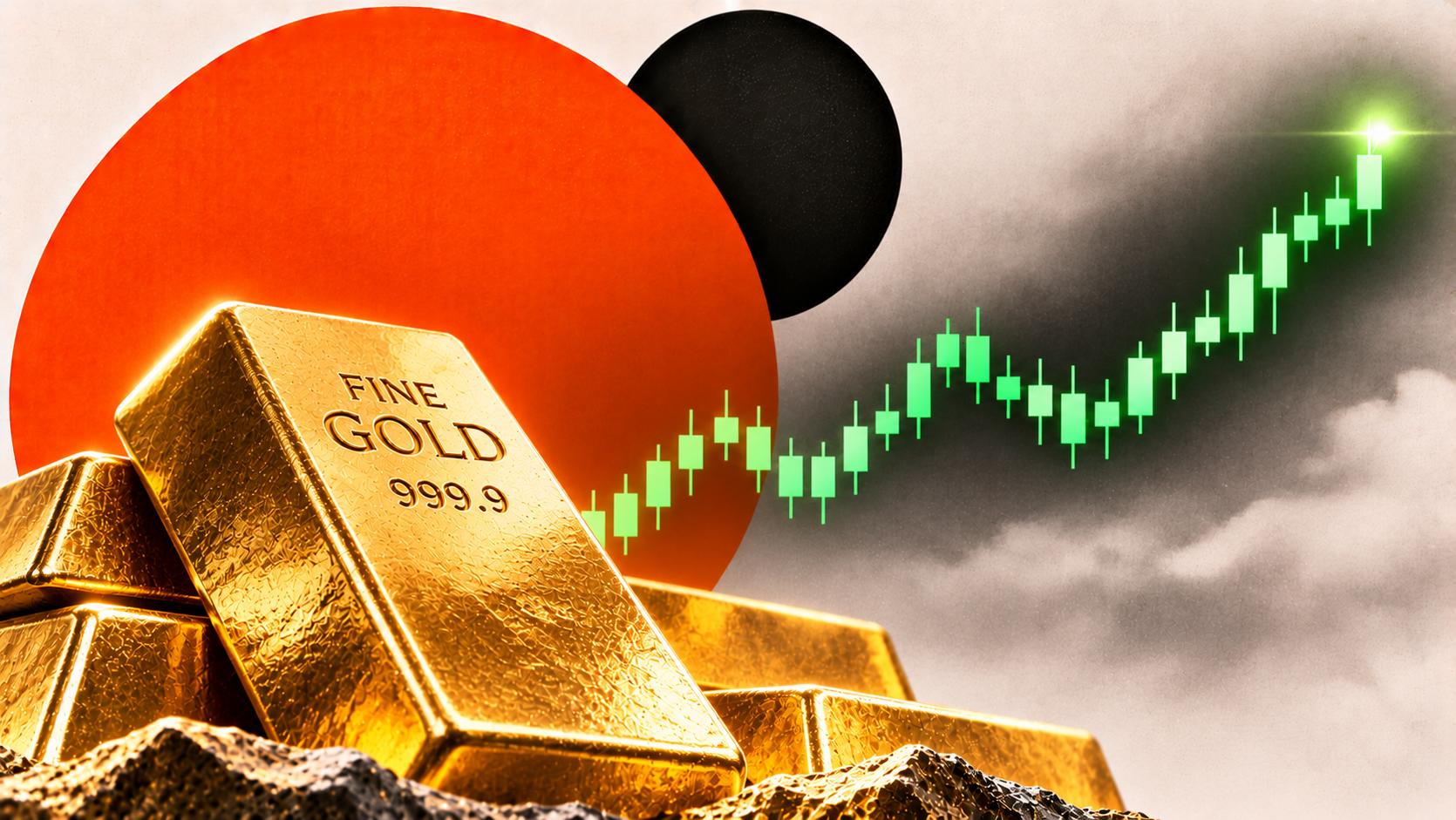
$13.2 trillion wiped off AI stocks. Hedge funds caught in a historic unwind. Gold and Silver gaining $1 trillion in less than 24 hours. Is Wall Street witnessing the beginning of the next great rotation?
Wall Street’s most crowded trade is suffering a brutal reckoning and Gold may be emerging as one of its biggest beneficiaries.
On 5 November, the Nasdaq 100 plunged 6.4%, erasing approximately $2.5 trillion in market capitalization in a single trading session. That represents nearly $385 billion disappearing every hour of trading.
The damage extends far beyond one disastrous day. According to data compiled by GSC Commodity Intelligence, 68 AI and major technology stocks have collectively surrendered approximately $13.2 trillion from their respective 2026 highs – a staggering destruction of paper wealth.
Meanwhile, Gold has reclaimed $4,000 and renewed investment demand for precious metals is strengthening the bullish case. Wall Street now faces an increasingly uncomfortable question:
What if the next great bull market belongs not to artificial intelligence, but to hard assets?
The scale of the technology correction is extraordinary. From their 2026 peaks, Alphabet has surrendered approximately $1.62 trillion in market value, Nvidia $1.49 trillion, Broadcom $965 billion and TSMC $700 billion.
Across the AI ecosystem, the drawdowns are even more alarming: memory stocks have declined an average 60%, AI power stocks 53%, data-centre stocks 50%, semiconductor stocks 43% and AI software stocks 36%.
Goldman Sachs’ memory-exposed basket has fallen 51% from its June peak – its deepest drawdown since ChatGPT launched in November 2022.
The Nasdaq 100 has also experienced three corrections during 2026, according to GSC’s analysis, raising comparisons with the turbulence surrounding the dot-com era.
For hedge funds, falling valuations are only part of the problem. Crowded positioning and leverage can turn a correction into a scramble for liquidity.
When institutional portfolios, retail investors and leveraged ETFs concentrate in the same companies, selling can become self-reinforcing. Forced liquidations push prices lower, putting further pressure on the remaining holders.
The question is how far that unwinding could spread and which assets might attract investors reassessing their exposure.
The Gold & Silver Club sees a potentially revealing historical parallel.
Following the bursting of the dot-com bubble, Commodities entered a powerful multi-year expansion. GSC Commodity Intelligence’s long-term analysis highlights the subsequent shift in relative performance between Commodities and U.S equities.
The firm believes today’s technology correction could signal another turning point in global asset allocation.
That possibility fits its broader investment thesis: The Hard Asset Decade – an era in which scarcity, tangible wealth and essential resources could increasingly command a premium.
Artificial intelligence itself requires enormous quantities of electricity, copper and physical infrastructure. Even if technology valuations contract, demand for the resources underpinning the digital economy may remain substantial.
The AI revolution can continue while investors reconsider the prices they are willing to pay for the companies driving it.
For hard assets, that distinction could prove consequential.
While technology investors confronted heavy losses, precious metals demonstrated remarkable resilience.
Following the U.S midterm elections, Gold and Silver added an estimated combined $1 trillion in market capitalization in less than 24 hours, according to GSC Commodity Intelligence.
Gold rebounded approximately 7% from its 30 October low near $3,870 towards $4,150 on 5 November, recovering roughly $280 an ounce while technology stocks came under intense pressure
The divergence does not yet establish a sustained rotation. But it raises the possibility that investors are beginning to reconsider where they want their capital exposed.
“A market can recover faster than investor confidence,” says Lars Hansen, Head of Research at The Gold & Silver Club. “By the time the headlines feel reassuring, the entry price can look very different.”
Another powerful force is emerging from Asia. According to World Gold Council figures, Chinese bar and coin purchases increased 7% year-on-year during the third quarter, even as global demand for these products declined 19%.
Central banks purchased an estimated 321 tonnes of Gold during the quarter, while physically backed Gold ETFs accumulated another 211 tonnes.
These are important indicators of persistent demand beyond short-term speculative positioning.
“The price correction has been dramatic, but the strategic reasons for owning Gold have not disappeared,” Hansen says. “Investors should ask what happens when persistent demand meets improving financial conditions.”
Historical seasonality provides another reason to watch precious metals as the year draws to a close.
GSC Commodity Intelligence’s study of post-U.S.-midterm election windows since 1974 indicates positive returns in approximately 78% of the individual observations across Gold and Silver.
Within the study’s selected windows, Gold gained 16% and Silver 7.5% in 2018–19. Following the 2022 midterms, the corresponding gains were 17.5% and 18.8%.
“Whilst historical returns cannot guarantee another rally, the pattern offers an additional reason to monitor precious metals as 2027 approaches,” Hansen says.
The Gold & Silver Club’s bullish view was already on record before the post-U.S-midterm election rebound.
In analysis published on 30 October, with Gold trading below $4,000, the firm described the correction as having opened “a compelling accumulation window within a much larger bull market”. The recent pullback buying opportunity was not just identified by The Gold & Silver Club. It was nailed with surgical precision.
Over the past 15 years, The Gold & Silver Club has built a reputation as the most accurate forecaster of precious metal prices, a record well documented across leading financial publications and institutional research reports.
The firm’s proprietary models have consistently pinpointed major turning points in both Gold and Silver – earning GSC recognition as a trusted authority among institutional investors and private wealth clients alike.
The Gold & Silver Club’s proprietary models project a base-case Gold target of $4,900–$5,000 an ounce by the first quarter of 2027.
Measured from $4,150, that implies approximately 18%–20.5% potential upside. Even the upper end would leave bullion below January’s record near $5,595. A substantial further advance could therefore unfold before Gold revisits record territory.
Whether the technology sell-off develops into a sustained rotation remains an open question. But if investors reducing crowded technology positions begin increasing their allocations to Gold, Silver and Commodities, the implications for hard-asset markets could be substantial.
For The Gold & Silver Club, that possibility reinforces the conviction at the heart of its long-term outlook:
“None of Us Own Enough Hard Assets.”
If the rotation gathers momentum, investors waiting for universal agreement could find themselves paying a much higher price.
Where are prices heading next? Watch The Commodity Report now, for my latest price forecasts and predictions:
Author

Phil Carr
The Gold & Silver Club
Phil is the co-founder and Head of Trading at The Gold & Silver Club, an international Commodities Trading Firm specializing in Metals, Energies and Soft Commodities.