FOMC Signaled To Begin Balance Sheet Normalization 'Relatively Soon', Downgraded Core Inflation Assessment


The July FOMC meeting came in as widely anticipated. The Fed left its monetary policy unchanged, maintaining the federal funds rate target at 1-1.25%. The Fed made two tweak in the statement, though. First, it noted that balance sheet reduction would begin 'relatively soon', signaling that the official announcement would come in September. Second, policymakers revised lower the outlook on core inflation. US dollar plunged, with the weighted index falling to a 13-month low as the market interpreted the inflation assessment as dovish.
As indicated in the concluding paragraph of the accompanying statement, the Fed is maintaining, 'for the time being', the reinvestment of principal payments from its holdings of agency debt and agency mortgage-backed securities in agency mortgage-backed securities and of rolling over maturing Treasury securities at auction. It expects to begin implementing its balance sheet normalization program 'relatively soon', given that 'the economy evolves broadly as anticipated'.
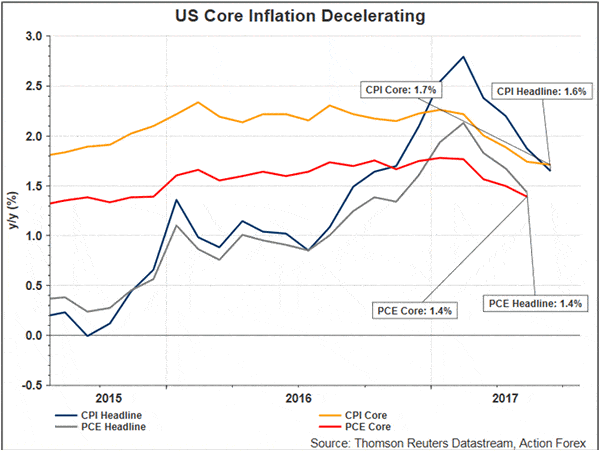
Policymakers acknowledged that the overall inflation and the measure excluding food and energy prices (core inflation) have 'declined' and are 'running below 2%'. The removal of the word 'somewhat' signaled the weakness in inflation is more than the Fed had anticipated. They noted that 'market-based measures of inflation compensation remain low' while 'survey-based measures of longer-term inflation expectations are little changed, on balance'. Yet, the Fed retained that the long-term inflation would have 'a sustained return to 2%'.
For now, we believe the Fed would make an official announcement of the balance sheet reduction process in as soon as September. We continue to expect the Fed would deliver one more rate hike this year, likely in December, unless the economic growth and inflation prints decline dramatically.
Author
Agnes Tse
ActionForex.com
Agnes Tse, CFA, is adept at analyzing the impacts of politics on global financial markets.

















