FOMC preview: The Fed is trading optionality, waiting for the flop card
- The Fed is deliberately trading optionality as oil-driven volatility makes forward guidance fragile and easily invalidated.
- Policy asymmetry remains intact with higher oil delaying cuts rather than triggering hikes and setting up a later more forceful easing cycle.
- Markets are pricing a two-sided macro regime where inflation persistence and growth deterioration will alternately dominate cross-asset direction.
The Fed is trading optionality, waiting for the flop card
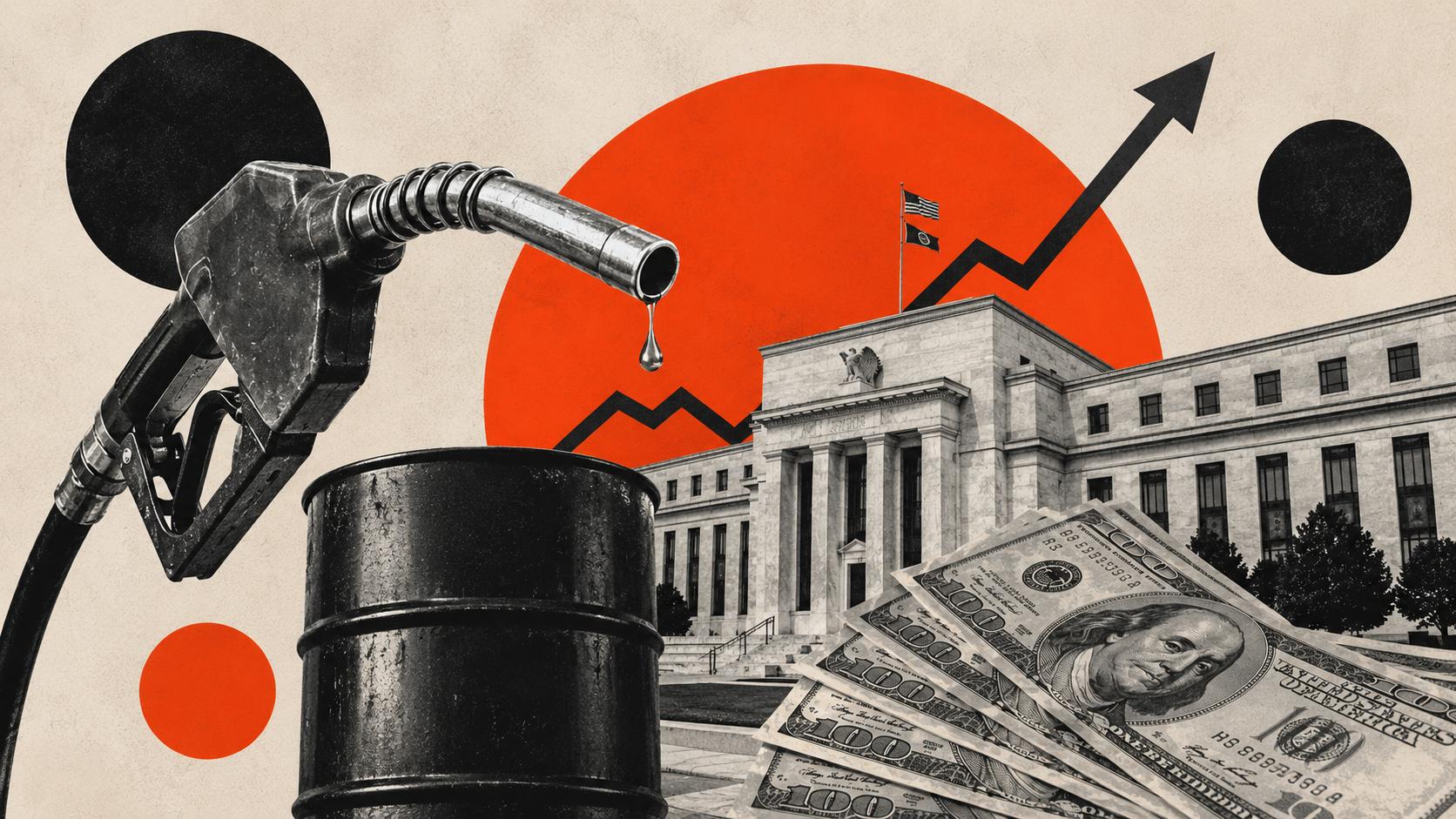
This is not a meeting about pulling levers; it is a meeting about body language, because the Fed has found itself sitting at a table where every chip it moves gets repriced by something it does not control and right now that something is oil.
Rates are staying parked at 3.50 to 3.75 and nobody in the room is seriously arguing otherwise, but the real story is how quickly the market has had to rewrite the script as crude started behaving less like a commodity and more like a macro wrecking ball, taking the expected path of cuts from something orderly and predictable to something that now looks conditional, hesitant, and frankly a little bit nervous. Before the Iran shock, the market was leaning toward two cuts this year; now it is barely holding onto one, and even that feels like a placeholder rather than a conviction trade.
Goldman’s framing is actually the cleanest way to think about it. The risk function is asymmetric: higher oil prices in a world where inflation is already above target do not push the Fed to hike; they absolutely force it to wait, and when it finally moves, it is more likely to cut harder rather than earlier. That is a subtle but critical shift because it indicates that the Fed's reaction function has shifted from smooth calibration to a delayed response.
Morgan Stanley leans into the same idea from a different angle, they still see cuts this year but only if the labor market continues to soften and if underlying inflation behaves enough to give the Fed cover, and crucially they expect the Committee to stick to its old playbook of looking through oil shocks, even if that doctrine is starting to feel like it was written for a different market regime. In their words, the median dot probably does not move much, but that masks a growing internal disagreement: some want to pull easing forward, while others want to push it out.
And that split is no longer theoretical.
You can see it in the voting dynamics, where dissent is building not around hikes but around cuts, with Waller and Miran already pushing for easing and Bowman increasingly sounding ready to join them. Goldman explicitly flags the risk of three dissenters this time around, which tells you the center is no longer holding as tightly as it once did. This is a Committee that agrees on the destination less than it used to, but is still trying to present a unified map.
The macro backdrop is what is driving that tension.
Inflation is stuck above target, with core PCE still running north of 3 percent and now getting a fresh impulse from energy and commodities tied to the conflict, while the labour market is starting to show stress in a way that feels less cyclical and more structural. A negative payroll print does not usually move the Fed on its own, but when it shows up alongside a narrative that AI is starting to reshape hiring demand, it becomes harder to dismiss as noise.
So the Fed is effectively trying to price two different economies simultaneously.
One where inflation risk remains live and requires patience, and another where growth is softening and could require support, and the problem is those two paths demand opposite policy responses. That is why forward guidance is becoming deliberately vague: anything more precise risks being invalidated by the next move in oil prices.
Bank of America probably captured the mood best with the “Hormuz Hold’em” line, because that is exactly what this feels like: the Fed is sitting on its hands waiting for the next card to be dealt before deciding whether it is worth playing. And the reality is the oil market is the dealer right now, not the Fed.
At this point the Fed does not look like a central bank with a grand master plan, it looks more like the last guy sitting at a late night poker table quietly protecting his stack while oil keeps flipping over cards nobody saw coming, because when the deck is this wild committing to a big bet is how you turn a decent hand into a story you regret telling later.
That is why the statement will lean into uncertainty and why the changes will be subtle rather than dramatic.
Growth will likely be nudged down to something closer to moderate, the labour market language softened a touch, inflation was left described as elevated, and the guidance was kept intentionally open-ended around the extent and timing of future moves. Morgan Stanley expects minimal textual changes, and that feels right because the Fed is not trying to lead the market here; it is trying not to get caught on the wrong side of it.
The dot plot will do what it always does in moments like this: present a calm surface with one cut this year and one next year, while underneath that median sits a wider dispersion that reflects the real debate. Goldman expects little net change, and that makes sense because any attempt to push the median meaningfully in either direction would be interpreted as a commitment the Fed simply cannot afford to make.
The economic projections will likely tell the real story.
Higher inflation, slightly weaker growth, and a higher unemployment rate are about as classic a stagflation signal as you can print without calling it that outright, and it is exactly the kind of backdrop that makes central banking uncomfortable because it removes the luxury of clean trade-offs. You are no longer choosing between overheating and slowdown; you are managing both at the same time.
And layered on top of all this is the leadership transition.
Powell is nearing the end of his term, and whatever his strengths, one of them has been his ability to build consensus in a divided room. The market is quietly starting to ask whether a new chair inherits that same credibility on day one, especially with Warsh’s views on balance sheet policy potentially introducing a different mix of tools into the mix. Goldman does not see a radical shift, but even a small change in how policy is communicated can have outsized effects when the system is already this sensitive.
Across markets, you can see how this uncertainty is being priced.
Goldman’s rates desk points out that the front end has already undergone a volatility shock, with aggressive repricing and skew moving in ways that punished consensus positioning, while still viewing outright hikes as a very low-probability outcome, even with oil in play. Their framing is simple; the easiest tail to fade is still hikes, because the bar for that is just too high, given the cracks already appearing in growth.
ING Bank “sees a high risk that the Fed will revise its median Dot Plot to signal the next cut only in 2027. That could influence markets in a meeting where caution might be the main focus, given the highly volatile situation”. Hence, upside risks for the dollar.
Equities are holding together, but volatility sits just under the surface, as desks start to think less about the immediate decision and more about how the distribution of outcomes is widening. Credit is already reflecting that shift, with spreads widening, not in panic but in recognition that the growth-inflation mix is deteriorating and warrants a higher risk premium.
Even gold is behaving in a way that reflects this tension, getting caught in short-term liquidation flows but still sitting on a fundamentally supportive backdrop if tail risks materialize.
So where does that leave the Fed?
On hold, but not comfortable, waiting but not passive, aware that the next move matters more than usual because the margin for error is thinner than it has been in years.
And that is really the takeaway.
This is a central bank that is not trying to be early or clever; it is trying to stay flexible in a market where the next turn of the oil wheel can rewrite the entire macro script overnight, and in that kind of environment, the smartest move is often the one you do not make.
Author

Stephen Innes
SPI Asset Management
With more than 25 years of experience, Stephen has a deep-seated knowledge of G10 and Asian currency markets as well as precious metal and oil markets.