Feeder cattle reaches a two-year bullish positioning extreme as Soybeans and Silver send contrasting signals [Video]
![Feeder cattle reaches a two-year bullish positioning extreme as Soybeans and Silver send contrasting signals [Video]](https://editorial.fxsstatic.com/images/i/Economic-Indicator_GDP-2.png)
The most striking signal in this week's Commitments of Traders report came from feeder cattle, where positioning reached a bullish extreme that took almost two years to develop.
Readings of this length are unusual. They show that the current positioning structure has moved beyond the range seen in the previous 100-plus reports, making the signal more meaningful than a short-lived weekly fluctuation.
The feeder cattle reading is also consistent with the broader picture in live cattle. Commercial participants recorded a larger-than-average change in their net position for the second consecutive week, with both markets currently leaning toward higher prices in the near term.
Why the feeder cattle extreme matters
Commercial participants are directly involved in the underlying physical market and generally use futures to manage business risk. Their positioning should not be interpreted as a straightforward speculative trade, but unusually stretched readings can still reveal when the balance of exposure has changed materially.
A two-year extreme does not guarantee an immediate rally, and COT data is not designed to provide precise entry timing. It does, however, identify feeder cattle as a market where positioning has become historically unusual and where the current structure supports a bullish interpretation.
The similar signal in live cattle adds weight to that conclusion. When related markets begin to show aligned commercial positioning, the broader sector picture becomes more relevant than an isolated move in a single contract.
New Zealand dollar posts its largest bearish shift in a year
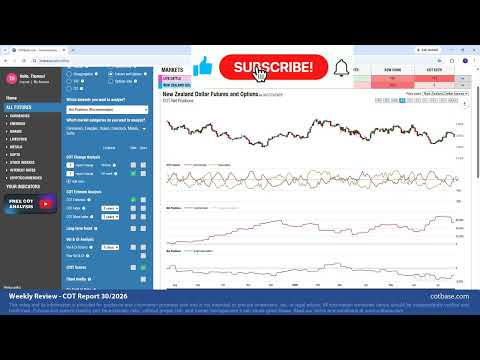
The New Zealand dollar produced the clearest bearish change signal among the currency markets in the latest report.
Commercials recorded their largest change in net positioning over the past year. Price has already started to move lower, which means the positioning signal is beginning to receive confirmation from the market itself.
That distinction is important. A large weekly change can show that positioning is turning, while subsequent price action helps indicate whether the market is responding in the same direction. In the New Zealand dollar, the current combination remains bearish, although the move should still be assessed alongside the broader US dollar trend and incoming macroeconomic developments.
Soybeans show bearish positioning before price reacts
Soybeans present a different type of setup. The latest COT signals lean bearish, while price has not yet made a decisive move in response.
The market is also approaching a significant resistance area. This creates a potentially important test: if price struggles at resistance while positioning continues to weaken, the bearish case would become more convincing.
For now, the signal remains developing rather than confirmed. The value of the COT data is that it can highlight a change in market structure before that shift becomes obvious on a standard price chart. Traders should therefore watch how soybeans behave around resistance and whether the next reports reinforce or weaken the current positioning pattern.
Silver approaches a 124-report extreme
Silver is showing one of the most historically stretched readings in this week's report.
Large speculators have reached a 124-report extreme, a level that also took close to two years to form. In my view, this type of positioning may indicate that a bottom is beginning to develop.
That interpretation requires caution. Extreme positioning can persist, and it does not confirm that the final low is already in place. However, readings that extend across more than 100 reports deserve attention because they show that speculative exposure has moved to a level rarely seen in recent history.
The next step is to watch whether price begins to stabilise and whether subsequent COT reports show the positioning extreme starting to reverse. A combination of historically stretched positioning and improving price action would provide stronger evidence that a bottoming process is underway.
The key takeaway
This week's data presents three distinct positioning stories.
Feeder cattle has reached a rare two-year bullish extreme, supported by another constructive commercial shift in live cattle. The New Zealand dollar has produced its largest bearish commercial change in a year, with price already moving in the same direction. Soybeans are showing a developing bearish setup near resistance, while silver's 124-report large-speculator extreme may be an early sign that a bottom is forming.
None of these readings should be treated as standalone trading signals. Their value lies in showing where major participant groups are changing exposure, where positioning has become historically stretched and where the market may be approaching an important transition.
Price shows what the market has already done. Positioning can provide additional context about who is behind the move and where the balance may be shifting next.
I explain the full report and walk through every chart in this week's COTbase video review
Author

Thomas Lukacs
COTBase.com
Thomas Lukacs is the founder and CEO of COTbase.com.

















