Fed's rate cut plans uncertain after robust NFP vs household decline


Last week’s major economic news was the significant rise in Non-Farm Payrolls (NFP), which increased by 272K, surpassing the expected 180K. Additionally, average hourly earnings grew by 0.4% in May, higher than the 0.3% estimate, reaching 4.1% year-over-year compared to 4.0% in April. These stronger-than-expected figures have reduced the likelihood of the Federal Reserve cutting interest rates this fall.
The US Bureau of Labor Statistics (BLS) releases the US employment situation monthly, closely watched by economists, analysts, and investors for economic insights and potential Fed interest rate changes.
The report includes the Current Employment Statistics Survey (covering 697,000 work sites) and the Household Survey (covering 60,000 households).
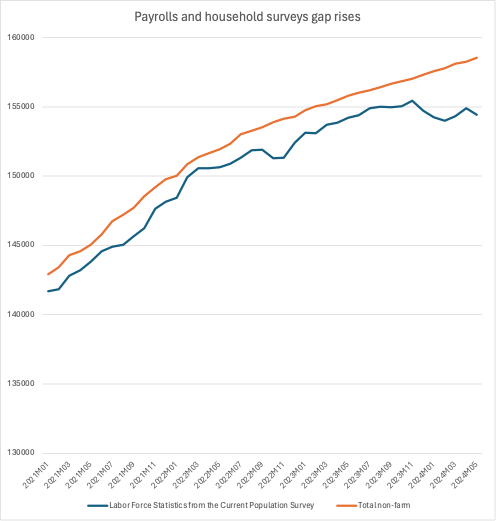
The Household Survey showed a loss of 408K jobs and a decrease of 250K in the labor force, indicating a weak labor market.
ADP reported 152K new jobs in May, below the 175K estimate, and April's jobs were revised down to 188K from 192 K.
The gap between the two employment surveys has widened, which is not a good sign.
Source: BLS
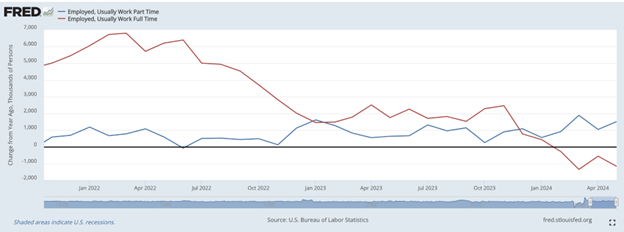
Full-time job numbers have declined since peaking in 2022 after the Russia-Ukraine war and Fed rate hikes. Part-time job numbers are increasing, indicating more job losses compared to a year ago.
Source: Fred St Louis
The SNB, BoC, and ECB have started rate cuts. While the Fed is not expected to cut rates soon, the upcoming dot-plot chart will be crucial to understanding any changes in the Fed’s views on employment and inflation.
The Fed’s quantitative tightening (QT) involves not investing in long-term treasuries, reversing the previous effect of lower long-term bond yields. Given high interest rates and the budget deficit, long-term yields are expected to rise.
FOMC meeting
In March, the Fed predicted the Fed funds rate would decrease by 75 basis points annually from 2024 to 2026. This week's dot-plot update will affect market sentiment. However, recent Fed comments suggest fewer rate cuts this year. Starting June 1, the Fed reduced the cap on Treasury securities from $60 billion to $25 billion per month. This pace of QT will remain unchanged for a while. The USD and stock markets will rely more on the US economic outlook.
Source: Deriv MT5
Technical analysis
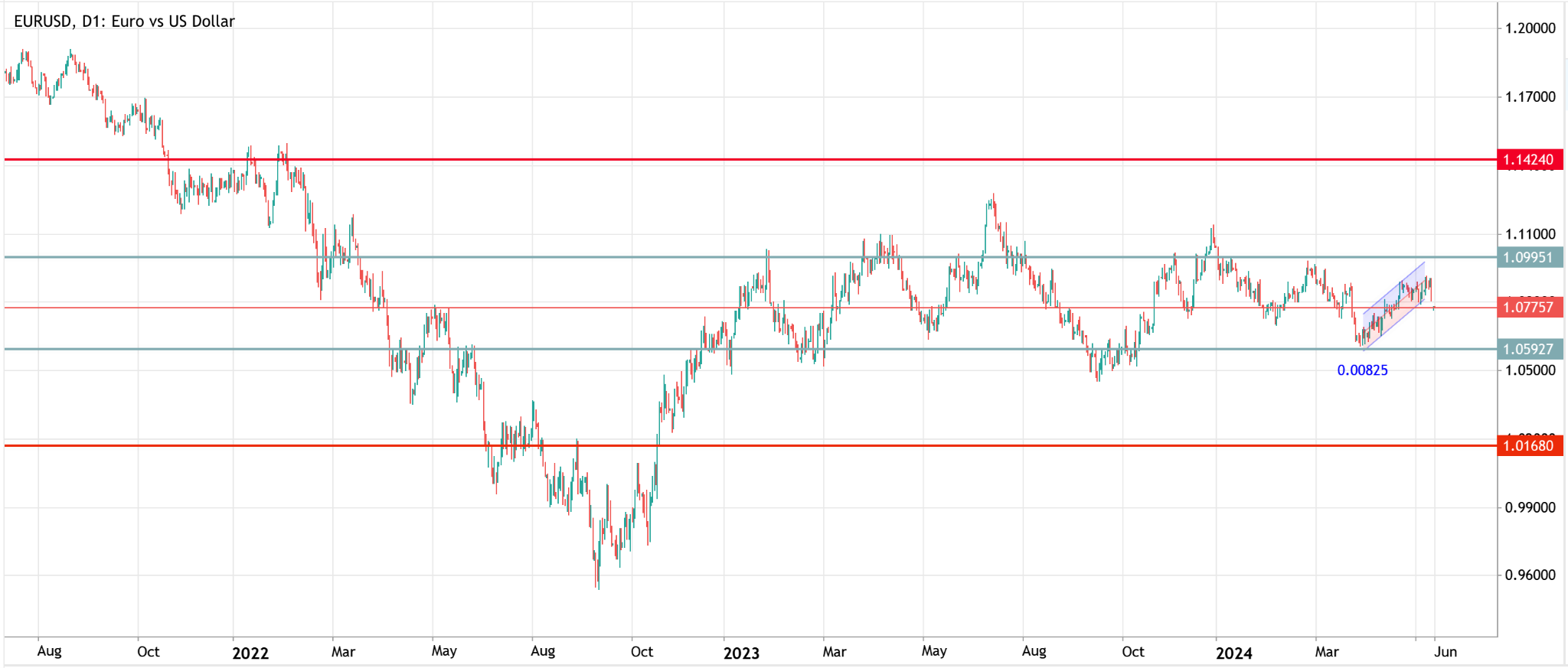
The EUR/USD has broken its uptrend channel and will likely test the lower support line at 1.05927-1.0450, established since November 2022. If EUR/USD falls below 1.0450, it may test 1.0168.
Source: Deriv MT5
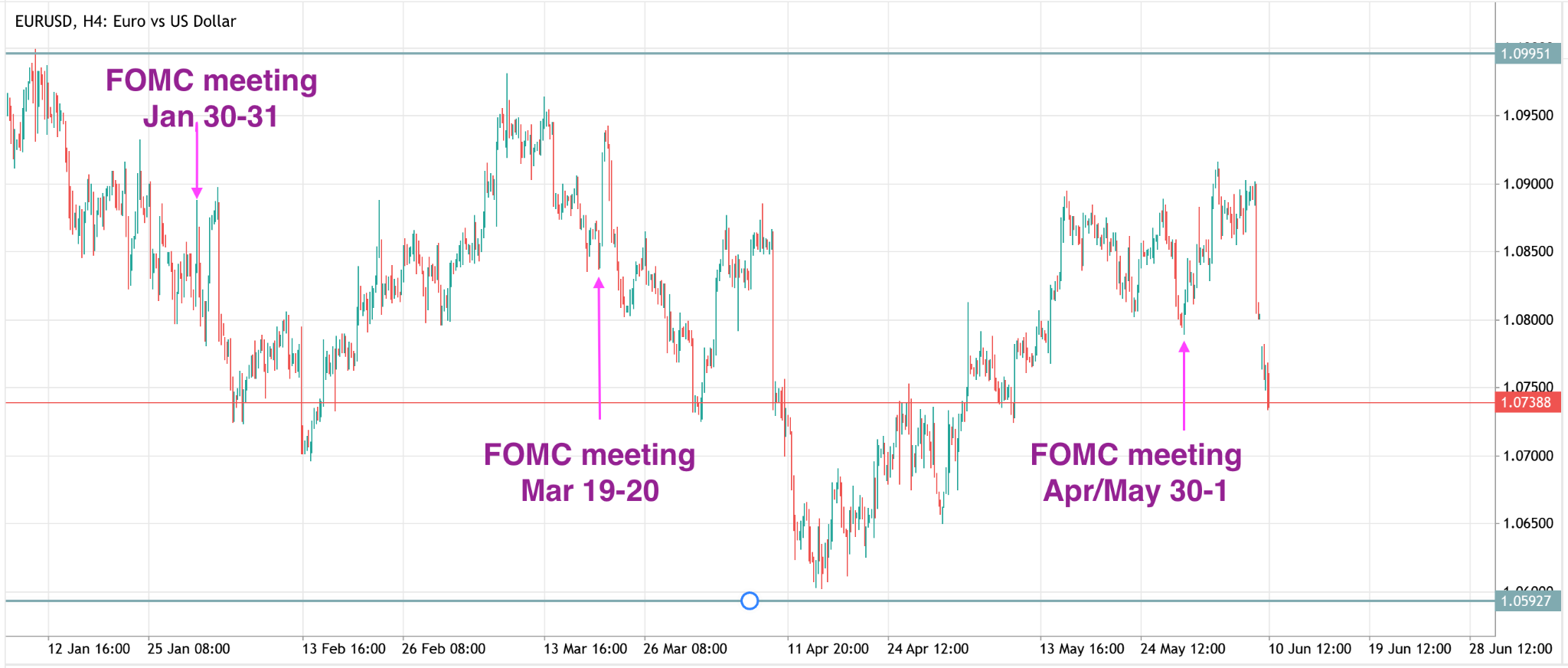
In the past three meetings, EUR/USD has consistently declined. Expect a lower EUR/USD price this time as well. For more details, please read the full post. Big moves ahead: ECB’s interest rate cut and the future of EUR/USD.
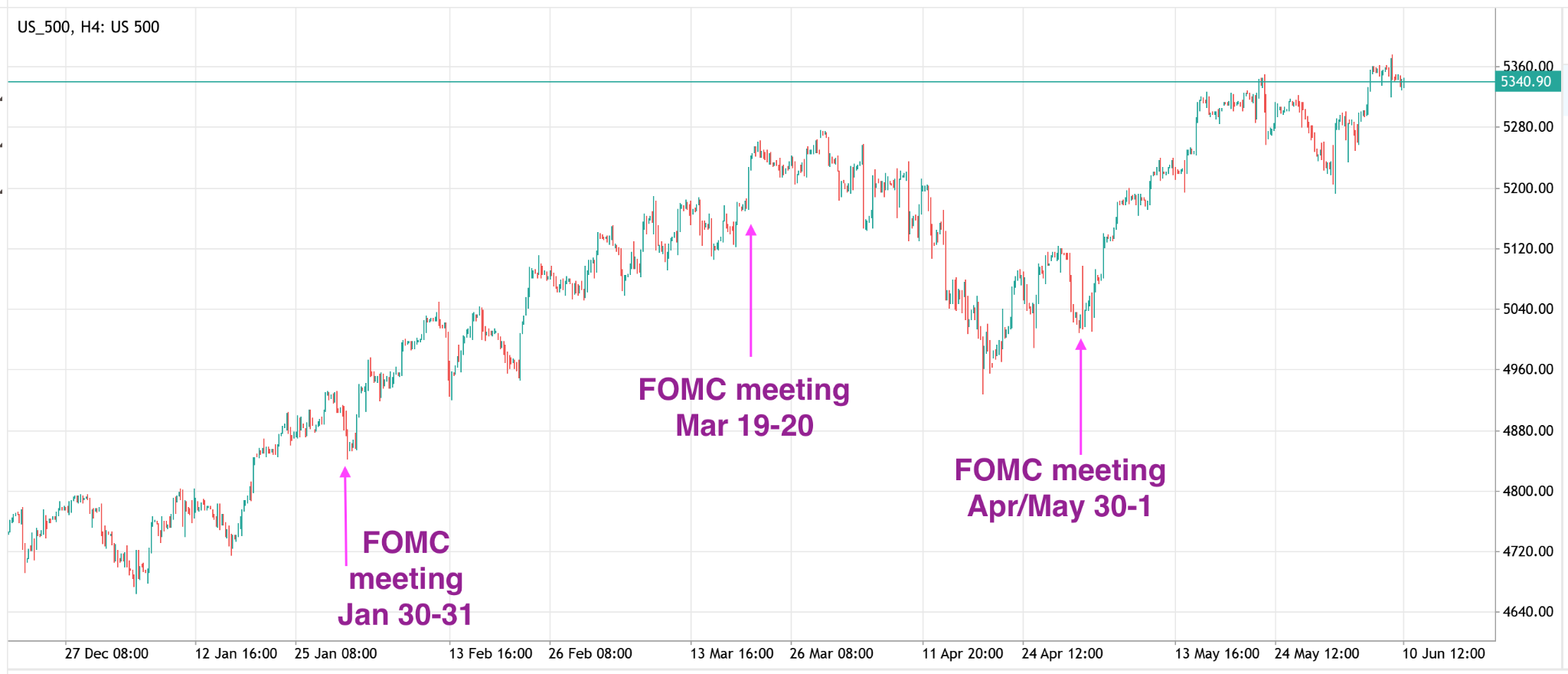
Source: Deriv MT5
In the past three meetings, the market initially expected rate cut from the Fed, causing the S&P 500 to rise. By the May 1 meeting, expectations shifted from three rate cuts to two or one but the pace of the QT will be slowed and the market now in new high before the coming June FOMC meeting.
The dot plot will provide more clues about potential rate cuts. With only four meetings left this year, it is unlikely the Fed will cut rates three times. Meanwhile, the SNB, BoC, and ECB have cut rates, with the ECB signalling more cuts. This rate differential may attract funds to the US, continuing the S&P 500 rally.
Author
Prakash Bhudia
Deriv
Prakash Bhudia, HOD – Product & Growth at Deriv, provides strategic leadership across crucial trading functions, including operations, risk management, and main marketing channels.