Federal Reserve hikes 0.25%, cautious on balance sheet and economic growth
- Fed hikes base rate 0.25% as expected, first increase since December 2018.
- Projections suggest an increase at each of the six remaining 2022 meetings.
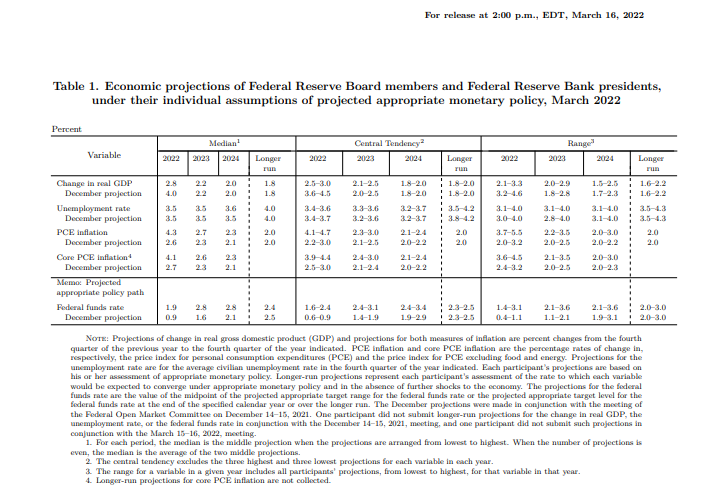
- US economic growth estimate for 2022 reduced to 2.8% from 4.0%, inflation rises to 4.3% from 2.6%.
- Equities, US Treasury rates rise, dollar falls on retreating Ukraine safety trade.

The Federal Reserve raised its base rate for the first time in three years marking the official end of the extraordinary policy response to the COVID-19 pandemic. This came after two years of a zero-rate program, where Treasury yields reached record lows,
The Federal Open Market Committee (FOMC) voted to increase the target range for the fed funds rate to 0.25%-0.5%. The governors said they expected to begin reducing the bank’s $9 trillion balance sheet at a coming meeting. The vote was 8 to 1 with James Bullard, President of the St Louis Fed backing a 0.5% increase.
Federal Reserve Chair Jerome Powell observed in his press conference that the plans for the balance sheet were well advanced and the start could come as soon as the next FOMC meeting in May.
In addition to today’s increase, the bank's Projection Materials posited six more rate increases this year with an median estimate for a 1.9% base rate after the final bank meeting on December 14. The prior set of projections from December 2021 had three hikes to year-end and a 0.9% fed funds rate.
Markets
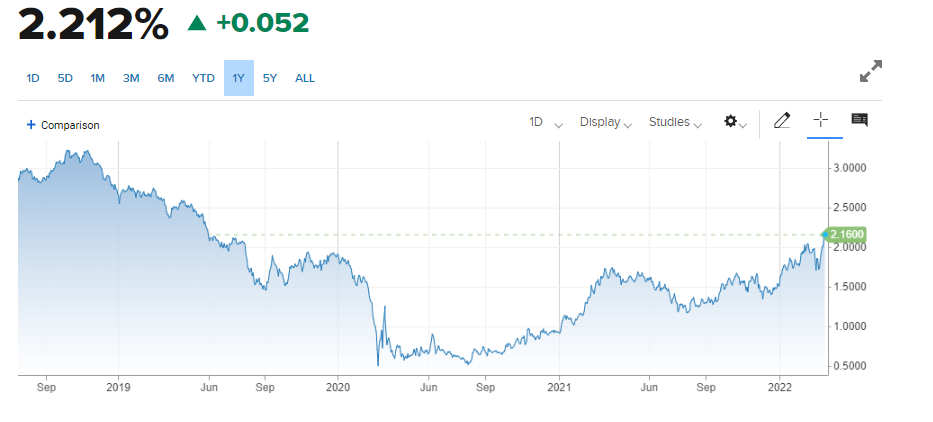
Treasury and commercial interest rates have been anticipating this Fed move for many weeks. The yield on the 10-year note reached a three-year high of 2.246% during Fed Chair Jerome Powell’s press conference before retreating slightly to the close.
10-year Treasury yield
CNBC
Equities responded to Mr. Powell’s characterization of the US economy as “very strong” with an “extremely tight” labor market.
“We will not let high inflation become entrenched. The cost of that is far too high,” promised the Fed chair.
The three major US averages rebounded from their initial dips to close sharply higher.
US equities

CNBC
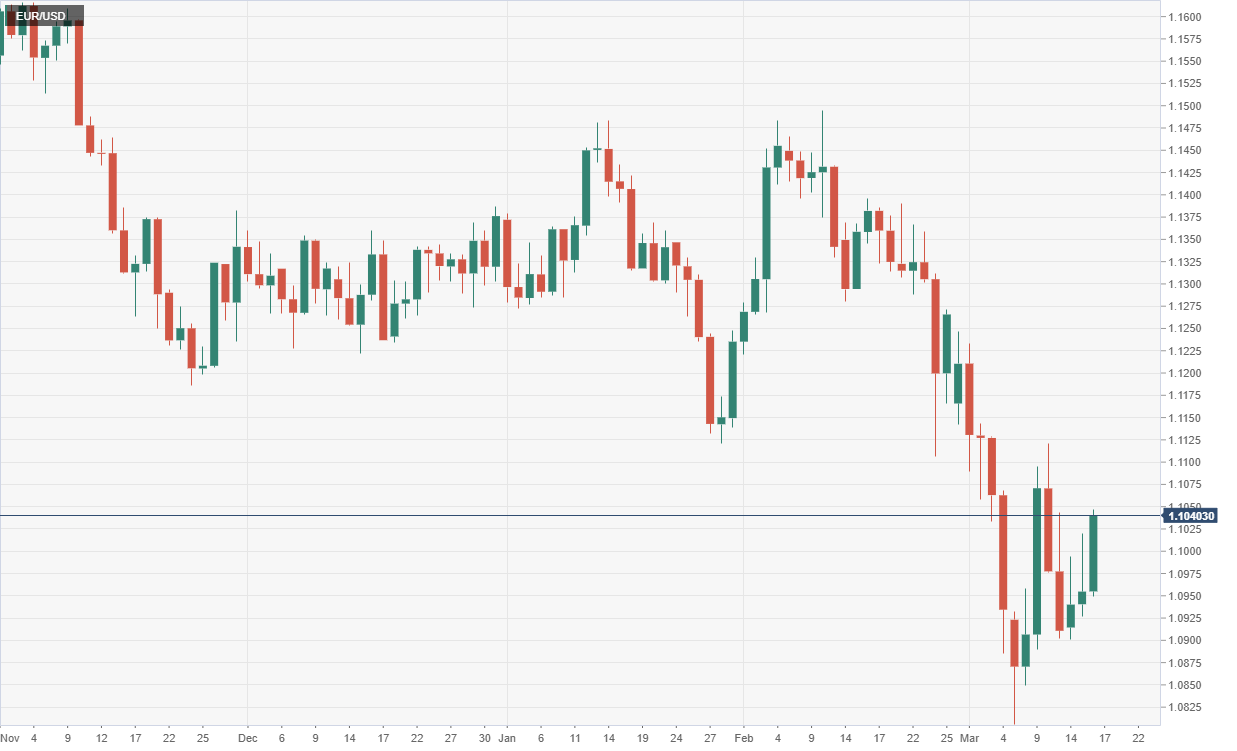
The dollar was lower in all its major pairs except the USD/JPY, despite the rise in US Treasury rates, a result that owed more to reports of progress in the Ukraine cease-fire talks and a retreat of the safety-trade than to any Fed policy changes.
Oil and commodity prices were slightly lower on the day. West Texas Intermediate (WTI) has returned to its level just before the Russian invasion of Ukraine began on February 24.
-637830583049750196.png)
Final thoughts on the Fed
Caution was the Fed's unstated policy at the March FOMC. The governors raised the fed funds 0.25% as universally expected, and did nothing else. They did not begin the balance sheet reduction nor did they specify when it might start. Chair Powell said that the preparations are nearly complete and suggested it could start in May.
Behind all economic and rate considerations was the Fed’s recognition that the Ukraine war could yet upend the US and global economies and all of the bank’s predictions and policies.
Markets greeted the policies with relief that the Fed did exactly what was expected. More important to equities and Treasury rates were rumors of improving prospects for a ceasefire in Ukraine .
If and when the Ukraine war is settled, the Fed is well-positioned to turn up the heat on inflation should prices continue to rise. Until then, discretion is clearly the better part of rate valor.
Premium
You have reached your limit of 3 free articles for this month.
Start your subscription and get access to all our original articles.
Author

Joseph Trevisani
FXStreet
Joseph Trevisani began his thirty-year career in the financial markets at Credit Suisse in New York and Singapore where he worked for 12 years as an interbank currency trader and trading desk manager.