Fed Monitor: “Not even thinking about thinking about raising rates”

Key takeaways
- The Fed is far away from considering scaling back its support to the economy. The Fed maintained its forward guidance and signalled the target range will remain at 0.00-0.25% through 2022.
- The Fed said it will continue to buy US Treasury securities and mortgage-backed securities "at least at current pace ", i.e. around USD80bn US Treasury securities and USD45bn mortgage-backed securities per month.
- The Fed is seriously considering implementing yield curve control, i.e. setting a ceiling for how high medium-term interest rates can go.
- Risk sentiment improved on announcement by the dovish Fed signal. USD still seems to be on a declining path against most currencies. We see EUR/USD rising to 1.15 near-term. SEK and NOK should also be able to strengthen further in the current environment.
Fed message: Not anywhere near considering scaling back
Today’s FOMC announcement was pretty much in line with our expectations, as the Fed is not anywhere near considering scaling back its support to the economy. This supported market sentiment sendingequities higher and the USD weaker on announcement.
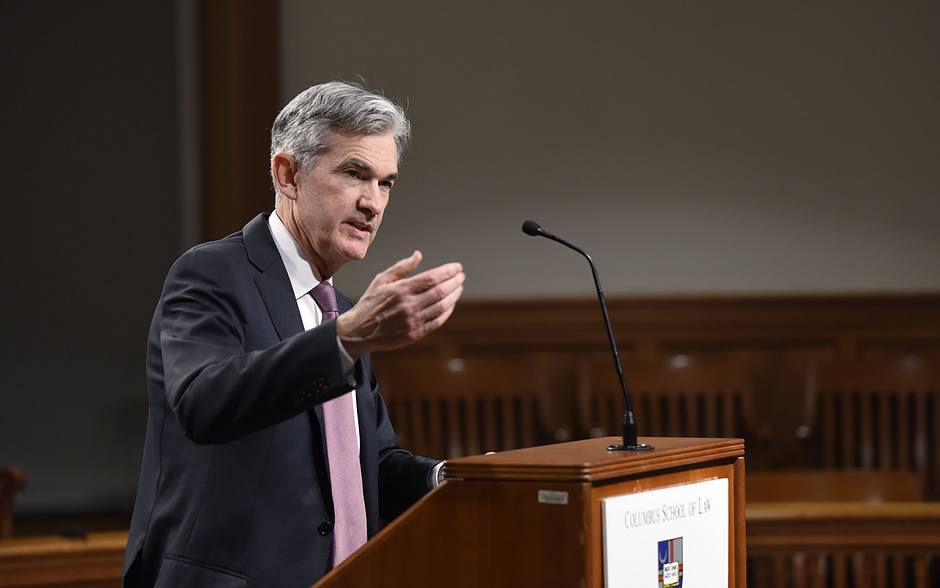
In line with our expectation, the Fed kept both the target range and forward guidance unchanged, i.e. will maintain the current target range until the economy “has weathered recent events and is on track to achieve its maximum employment and price stability goals”. Some had speculated that the Fed would strengthen its forward guidance but refrained implementing e.g. the “Evans rule” (linking the policy rate to unemployment rate) or an “asymmetric operational inflation target range” as discussed in January/February at this point. According to the ‘dots’, the Fed does not expect to raise rates through 2022, which is in line with current market pricing. Fed chair Powell said at the Q&A that the Fed is “not even thinking about thinking about raising rates” despitesome early positive signs that the economy has bottomed out and the healing has started, see US Macro Monitor: Jobs report for May supports our view that the healing has begun, 9 June. The Fed clearly fears tightening too much before the recovery is robust and self-sustaining, which makes sense as unemployment remains high, inflation is below target and a prolonged crisis hurts long-term potential GDP growth (too few capital investments and people leaving the labour force permanently).
On QE, the Federal Reserve said it will keep its QE buying “at least at current pace”. Up to the meeting, some had speculated that the Fed would slow down its purchasing pace now that risk sentiment has rebounded, markets are functioning more smoothly and better data. This means the Fed will continue to buy around USD80bn of Treasuries and US D45bn of mortgage-backed securities per month, see latest details from NYFed here and here. This is another signal that the Fed is not close to exit its easy policy stance.
Fed is seriously considering implementing yield curve control
A very interesting thing, which is likely to become a market theme, was that Fed chair Powell said that it is “an open question” whether the Fed will implement so-called yield curve control (i.e. setting a ceiling for how high medium-term yields can go) and something the FOM C will discuss at coming meetings. Powell did not add much colour but in particular Fed governor Lael Brainard has been advocating for implementing yield curve control. Brainard argued that “This forward guidance could be reinforced by interest rate caps on short-term Treasury securities over the same horizon” (see Reuters), i.e. probably targeting 0.25%(the upper end of the Fed’s target range) for the 2-3yr segment of the US Treasury curve. We are, however, not convinced this is a good idea. Yields can move higher due to 1) higher real rates, 2) higher risk premia or 3) higher inflation. The Fed probably wants to avoid higher real rates and higher risk premia but it seems counterproductive from an inflation objective point of view to fight against higher rates due to higher inflation. We will monitor the discussion closely .
The Fed still refrained from hiking the interest rate on excess reserves (IOER) despite the effective Fed funds rate trade at the lower end of the target range. The pre-corona policy rule was to make small technical adjustments to ensure the effective Fed funds rate was trading in the middle of the range. The Fed seems reluctant to hike the IOER, probably because it does not want banks to just “park” money at the Federal Reserve.
Market sentiment improved on dovish policy signal
The key discussion among markets and macroeconomists alike remains whether or not this policy guidance will be able to create inflation down the line. The immediate effect seems to be one more notch in the belt in favour of ‘stagnation forever’. Indeed, the IT sector, whom tend to do well in such low-rate & mediocre-growth scenario, was well into the green.
In FX, the picture was somewhat mixed but the US D seems to still be on a declining path against most currencies. Meanwhile, yields all the way to 10 years out remain depressed and fell a bit. We suspect the world’s biggest central bank may indeed be able to erode some of the past year’s broad USD strength, helping global growth, debt burdens, commodity prices and demand. In turn, we remain constructively positive on cyclical sectors such as banks and industrials. Scandinavian SEK and NOK should also be able to strengthen further in this environment while we see EUR/USD rising to 1.15 near-term.
Author
Danske Research Team
Danske Bank A/S
Research is part of Danske Bank Markets and operate as Danske Bank's research department. The department monitors financial markets and economic trends of relevance to Danske Bank Markets and its clients.

















