Fed grilled about its unsound currency, digital currency schemes
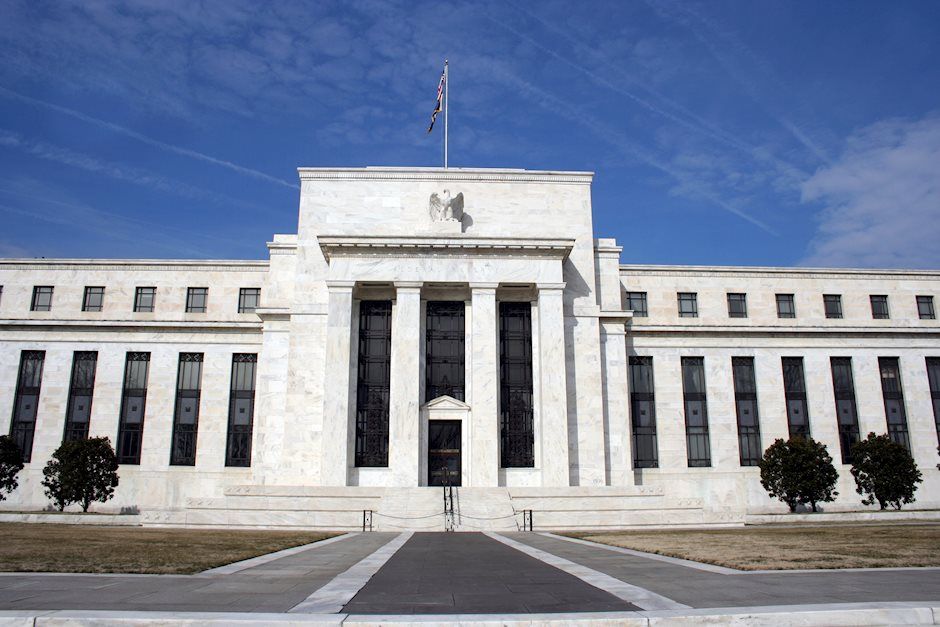

As financial markets gyrated this week, Federal Reserve chairman Jerome Powell touted the U.S. dollar as a form of “sound money.” More on that incredible take in a moment.
But first, let’s review this week’s market action.
Inflation fears helped drive another spike in long-term bond yields, and by Thursday that began to spook Wall Street. The Treasury market is now off to one of its roughest starts to a year on record. As a result, calls are mounting for the Fed to up its bond purchases.
A steepening yield curve is helping to depress precious metals prices. Rising real interest rates tend to be negative for the gold market.
But with short-term rates remaining locked near zero and inflation pressures rising, the case for rising real rates as a major trend remains tenuous at best. If central bankers begin deploying yield curve control measures to bring down long-term bond yields, that could serve as a catalyst for the next up-leg in gold and silver.
In the meantime, gold and silver have fallen back sharply here at the end of the week – with gold trading down to $1,730 and silver at $26.50.
In other alternative asset markets, Bitcoin prices plunged more than 25%. The cryptocurrency had been gaining increasingly widespread adoption by some large corporations and financial institutions. At the same time, Bitcoin has come under increasing scrutiny by regulators and central bankers.
Treasury Secretary Janet Yellen recently derided cryptocurrencies for supposedly facilitating illegal activity. Yellen along with some members of Congress are threatening to crack down on crypto markets.
Meanwhile, Fed chairman Powell along with other central bankers and the International Monetary Fund are vowing to roll out official digital currencies in the near future. As the globalist Great Reset agenda proceeds, a more globally coordinated, centralized currency regime may be coming – one that seeks free-market digital currencies as well as paper cash.
Powell told Congress on Tuesday that developing a digital currency is a "high priority project" for the Fed. But he admitted that there are still significant technical and legal issues that need to be worked out.
For now, he continues to cheerlead for higher inflation while at the same time insisting the U.S. dollar’s value is stable and everyone should have confidence in holding it. In an exchange with Republican Congressman Warren Davidson, Powell laughably claimed that depreciating Federal Reserve notes are “sound money”:
Warren Davidson: What would you say constitutes sound money?
Jerome Powell: Well, the public has confidence in the currency, which they do, which the world does. That's really what it comes down to that people believe that the United States currency is perfectly reliable and stable in value.
Warren Davidson: Is it diluted as a store of value when M2 goes up by more than 25% in one year. Does the printing of more U.S. dollars somehow diminish the value of the dollars that others hold?
Jerome Powell: There was a time when monetary aggregates were important determinants of inflation and that has not been the case for a long time. So, you'll see, if you look back, the correlation between movements in different aggregates, you mentioned M2 and inflation is just very, very low. And you see that now where inflation is at 1.4% for this year.
Surging food, energy, housing, and healthcare costs this year would suggest that real-world inflation is running at a much higher rate than 1.4%. But even that rate of currency depreciation means that long-term savers of dollars are guaranteed to lose significant purchasing power as that rate of depreciation compounds.
That is a far cry from sound money. A truly sound currency would be backed by more than mere expressions of confidence. It would be backed by something solid, timeless, and universally recognized. It would retain value over years, decades, and centuries – not depreciate at an arbitrarily prescribed pace.
Physical precious metals are the basis of sound money. Although in theory a currency could attain soundness through other mechanisms, only gold and silver have a consistent historical track record worldwide of serving as the ultimate money.
The era of unbacked fiat money may be heading toward a ruinous end. The M2 money supply has been exploding over the past several months. Even as Powell expresses nonchalance at the prospect of an inflation problem, the risks of spiraling adverse consequences to all his money printing are growing.
It’s true that the rate of money supply growth doesn’t necessarily cause corresponding price increases in the economy immediately. Cash can sit on the sidelines or be cycled through financial markets without generating any noticeable uptick in conventional inflation gauges.
And as long as inflation expectations remain well “anchored” as Fed head Powell often puts it, money velocity tends to be slow. But when business owners and consumers begin to worry about higher costs ahead, they tend to accelerate their spending. That in turn causes price levels to rise more rapidly and inflation expectations to no longer be anchored at the Fed’s desired rate.
An inflationary spiral that develops slowly at first does not mean that inflation is therefore contained. As long as the currency supply isn’t contained, then neither is inflation risk.
There is at all times a limited supply of physical precious metals. Although supply and demand dynamics will cause price fluctuations, what makes gold and silver sound investments is that they retain intrinsic value regardless of inflation rates or other threats particular to paper and digital assets.
To receive free commentary and analysis on the gold and silver markets, click here to be added to the Money Metals news service.
Author
Mike Gleason
Money Metals Exchange
Mike Gleason is a Director with Money Metals Exchange, a national precious metals dealer with over 500,000 customers.

















