Exploring some of the best reporting practices for forex brokers
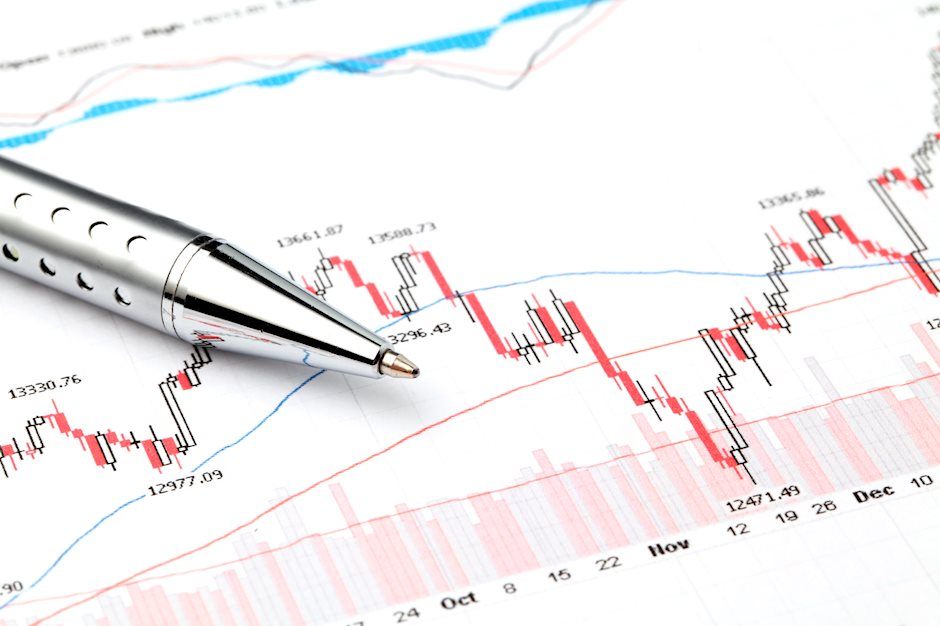

The world of forex is expanding at a rapid pace, and it’s essential that brokers continue to embrace cutting-edge reporting tools to ensure that clients continue to favor them in a congested marketplace.
2022 saw turnover in global foreign exchange (FX) markets reach $7.5 trillion per day, a seismic figure that’s 30 times greater than the daily global GDP. For such a vast accessible market, the opportunity for leading brokerages to reap the rewards of enhanced user traffic can be highly lucrative.
But forex is a largely competitive industry, with many different market players vying for a larger audience share both in terms of retail and institutional traders.
At present, there are an estimated 7,000 forex brokers active worldwide, so the battle to attract traders can be fiercely contested by other ambitious players.
So, how can brokers actively improve their ability to attract and retain clients? One of the most easy-to-implement strategies you can undertake is to focus on the quality of your reporting to help clients improve their performance and enjoy a better experience with your brokerage.
There are many ways in which this can help to impress your clients and ensure that you become a strong option to leverage their trades. With this in mind, let’s take a deeper look at how to supply clients with high-quality, actionable reports:
Finding value in reporting
Brokers need to offer a positive experience for their clients. The single most effective means for achieving this is through providing a user experience model that can help them improve their performance and achieve their desired results through trading.
Crucially, forex has long been recognized as a difficult industry to crack, particularly when it comes to retail investors. Although they only take up around 5.5% of the FX market, retail investors have experienced a vast number of losses when it comes to forex, with statistics suggesting that between 72% and 85.15% of various broker clients operate at a loss.
Of the industry’s top 10 online brokerages, available data suggests that the share of trader losses at Forex.com stands at 72%, IG Markets at 75%, Saxo Bank at 76%, Oanda at 76.6%, IC Markets at 77.16%, FX Pro at 84.6%, and Pepperstone at 85.12%.
This comprehensively underlines the difficulty that traders face when it comes to forex, and although institutions and professional traders are more dominant throughout the industry, the highly congested marketplace demands a level of agility that some professionals can struggle to maintain.
For an industry that’s littered with losses, reporting becomes of paramount importance. The best reporting tools can equip traders with detailed insights into their performance, emerging bad habits, where their winning streaks come from, and how they can improve their profit margins.
What’s more, is that embracing quality reporting and trader insights can help brokers to out-innovate their competitors. Today, many traders opt to use alternative measures or third-party solutions to gain insight into their activities.
Embedding all the necessary information to help clients improve in a one-click action can help you become a highly functional brokerage that offers an exceptional user experience.
Embracing cutting-edge reporting
In addressing the need for better reporting functionality within the world of FX trading, MetaQuotes has unveiled a major update to its flagship MetaTrader 5 platform.
The update has seen the company completely change its statistics section within its user terminals, providing each trader with their own bespoke tool for reporting and analyzing their trading history. The update means that clients will possess all the tools they need within a single platform, with no need to utilize third-party insights.
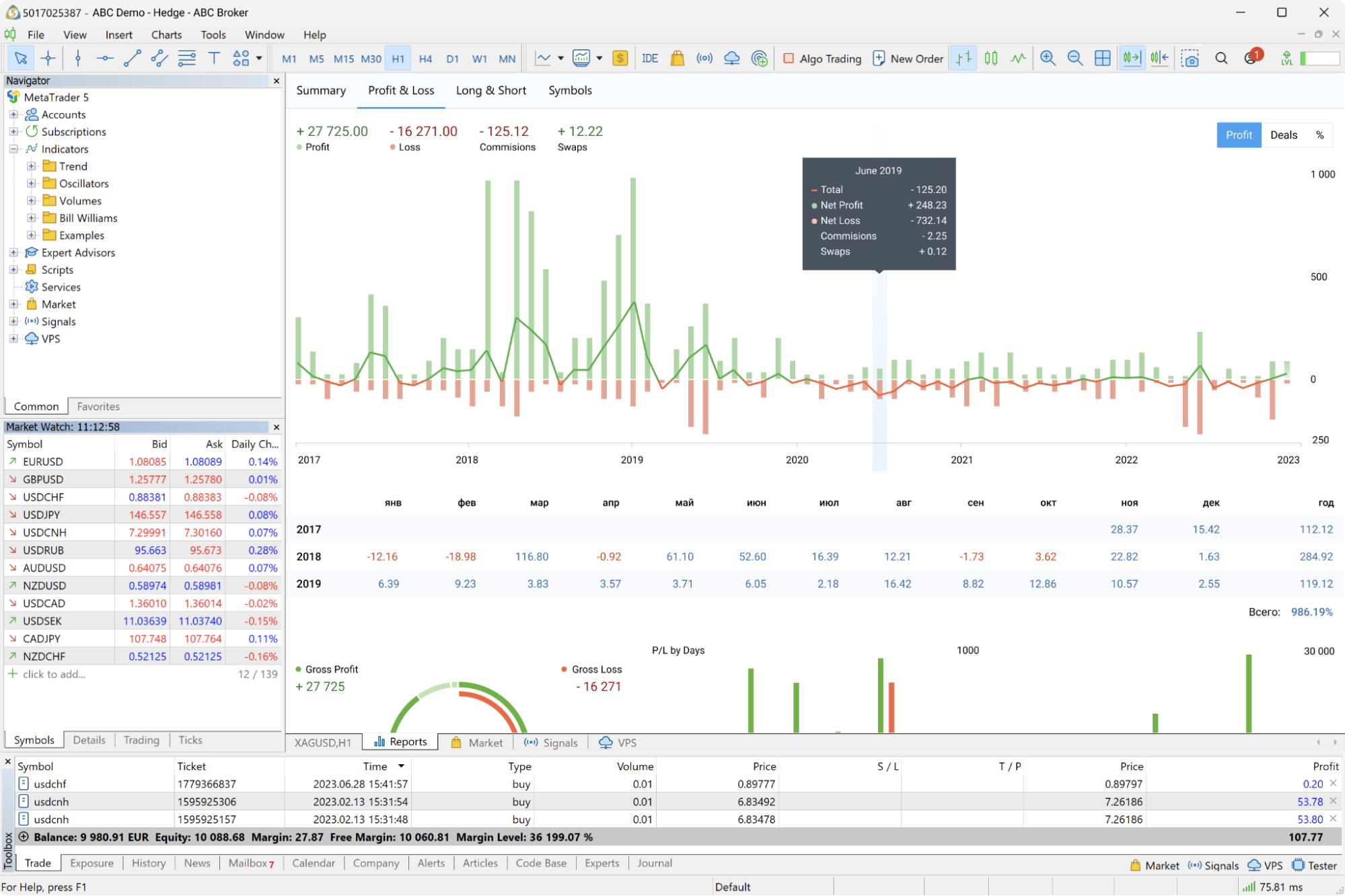
It now has a reports function that features a Summary page, and a brand new Profit & Loss section that offers a holistic view built on rich historical data covering profitable and loss-making trades.
The report also breaks performance down based on different forms of trading, including manual trades, copy trading, and algorithmic trading, and can be analyzed in terms of deals, percentages, money, or based on various time-frames.
It also includes the ratio of the number of trades, comparison of different types of trade, and historical data spanning individual symbols or entire groups also help traders break their history down by different symbols to get to the bottom of their performance.
This update is set to provide fresh account overviews for traders, with end-to-end filters available, and the ability for users to select partial information to scrutinize in greater detail across different tabs.
For instance, a user can choose to analyze the profitable trading operations for the symbols EUR/USD and GBP/USD made by trading bots or comb through manual trading actions concerning the pairs.
Bringing the ‘wow factor’ to your platform
For brokorages, utilizing trading reports can provide their clients with a free and value-adding resource that can help to establish themselves as a key industry player and reliable partner.
Crucially, efficient reporting tools can help to leverage a better client-focused approach to operations that can improve the quality of trading within the platform and alleviate the security risks that they may encounter by opting for third-party information sources to inform their trades.
Ultimately, these implementations can help to bring the ‘wow factor’ to client-focused brokerages, boosting their usability and supercharging client satisfaction.
Author
Dmytro Spilka
Solvid
Dmytro is a tech, blockchain and crypto writer based in London. Founder and CEO at Solvid. Founder of Pridicto, an AI-powered web analytics SaaS.