European open: Good news will be bad news

Stocks are down again, a legacy of a lights-out jobs report causing a stir along the interest rates to curve, especially the several big wagers on the Fed rate reaching 6% after one man's markets amassed a social size position that will pay out a hefty $135 million if the Fed keeps the pedal to the metal until September.
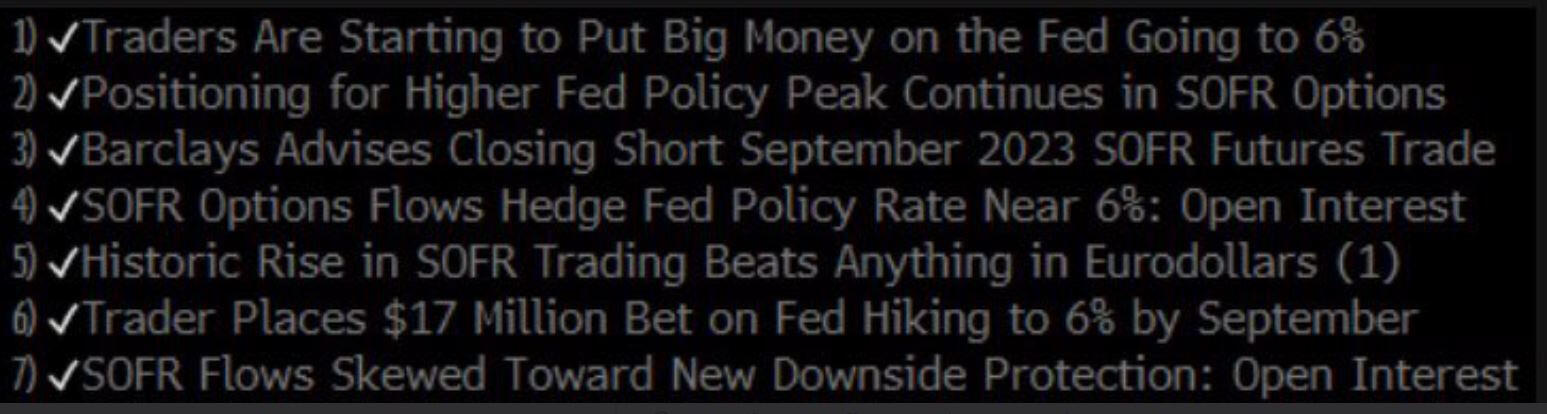
And with stock lower, it's easy to conclude that the Fed message was finally hitting home. But many are now re-engineering that 6 % SOFR trade, which could be one reason holding equities down. And on good timing supporting the latest "hawkish" mainstream narrative, a chorus of Fed hawks shared the same message: the fight against inflation is not yet won.
But as you might have noticed recently, stock pickers are not inclined to believe central banks when it comes to policymaker attitudinizing " the higher for longer pitch."
Still, this big 6 % trade has tongues wagging across the institutional space, and it even came across our desks where we theorize that in the wake of the NFP, where layoffs are usually quite prominent in the US in January, a model has rolled out NFP higher than expected through Q1 and further.
I would keep an eye on jobless claims.
While macro data remained relatively strong, supporting the rally in risky assets since the start of the year, investors are moving back into that frame of mind where " Good News " is "Bad News." especially on the Jobs front. In fact, towards the end of last year, equities had become very negatively correlated to labour market surprises, suggesting that labour market strength was bad news for risky assets, as it increased the risks of an extension of the hiking cycle; hence 2 years yields had a very positive correlation to labour market strength.
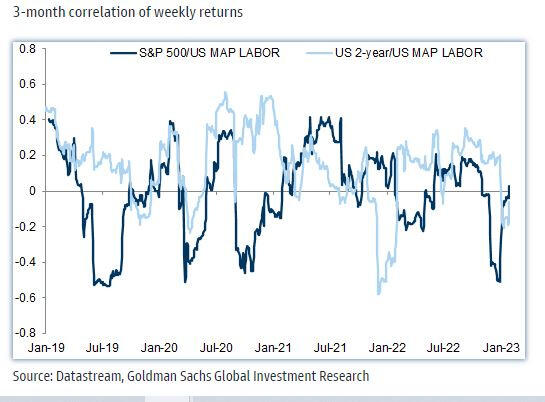
So the story of the " good news is bad news" doom loop goes. And places far more focus on the economic data rather than the Fed. Well, at least that is our take.
Author
Stephen Innes
SPI Asset Management
With more than 25 years of experience, Stephen has a deep-seated knowledge of G10 and Asian currency markets as well as precious metal and oil markets.