EUR/USD Weekly Forecast: US inflation and EU turbulence hint at further slides
- The US Consumer Price Index decreased by less than anticipated, the Fed in the same path.
- Europe is facing turmoil as tensions loom with Russia as covid cases rise.
- EUR/USD ended the week as it started, is still en route to fresh yearly lows.


The EUR/USD pair is flat for the week and trading at around 0.9730 heading into the close. Generally speaking, volatility remained subdued throughout the first half of the week as market players awaited first-tier US events. The different announcements triggered some wild moves across financial boards but fell short of affecting the USD trend.
US Federal Reserve and inflation
Tensions mounted ahead of the FOMC Meeting Minutes and the US Consumer Price Index, as inflation and central banks’ efforts to control it have been the main theme for most of the year. The US Federal Reserve (Fed) offered some well-known hawkish rhetoric, which had no impact on EUR/USD. Policymakers repeated they are determined to maintain the restrictive monetary policy to control elevated inflation. A bit more hawkishness came from officials saying that once they reach what they consider a restrictive level, “it would be appropriate to keep it there for a period of time.”
Regarding inflation, the US CPI soared by 9.1% YoY in June, reaching a multi-decade high and forcing the US Fed to maintain the 75 bps per meeting hike pace. In September, the annual inflation figure hit 8.2%, easing for a third consecutive month but missing the market’s expectations of 8.1%. However, the core price index, which excludes volatile food and energy prices, jumped to 6.6% YoY, a fresh multi-decade high.
The announcement unwound crazy price action, initially sending EUR/USD to a fresh weekly low, from where it jumped to fresh weekly highs. Investors panicked and rushed away from high-yielding assets, resulting in US indexes plummeting to fresh yearly lows. Nevertheless, and as investors realized the Fed would not change its planned path, the USD lost steam. Wall Street soared, while EUR/USD advanced roughly 200 pips in a matter of hours.
European Union’s suffering increases
European news was far less encouraging. The Union is facing an escalation of tensions between Russia and Ukraine, with massive attacks from Moscow on its neighboring country and menaces of a potential third-world war should Ukraine join NATO. The ongoing war led to Russia cutting off its gas provision to the Old Continent, now struggling with soaring prices and shortages ahead of the winter.
Out-of-control inflation is also a thing in Europe. This past week, Germany confirmed annual inflation was up by 10.9% in September, in its EU-harmonized version. But contrary to what the Fed is doing, the European Central Bank (ECB) is taking quantitative tightening with loads of salt. The ECB pulled the trigger by 75 bps in September, but it is likely to be an exception rather than the rule. So far this year, the central bank has delivered two rate hikes totalling 125 bps, well below the Fed’s 300 bps. The Fed and the ECB will have two more monetary policy meetings each before year-end.
To top it all, the EU is suffering from a new coronavirus wave. So far, governments have taken no measures but reinforced their vaccination campaigns and warned caution ahead of winter. Germany has reintroduced rules relating to the use of masks in public transportation and in the health system. Further measures are under analysis, including regular tests and a more generalized mask mandate.
A pause in first-tier events
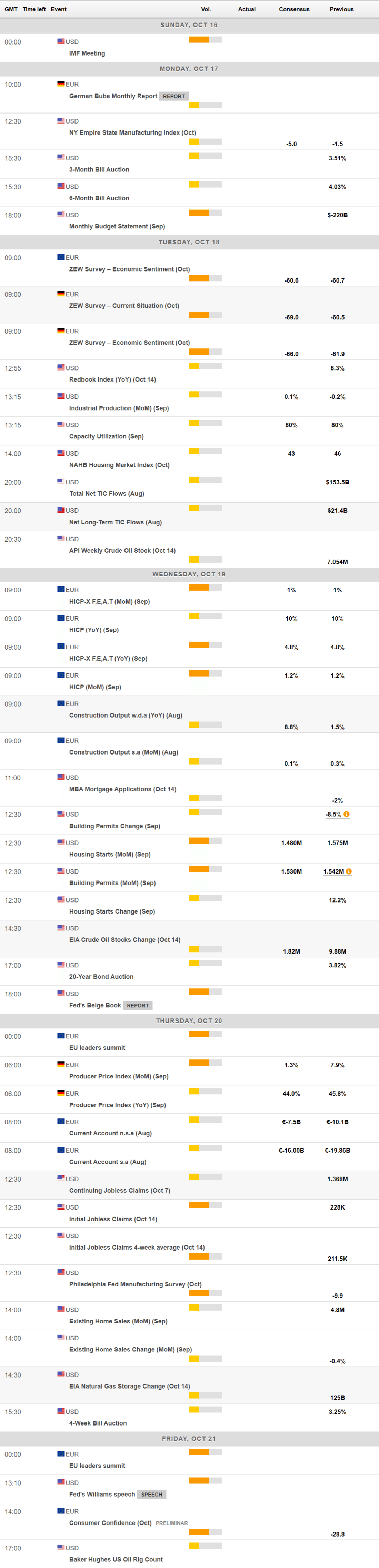
The European Union has some interesting data scheduled for the upcoming week. Germany will release the October ZEW Survey on Economic Sentiment, while the EU will unveil the final reading of its September Consumer Price Index. The country will also publish October Consumer Confidence, previously at -28.8. The US macroeconomic calendar does not include relevant events, but some minor reports that could hint at the country’s economic health.
EUR/USD technical outlook
The macroeconomic scenario provides little material for a EUR/USD rally. But what about the technical one?
Well, the weekly chart shows that the pair has posted a lower low and a lower high, usually understood as a bearish sign. Technical indicators remain within negative levels, with the Momentum correcting upwards but the RSI grinding lower at around 29. The same chart shows that the pair remains below a descending trend line coming from this year's high at 1.1494, currently at around 0.9990, while the 20 SMA keeps running parallel to the trend line, a handful of pips above it, reflecting persistent selling interest.
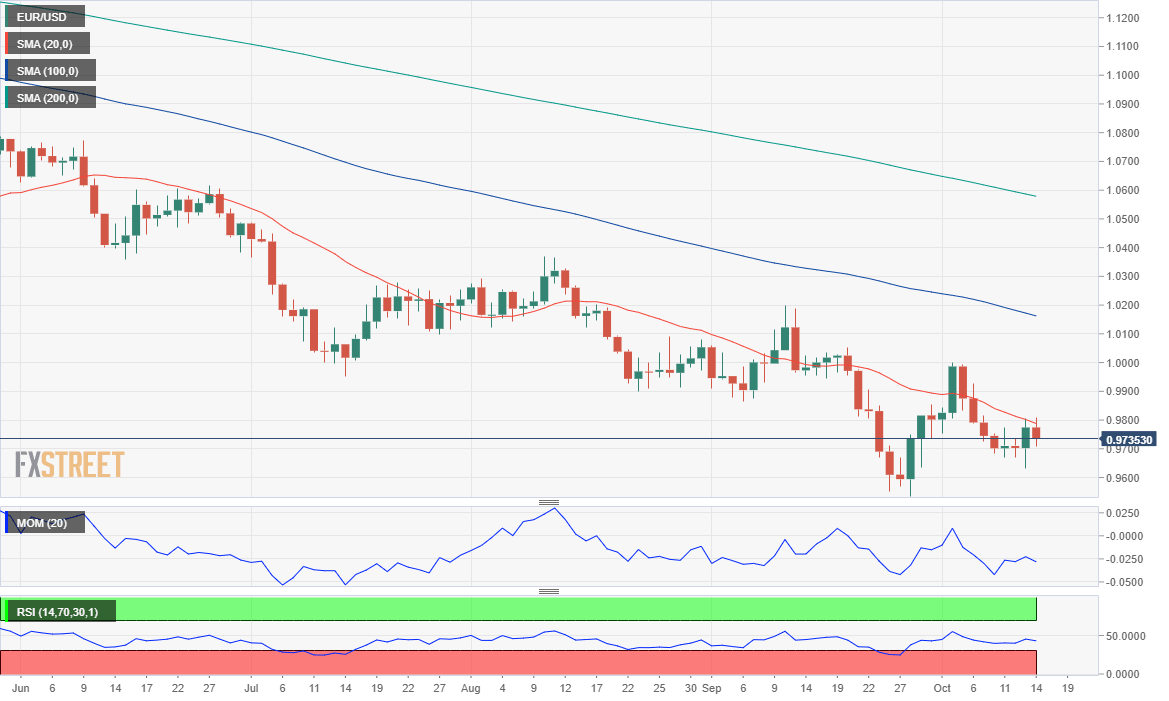
The daily chart shows that over the last few days, sellers appeared around a bearish 20 SMA, currently at around 0.9790. The longer moving averages keep heading south above it, in line with the dominant trend. At the time being, the Momentum indicator remains within positive levels with a modest bullish slope, but the RSI indicator already heads lower below its midline, skewing the risk to the downside without confirming it.
A steeper decline could come on a break below the weekly low at 0.9630, aiming then for a test of the 2022 low at 0.9535. Below the latter, the next relevant support level and a potential bearish target is the 0.9400 figure. Steady gains above 0.9800 may trigger a corrective advance, although the closer the pair gets to the aforementioned trend line, the higher the chances of a substantial pullback.
EUR/USD sentiment poll
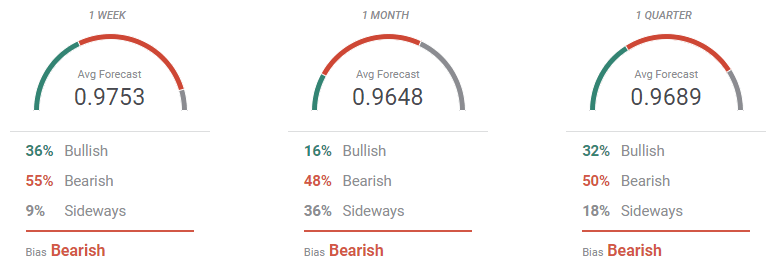
According to the FXStreet Forecast Poll, EUR/USD will likely resume its decline next week, as the majority of the polled experts are bearing on lower levels. Such sentiment extends in the monthly and quarterly views. On average, the pair is seen holding above 0.9700 in the near term but below the level afterward, which increases chances of a break through 0.9535, the multi-year low posted this month.
The Overview chart shows that the near-term moving average lacks clear directional strength, as the potential targets are more or less evenly split and not far away from the current price zone. However, the longer moving averages offer bearish slopes, with the clearest being the monthly one. The same chart shows that most targets in the three-month view accumulate between 0.9200 and 0.9800, in line with a breach of the 2022 yearly low.
Premium
You have reached your limit of 3 free articles for this month.
Start your subscription and get access to all our original articles.
Author
Valeria Bednarik
FXStreet
Valeria Bednarik was born and lives in Buenos Aires, Argentina. Her passion for math and numbers pushed her into studying economics in her younger years.