EUR/USD Weekly Forecast: Trade talks and US inflation coming next
- The European Central Bank delivered a hawkish cut, temporarily boosting the Euro.
- An upbeat US Nonfarm Payroll report fueled optimism ahead of the weekly close.
- EUR/USD retains its long-term bullish potential, aiming to conquer 1.1600.

The EUR/USD pair flirted with the 1.1500 threshold in the first week of June, finally settling at around 1.1400, erasing a good bunch of its latest gains.
Trading was choppy throughout the first half of the week, as market players were concerned about global trade negotiations while waiting for first-tier events. Thursday was D-Day, with the European Central Bank (ECB) announcing its monetary policy decision and United States (US) President Donald Trump engaging in a new political drama.
Trump and the now former leader of the Department of Government Efficiency (DOGE), Elon Musk, engaged in a battle of egos that put markets in risk-off mode ahead of the release of the US May Nonfarm Payrolls (NFP) report on Friday.
US woes and employment data
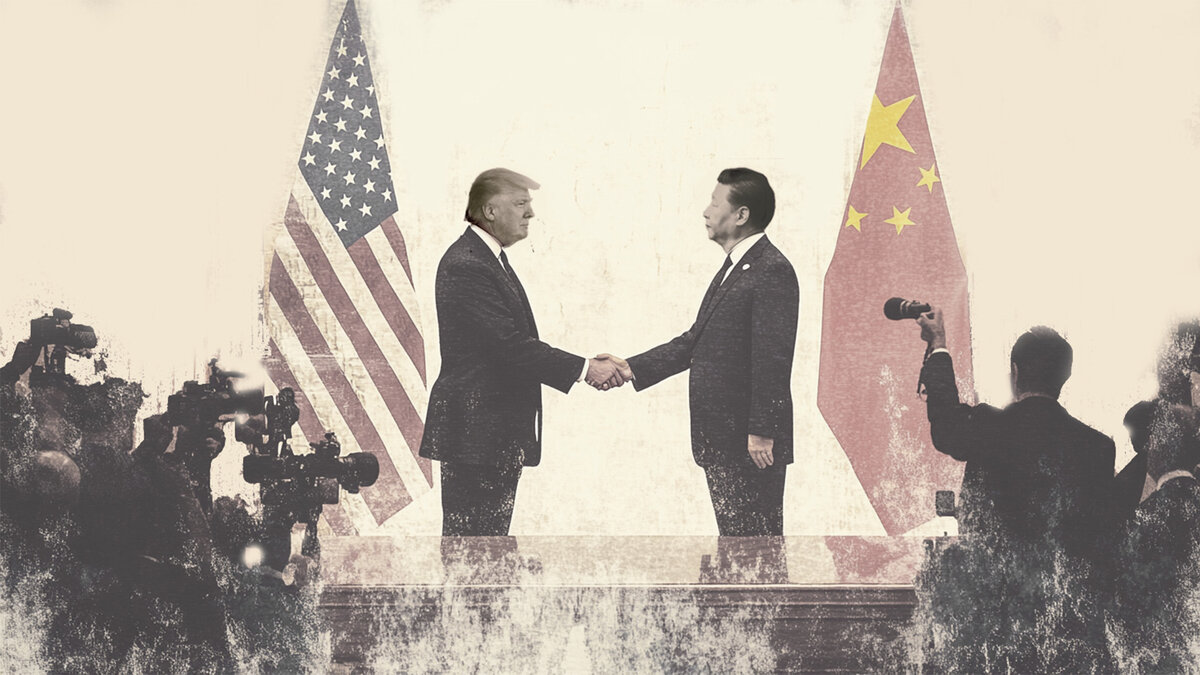
Tensions between China and the US dominated headlines after Trump announced the country will double its current tariff rate on steel and aluminium imports from 25% to 50%, starting on Wednesday. The Chinese Commerce Ministry quickly responded by threatening countermeasures amid Trump’s decision “seriously violating” the truce agreed last month. “The US government has unilaterally and repeatedly provoked new economic and trade frictions, exacerbating uncertainty and instability in bilateral economic and trade relations,” the minister stated.
Concerns cooled down after Trump spoke with Chinese President Xi Jinping on Thursday and agreed to resume the dialogue. On Friday, White House Trade Advisor Peter Navarro anticipated that the meeting between representatives from both countries would take place within seven days.
Also in the last trading day of the week, the US released the May Nonfarm Payrolls report. Figures were upbeat, as the country added 139K new job positions in May, more than the 130K anticipated, while the Unemployment Rate held steady at 4.2%. Additionally, annual wage inflation, as measured by the change in the Average Hourly Earnings, remained unchanged at 3.9%, surpassing the market forecast of 3.7%.
The upbeat figures, coupled with US-China trade talk “progress,” boosted Wall Street while providing near-term support to the USD.
Meanwhile, the social media battle between Trump and Musk scared speculative interest. Tensions started when Trump’s ‘One Big Beautiful Bill’ passed the House and moved to the Senate, as Musk considers it a “disgusting abomination.” Musk left his government position initially quietly, but after Trump said he was “very disappointed” in Elon Musk, Musk responded by saying in a post on X that “without me, Trump would have lost the election.”
Things continue to escalate late on Thursday, with Trump threatening to terminate Musk's governmental subsidies and contracts. Musk said then that SpaceX will decommission its Dragon spacecraft, which is used to transport crews to and from the space station, immediately.
Ahead of the close, the history has a big question mark at the end.
European Central Bank hawkish cut
The ECB announced it trimmed its benchmark interest rates by 25 basis points (bps) on Thursday, as widely anticipated. The accompanying statement shed no new light on monetary policy, but President Christine Lagarde dropped some hawkish headlines within her press conference that underpinned the EUR.
Lagarde noted that the ECB is close to the end of a monetary policy cycle and sounded confident about economic progress, despite the uncertainty related to the ongoing US-triggered trade war.
In fact, European policymakers don’t believe trade-war-related inflation could be an issue. Policymaker Mario Centeno said on Friday that the tariffs imposed by the US will have a deflationary effect in the Eurozone, per Reuters. He reinforced what Lagarde said a day before, namely, that further rate cuts will be decided meeting by meeting. Finally, he added that the downtrend of inflation could worsen until the beginning of next year, possibly approaching the dangerous level of 1%.
More drama, less data
Trading in the upcoming days will likely revolve around the Trump-Musk battle and US-China trade talks. Overall, the market sentiment will hardly be able to catch momentum, with definitions on tariffs out of the near-term horizon. Back-and-forth headlines should be expected, with the USD maintaining its prevalent weak tone.
On the data front, the US will release the May Consumer Price Index (CPI) on Wednesday, expected to remain unchanged at 2.3% on a yearly basis. Germany will also post an inflation update, publishing the May Harmonized Index of Consumer Prices (HICP) on Friday. Finally, the US will unveil the June Michigan Consumer Sentiment Index, previously at 52.2.
EUR/USD technical outlook
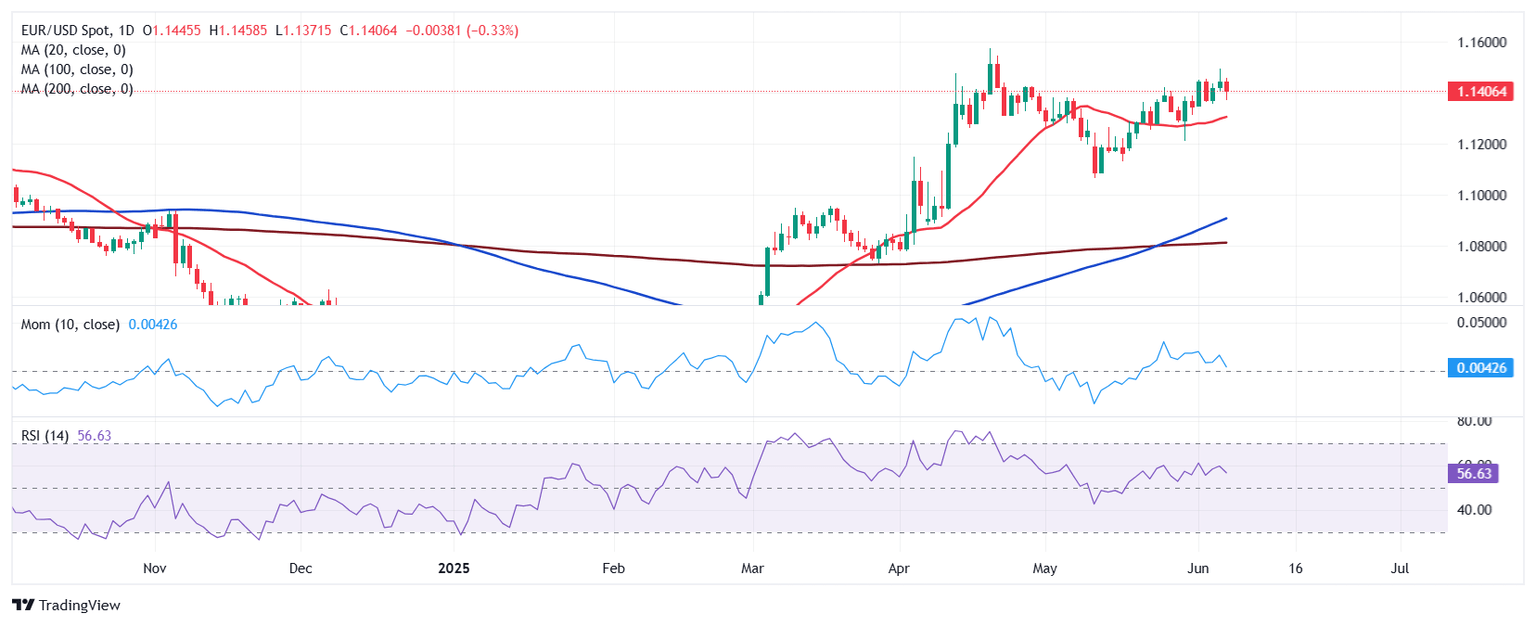
From a technical point of view, EUR/USD retains its long-term bullish stance. In the weekly chart, the pair keeps developing above all its moving averages, with a firmly bullish 20 Simple Moving Average (SMA) accelerating north above converging 100 and 200 SMAs. Technical indicators, in the meantime, hold near overbought readings with modest upward slopes.
The daily chart for the EUR/USD pair shows an easing bullish momentum, but buyers retain the grip. A mildly bullish 20 SMA provides support at around 1.1290, while the 100 SMA extends its advance beyond the 200 SMA far below the shorter one. Finally, technical indicators have turned modestly lower, but remain well above their midlines, hinting at limited selling interest.
The 1.1470/80 area provides resistance ahead of 1.1573, the year’s high. Beyond the latter, the rally can continue towards the 1.1650 price zone. 1.1380 provides near-term support ahead of the 20-day SMA at 1.1290. A bearish breakout exposes the 1.1160 region.
US-China Trade War FAQs
Generally speaking, a trade war is an economic conflict between two or more countries due to extreme protectionism on one end. It implies the creation of trade barriers, such as tariffs, which result in counter-barriers, escalating import costs, and hence the cost of living.
An economic conflict between the United States (US) and China began early in 2018, when President Donald Trump set trade barriers on China, claiming unfair commercial practices and intellectual property theft from the Asian giant. China took retaliatory action, imposing tariffs on multiple US goods, such as automobiles and soybeans. Tensions escalated until the two countries signed the US-China Phase One trade deal in January 2020. The agreement required structural reforms and other changes to China’s economic and trade regime and pretended to restore stability and trust between the two nations. However, the Coronavirus pandemic took the focus out of the conflict. Yet, it is worth mentioning that President Joe Biden, who took office after Trump, kept tariffs in place and even added some additional levies.
The return of Donald Trump to the White House as the 47th US President has sparked a fresh wave of tensions between the two countries. During the 2024 election campaign, Trump pledged to impose 60% tariffs on China once he returned to office, which he did on January 20, 2025. With Trump back, the US-China trade war is meant to resume where it was left, with tit-for-tat policies affecting the global economic landscape amid disruptions in global supply chains, resulting in a reduction in spending, particularly investment, and directly feeding into the Consumer Price Index inflation.
Premium
You have reached your limit of 3 free articles for this month.
Start your subscription and get access to all our original articles.
Author
Valeria Bednarik
FXStreet
Valeria Bednarik was born and lives in Buenos Aires, Argentina. Her passion for math and numbers pushed her into studying economics in her younger years.

















