EUR/USD subdued by data: Chances of Fed rate hike diminish

EUR/USD moved slightly lower on Friday, drifting to 1.1439.
Weaker-than-expected US inflation data led markets to scale back expectations of an imminent Federal Reserve rate hike. At the same time, escalating US-Iran tensions continue to sustain inflationary concerns.
The United States has launched several strikes against Iran this week, while Tehran has responded with attacks on US bases in neighbouring countries.
US consumer inflation came in softer than forecast in June, while producer prices unexpectedly fell. Retail sales increased in line with expectations: lower petrol prices reduced gas station revenues, while spending from car dealers and online retailers remained stable.
The number of initial jobless claims fell to a two-month low of 208,000. Markets have now all but ruled out a Fed rate hike in July, though views remain mixed on the possibility of a move in September.
Technical analysis
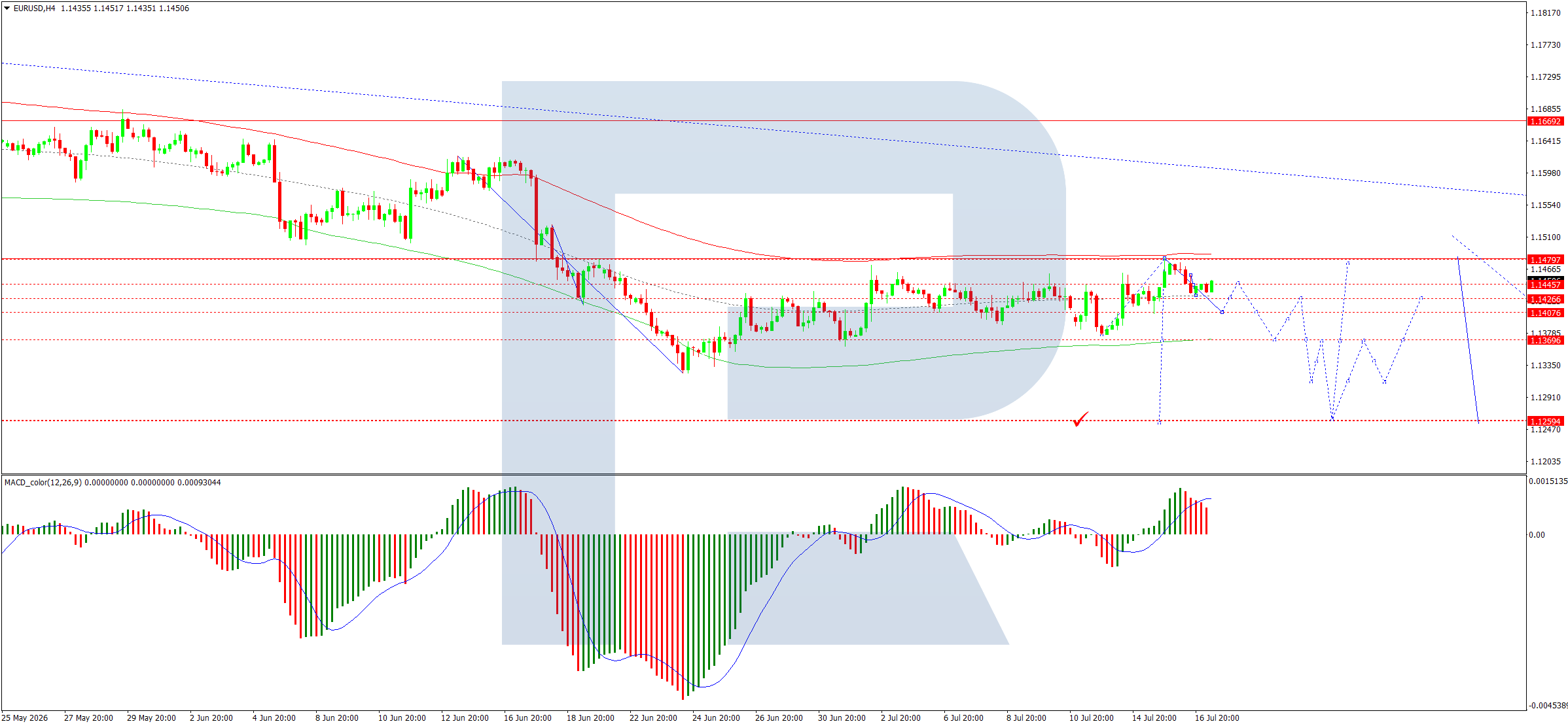
On the H4 chart of EUR/USD, the market has formed a consolidation range around the 1.1458 level, currently extending down to 1.1430 and up to 1.1455. A consolidation range around this level is practically complete. An upside breakout would suggest a corrective wave developing to 1.1465, followed by a decline to 1.1260. A direct downside breakout would open potential for a downward wave to 1.1260. Technically, this scenario is confirmed by the MACD indicator-its signal line is above zero but pointing strictly downwards, reflecting continued bearish momentum with the potential for the trend to continue lower.
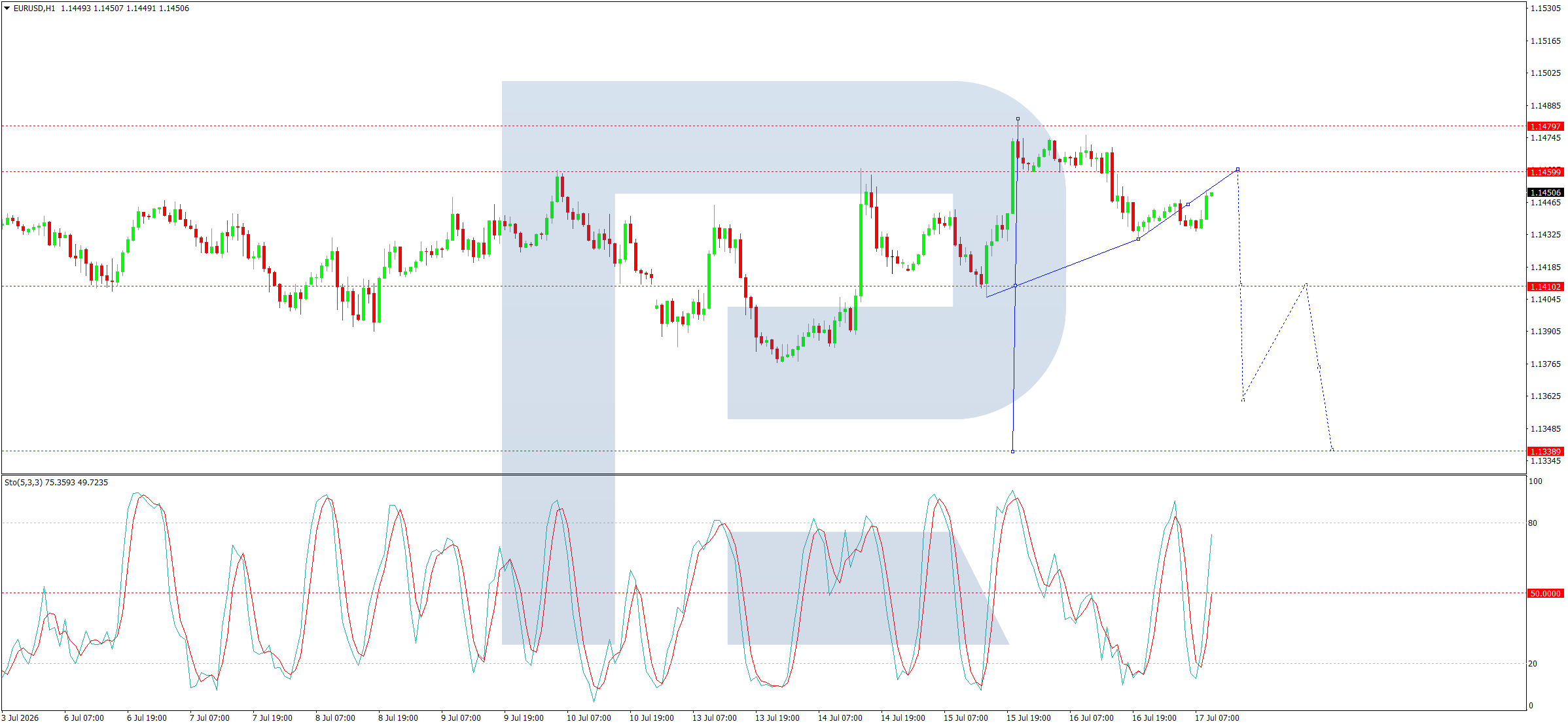
On the H1 chart, the market has completed the next downward wave to the 1.1430 level. A consolidation range is currently forming above this level. Today, a range expansion up to 1.1455 and down to 1.1400 is expected, followed by a decline to 1.1260. Technically, this scenario is confirmed by the Stochastic oscillator-its signal line is above the 20 level and pointing strictly upwards to 80.
Conclusion
EUR/USD is drifting lower on Friday as markets digest a mixed bag of US data. Softer-than-expected inflation figures-with consumer prices easing and producer prices unexpectedly falling-have reduced the likelihood of an imminent Fed rate hike. However, escalating US-Iran tensions continue to underpin inflationary fears, adding a layer of complexity to the policy outlook. Retail sales met expectations, with lower petrol prices offset by stable spending elsewhere, while jobless claims fell to a two-month low. Markets have priced out a July hike but remain divided on September. Technically, the bearish outlook for EUR/USD remains intact, with downside potential towards 1.1260 in the medium term, though near-term consolidation around current levels is possible.
Author

RoboForex Analysis Department
RoboForex
RoboForex Analysis Department provides timely market insights, expert technical analysis, and actionable forecasts across forex, commodities, indices, and equities.