|

Burnham picks Mahmood, whilst UK GDP beats
At one point, odds aggregators had Ed Miliband at a 68% chance of becoming Chancellor by the end of this week, only for Burnham to reluctantly appoint the more fiscally stayed Shabana Mahmood. A relief rally of 1.44% commenced in GBPUSD as concern regarding the UK’s future fiscal stability melted away. Quite the coup by Burnham, who also has been gifted a very rare beat in UK GDP, printing at 0.8% following a revision for the three months ending in May.

Naturally, UK GDP figures are suffering from a lack of credibility with strong beats always materialising in the first half of the year only to be trailed off by near 0 levels of growth in the second half.
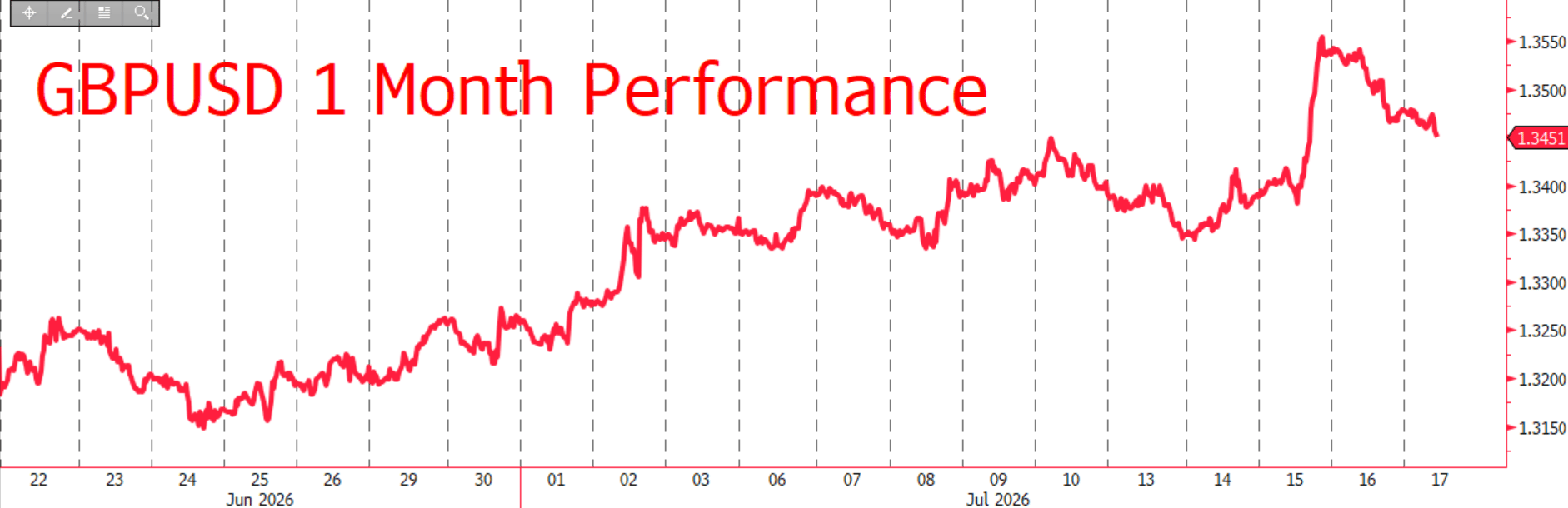
GBPUSD

With the Fed seeming more reluctant to travel the hawk’s path and the ECB taking a similar stance, the BoE’s stayed attitude isn’t hurting the Pound as badly as it used to.

Still, there is not a real abundance of reasons to be overly bullish Sterling in the medium term, the energy price cap will continue to flatten out CPI increases and the BoE is still concerned about the UK labour market. The British economy has added, net, -155,000 jobs since November of 2024, not exactly an economy straining at its slips.

Sarah Breedon, deputy Governor of the BoE, said today that the softness within the UK economy cuts the risk of a spike in CPI. There is very little the Pound can do to escape being enveloped by broad Dollar movements, especially given the clarity in the BoE’s medium term outlook.

Author

David Stritch

Working as an FX Analyst at London-based payments provider Caxton since 2022, David has deftly guided clients through the immediate post-Liz Truss volatility, the 2020 and 2024 US elections and innumerable other crises and events.


More from David Stritch
Share:

Editor's Picks

AUD/USD keeps the red near 0.6950 after weak Aussie jobs data

AUD/USD holds losses near 0.6950 on disappointing Australian jobs data, extending the previous day's retracement slide from the monthly high and hitting a fresh weekly low during Thursday’s Asian session. Meanwhile, declining US bond yields drag the US Dollar away from the April 2025 high, touched after Wednesday's hot US CPI, helping limit losses for the currency pair.

USD/JPY slides back below 158.00 as USD reverses post-CPI gains

USD/JPY extends the previous day's pullback from a three-week high, attracting follow-through selling and sliding below 158.00 during Thursday's Asian session. Traders remain on high alert amid speculation that authorities will step in to prop up the Japanese Yen. The US Dollar, meanwhile, reverses Wednesday's hot CPI-led gains to April 2025 highs as US bond yields retreat on China bond-buying talk, further pressuring the pair.

Gold pares intraday gains, trades below $4,150 as Fed hike bets cap upside

Gold struggles to capitalize on its strong Asian session move up on Thursday and currently trades below $4,150. The commodity, however, retains an intraday bullish bias, snapping a three-day losing streak to a one-week low, touched on Wednesday, amid a broadly weaker US Dollar (USD). 

Zcash declines as US inflation surprise offsets fresh ETF inflows
Zcash (ZEC) is trading in the red on Friday, extending its previous day’s roughly 6% losses as the broader cryptocurrency market falls on rising US inflation. The US Consumer Price Index (CPI) print came in higher than expected, at an annual increase of 3.7% versus the expected 3.6%, raising concerns about inflation and rate hikes.
China seems routing US Treasury holdings through Canada

According to a Bloomberg report, China seems to be moving United States securities to non-US custodian banks in other countries, masking its role in financing US deficits.

Has Bitcoin really escaped the macro forces it was built to fight?
Over 17 years ago, Satoshi Nakamoto designed Bitcoin (BTC) on the back of a global financial crisis as an alternative to the global monetary system outside the control of central banks, governments and traditional intermediaries. This raises a key question: has Bitcoin really become independent of the macroeconomic forces it was built to challenge?















