|

EUR/USD pares losses after weak Eurozone PMIs

The euro edged lower on Wednesday but has recovered. In the North American session, EUR/USD is trading at 1.0860, up 0.07% on the day at the time of writing.

Eurozone PMIs weaker than expected

Eurozone PMIs can be viewed as monthly report cards for the services and manufacturing services. The July PMIs decelerated and indicate a bumpy eurozone recovery. The Services PMI eased to 51.9, down from 52.8 and shy of the market estimate of 53. It was a similar trend for the Manufacturing PMI, which dipped to 45.6, down from 45.8 in May and below the market estimate of 46.1. Manufacturing has now been in contraction territory for over two years and there doesn’t seem to be a light at the end of the tunnel, as global demand remains weak.

The PMI reports won’t set off alarm bells but points to sluggish growth for the eurozone. The year started off on an optimistic note as GDP climbed 0.3% in the first quarter q/q, up from -0.1% in the fourth quarter of 2023. There are signs that the second quarter won’t be able to keep pace and today’s soft PMIs reinforce that concern.

The European Central Bank took the plunge in June and cut interest rates, so it wasn’t a surprise that the ECB elected to hold rates last week. The markets are expecting more cuts before the end of the year and weak data such as today’s PMIs strengthen the case for a rate cut in the near term, which could inject some life into the economy. The ECB hasn’t provided any hints about rate cuts, although ECB President Lagarde noted at last week’s meeting that growth in the eurozone likely slowed in the second quarter.

EUR/USD technical

  • EUR/USD tested support at 1.0832 earlier. The next support level is 1.0812.

  • 1.0865 and 1.0885 are the next resistance lines.
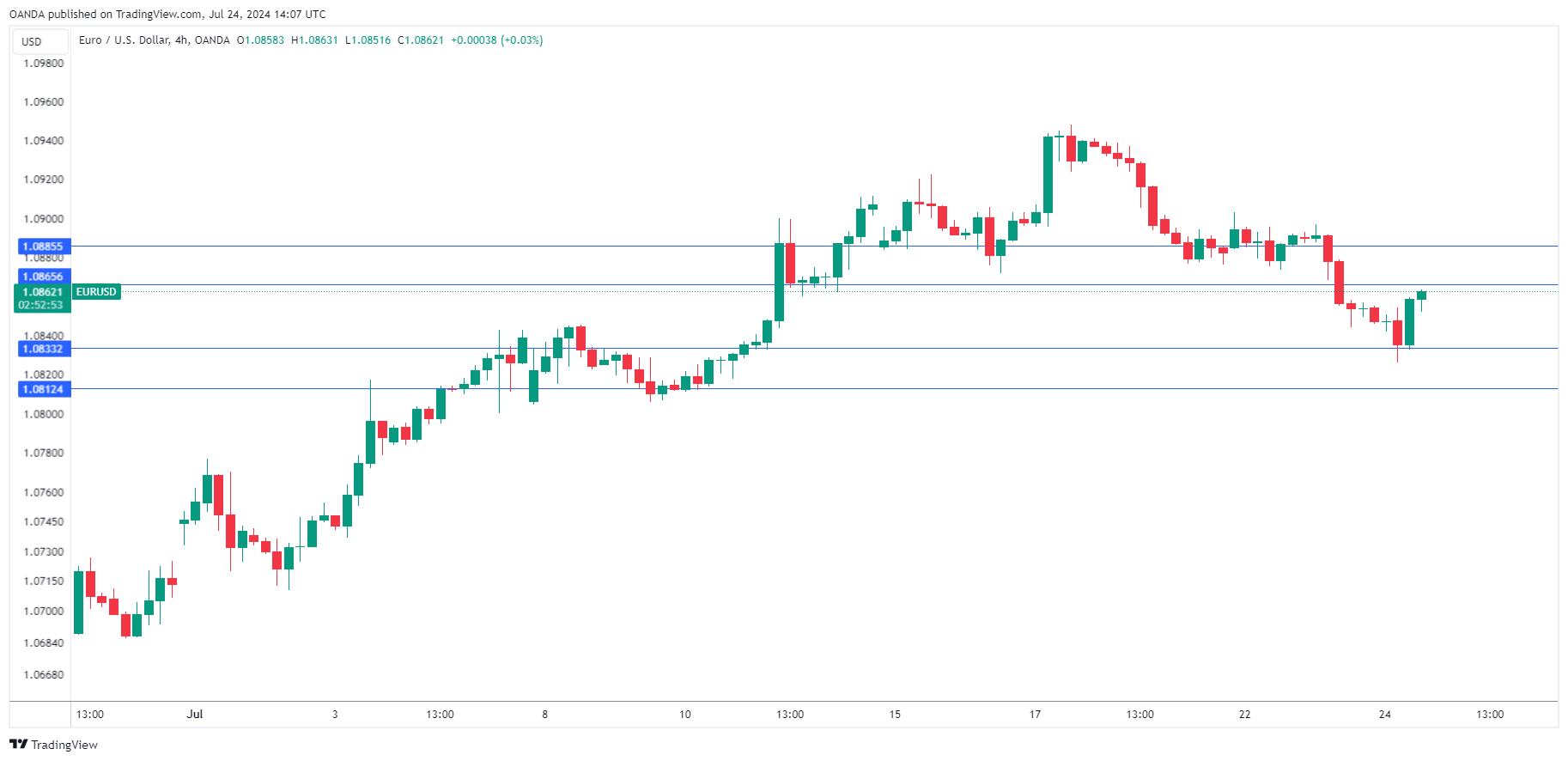
Chart

Author

Kenny Fisher

Kenny Fisher

MarketPulse

A highly experienced financial market analyst with a focus on fundamental analysis, Kenneth Fisher’s daily commentary covers a broad range of markets including forex, equities and commodities.


More from Kenny Fisher
Share:

Editor's Picks

EUR/USD flirts with daily highs, retargets 1.1900

EUR/USD regains upside traction, returning to the 1.1880 zone and refocusing its attention to the key 1.1900 barrier. The pair’s slight gains comes against the backdrop of a humble decline in the US Dollar as investors continue to assess the latest US CPI readings and the potential Fed’s rate path.

GBP/USD remains well bid around 1.3650

GBP/USD maintains its upside momentum in place, hovering around daily highs near 1.3650 and setting aside part of the recent three-day drop. Cable’s improved sentiment comes on the back of the Greenback’s  irresolute price action, while recent hawkish comments from the BoE’s Pill also collaborate with the uptick.

Gold clings to gains just above $5,000/oz

Gold is reclaiming part of the ground lost on Wednesday’s marked decline, as bargain-hunters keep piling up and lifting prices past the key $5,000 per troy ounce. The precious metal’s move higher is also underpinned by the slight pullback in the US Dollar and declining US Treasury yields across the curve.

Crypto Today: Bitcoin, Ethereum, XRP in choppy price action, weighed down by falling institutional interest 

Bitcoin's upside remains largely constrained amid weak technicals and declining institutional interest. Ethereum trades sideways above $1,900 support with the upside capped below $2,000 amid ETF outflows.

Week ahead – Data blitz, Fed Minutes and RBNZ decision in the spotlight

US GDP and PCE inflation are main highlights, plus the Fed minutes. UK and Japan have busy calendars too with focus on CPI. Flash PMIs for February will also be doing the rounds. RBNZ meets, is unlikely to follow RBA’s hawkish path.

Ripple Price Forecast: XRP potential bottom could be in sight

Ripple edges up above the intraday low of $1.35 at the time of writing on Friday amid mixed price actions across the crypto market. The remittance token failed to hold support at $1.40 the previous day, reflecting risk-off sentiment amid a decline in retail and institutional sentiment.













