|

EUR/USD amid slowing European economy

EUR/USD encountered significant pressure, testing a low of 1.0331 before rebounding to 1.0476, as market concerns mount over the potential economic slowdown in Europe and aggressive rate cuts by the European Central Bank (ECB).

Recent business surveys indicating an accelerated economic contraction in Germany and France have starkly dampened the euro’s outlook. Additionally, under the newly elected President Donald Trump’s administration, potential new trade duties from the US threaten to exacerbate Germany’s already fragile economic state. Trump’s protectionist stance could notably impact German industries, intensifying existing internal challenges.

Investors are bracing for a scenario where the ECB might implement rate reductions more swiftly than anticipated. At the same time, the Federal Reserve may hold steady, expanding the interest rate differential unfavourably against the euro.

This backdrop has led to heightened investor nervousness about the euro’s future, with further potential declines in EUR/USD not ruled out amidst ongoing uncertainties regarding the full pricing-in of these expectations.

Technical analysis of EUR/USD
EURUSD

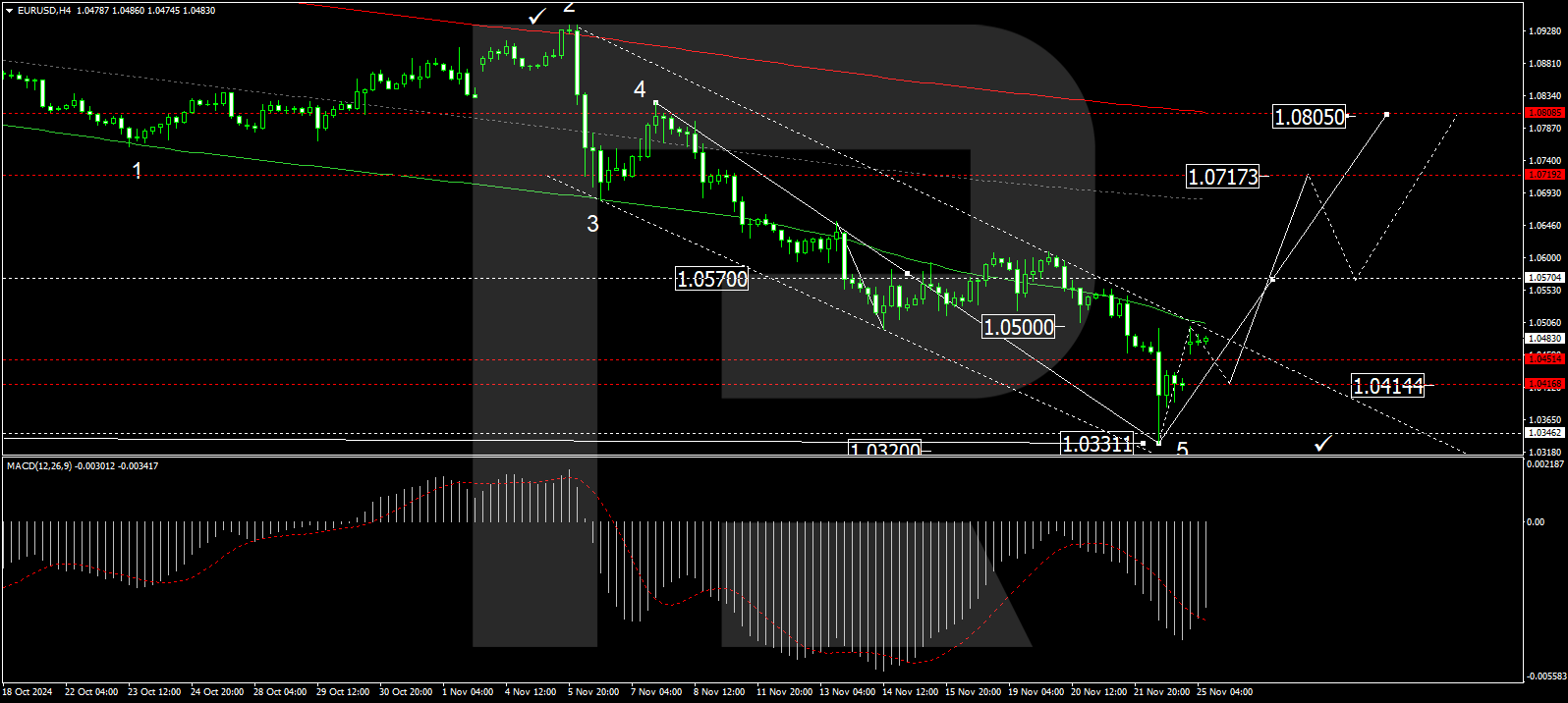
H4 chart: the EUR/USD has hit its projected low at 1.0331, subsequently initiating a rebound towards 1.0500. Upon reaching this level, a pullback to 1.0414 may occur. The market may form a consolidation range around 1.0414, with potential upward movements targeting 1.0570 and possibly extending to 1.0655. This EUR/USD outlook is supported by the MACD indicator, which suggests an impending rise from below the zero level.
eurusd

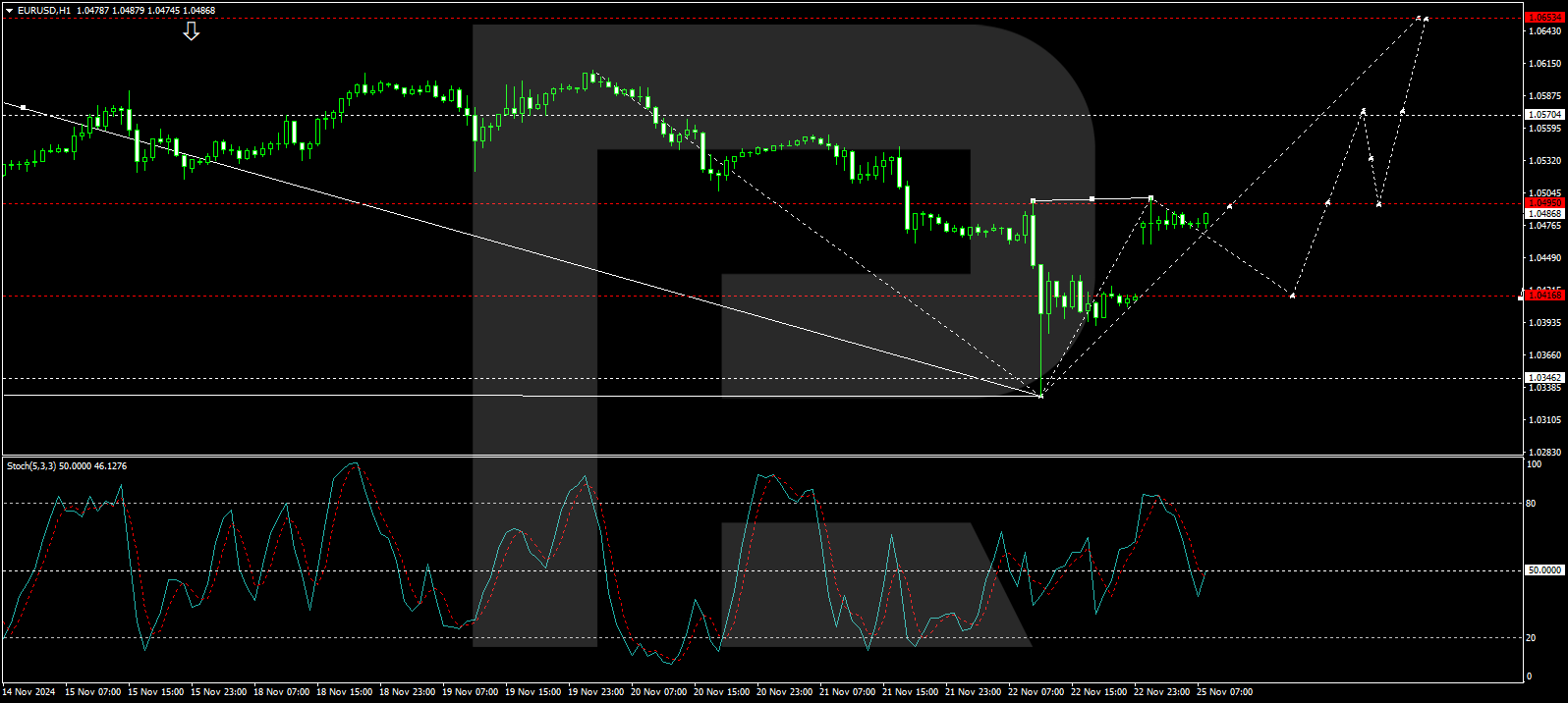
H1 chart: the pair is forming a rise to 1.0500, which is anticipated as an initial target. After this level, a corrective phase towards 1.0414 is expected, suggesting a test from above. The stochastic oscillator corroborates this view, indicating a readiness to descend from a mid-range position towards lower thresholds.

Author

Andrey Goilov

Andrey Goilov

RoboForex

Higher economic education. Andrey Goilov has been working on the Forex market since 2005. A financial analyst and successful trader. Preference in trading is highly volatile instruments.


More from Andrey Goilov
Share:

Editor's Picks

GBP/USD appears well offered near 1.3160

GBP/USD builds on Tuesday’s losses, although it now manages to pick up some pace and bounce off earlier multi-month troughs near 1.3140. The Greenback’s solid performance and continued political turmoil in the UK are keeping Cable under persistent pressure, with little sign of a meaningful recovery.

EUR/USD trims losses, hovers around 1.1350

EUR/USD now regains some composure and rebounds to the 1.1350 zone on Wednesday, partially reversing the prior pullback to fresh yearly lows near 1.1320. Meanwhile, spot remains on the back foot as the US Dollar continues to draw support from hawkish Fed expectations and uncertainty over the outcome of US-Iran peace negotiations.

Gold pressured near fresh 2026 lows

Gold accelerates its decline and gyrates around the key $4,000 mark per troy ounce on Wednesday, its lowest level since November 2025. In the meantime, tighter-for-longer Fed expectations and a broadly firmer US Dollar continue to weigh on the yellow metal, while uncertainty surrounding a potential US-Iran peace agreement has done little to revive demand for the safe haven space.

Crypto Today: Bitcoin, Ethereum, XRP trade under pressure as September Fed rate-hike odds increase

Bitcoin is trading between $62,000 and $63,000 at the time of writing on Wednesday, weighed down by headwinds stemming from macroeconomic uncertainty and geopolitical tensions in the Middle East.

2.25% rates and a wide discount: Why the Loonie isn't an Oil trade
The Loonie is trading at a 12-month low against the Greenback, and Oil is the only story the desk wants to tell about it. That story is wrong, or at least it answers the wrong question. Crude has unwound its war premium, the Canadian Dollar has slid, and the tidy read is that one dragged the other. The Loonie stopped trading the barrel months ago.
Regime change: Inside Kevin Warsh's first move to make the Fed unreadable on purpose

The rate did not move. That was the least interesting thing about Kevin Warsh's first meeting in charge of the Fed. The FOMC held its benchmark at 3.50%-3.75% for the fourth straight meeting, exactly as priced, and then the new chair used his first press conference to dismantle the machinery the market has leaned on for a decade.















