|

EUR/CAD bounces back: Reaction higher from blue box area
In this technical blog, we will look at the past performance of the 1-hour Elliott Wave Charts of EURCAD. In which, the rally from 02 September 2025 low unfolded as impulse sequence & showed a higher high sequence therefore, called for an extension higher to take place. We knew that the structure in EURCAD should remain supported & extend higher. So, we advised members not to sell the pair & buy the dips in 3, 7, or 11 swings at the blue box areas. We will explain the structure & forecast below:

EUR/CAD one-hour Elliott Wave chart from 9.19.2025
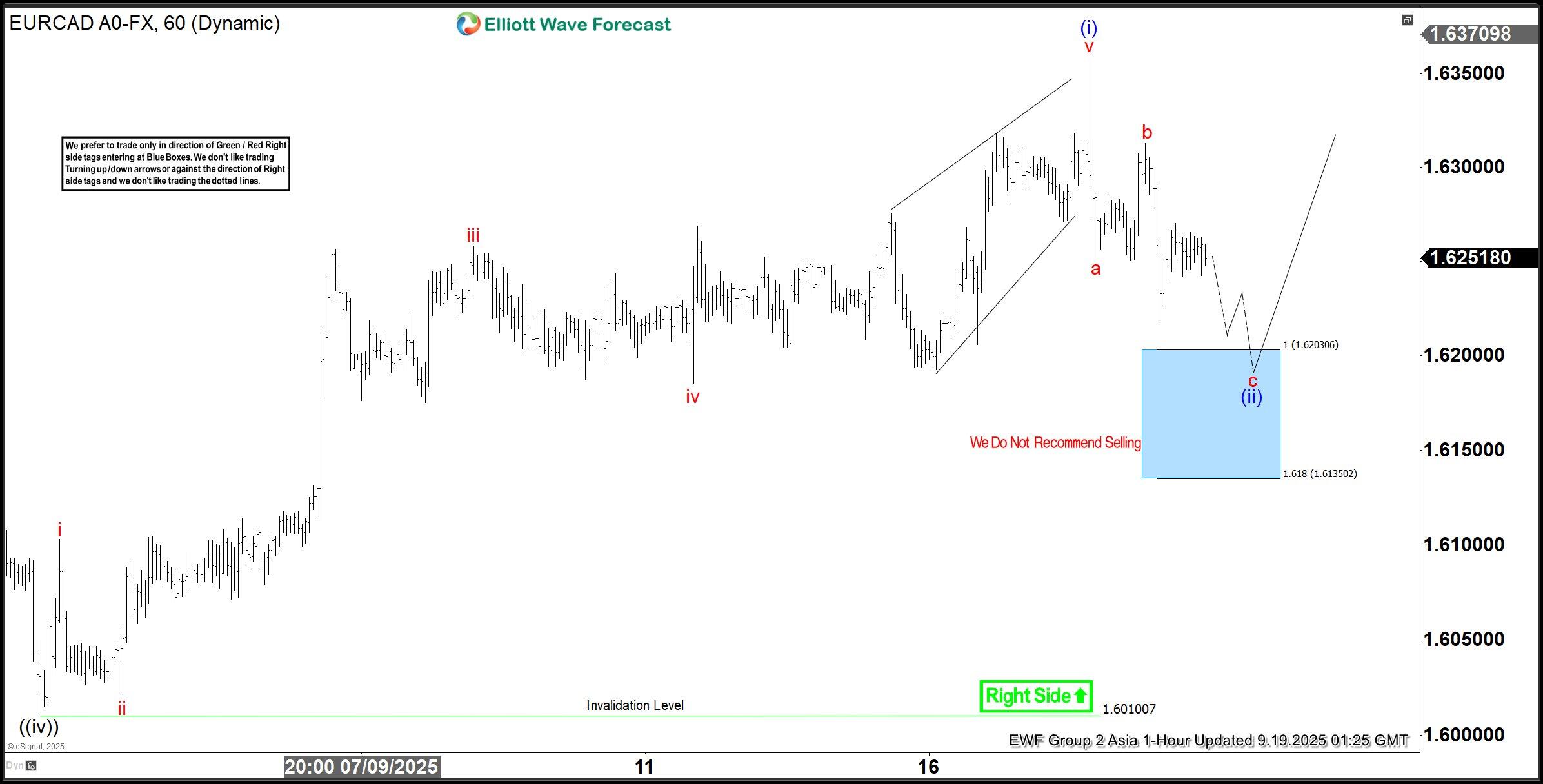
Here’s the 1-hour Elliott wave Chart from the 9.19.2025 Asia update. In which, the rally to 1.6359 high completed small wave (i) & made a pullback in wave (ii). The internals of that pullback unfolded as Elliott wave zigzag correction where small wave a ended at 1.6258 low. Then small bounce to 1.6313 high-ended small wave b. Then started the next leg lower in wave c towards 0.6203- 1.6135 blue box area. From there, buyers were expected to appear looking for new highs ideally or for a 3-wave bounce minimum.

EUR/CAD latest one-hour Elliott Wave chart from 9.29.2025
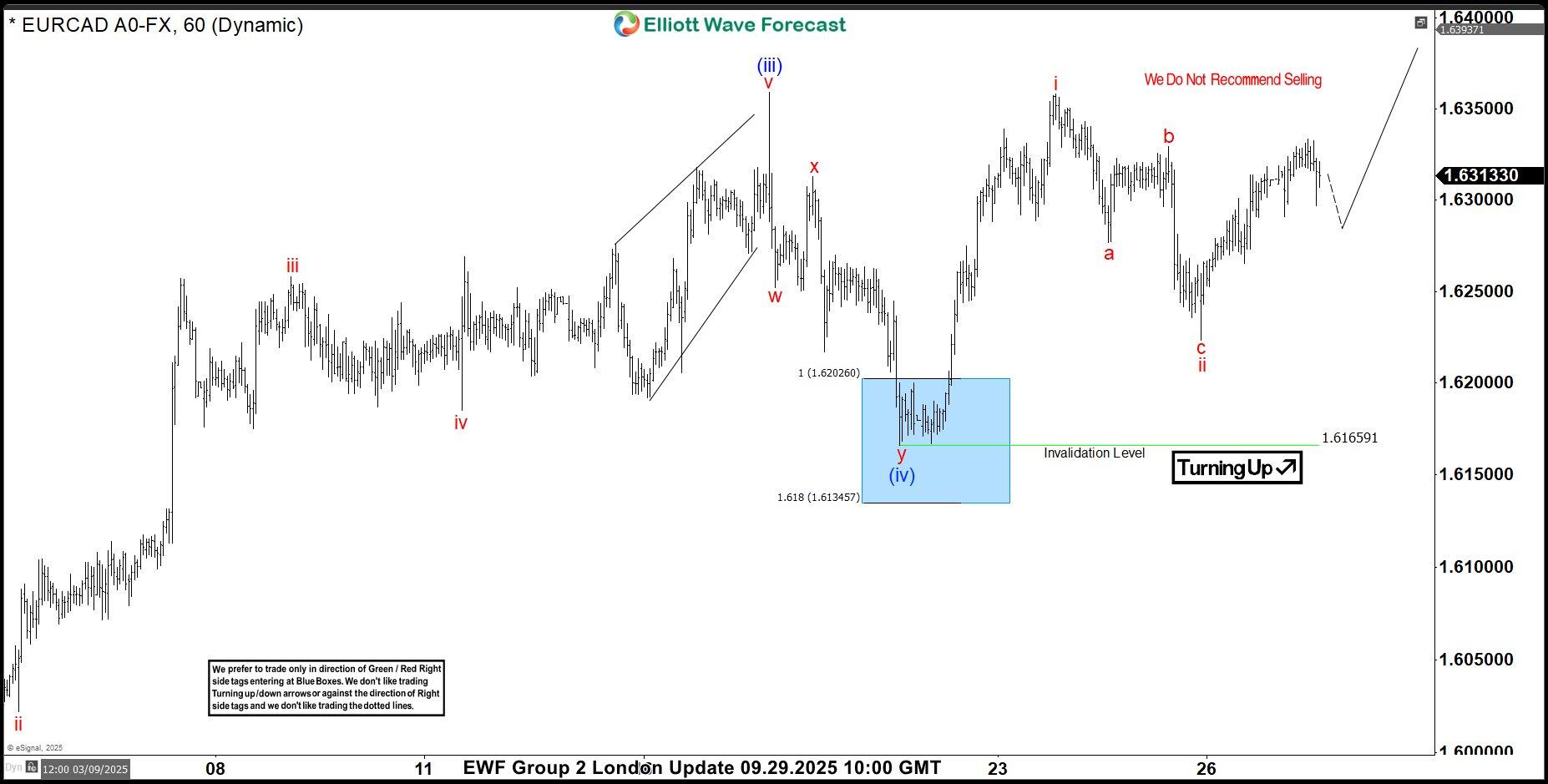
This is the latest 1-hour Elliott wave Chart from the 9.29.2025 London update. In which the pair is showing a strong reaction higher taking place, right after ending the correction within the blue box area. Allowed members to create a risk-free position shortly after taking the long position at the blue box area. However, a break above 1.6359 high is needed to confirm the next extension higher towards 1.6404- 1.6476 area minimum & avoid double correction lower.

Author

Elliott Wave Forecast Team

Elliott Wave Forecast Team

ElliottWave-Forecast.com

More from Elliott Wave Forecast Team
Share:

Editor's Picks

AUD/USD flatlines near 0.6965 as less hawkish RBA counters USD weakness

AUD/USD holds steady above a two-week low, trading near 0.6965 in the Asian session on Wednesday as early midterm election results heighten political uncertainty and weigh heavily on the US Dollar. Moreover, reviving safe-haven demand triggers a fresh leg down in US bond yields, offsetting Fed hike bets and exerting additional pressure on the buck. However, a less hawkish RBA caps the Aussie.

USD/JPY declines below 158.00 as USD weakens on midterm election results

USD/JPY comes under heavy selling pressure on Wednesday, dropping below 158.00 during the Asian session as the US Dollar slumps to a one-month low amid heightened political uncertainty after early US midterm vote counts. Moreover, the prospect of gridlock in Washington drives safe-haven flows, triggering a fresh leg down in US bond yields and further weighing on the buck.

Gold ticks lower while early trend points to Democrats victory in House

Gold trades with caution at around $3,930 in the Asian trading session on Wednesday. The precious metal struggles to gain direction as investors shift their focus to United States Midterm elections where early trend shows that Democrats would have a clear majority in House of Representatives.

Bitcoin tests critical support, Ethereum struggles below resistance, XRP extends losses
Bitcoin (BTC), Ethereum (ETH) and Ripple (XRP) remain under pressure on Wednesday as bearish momentum continues to weigh on prices. BTC approaches key support around $76,466, and a decisive close below could open the door to deeper losses. Meanwhile, ETH struggles below key resistance while XRP faces rejection at the upper trendline of a falling channel pattern, all hinting at deeper losses.
US Dollar Index dives to late September lows near 101.25 on US election results

The US Dollar Index, which tracks the Greenback against a basket of currencies, comes under intense selling pressure during the Asian session on Wednesday, dropping to its lowest level since late September as early US midterm election results heightened political uncertainty.

The 2% inflation target came from a throwaway remark. It now moves trillions
The Federal Reserve's 2% inflation goal grew out of an off-the-cuff remark by a New Zealand politician in 1988. Bond investors still price long-term US debt as if 2% holds, so a change in how the Fed measures inflation would move markets.
















