Eight Reasons the EU Will Suffer Far More Than UK in Brexit


The EU would be wise to make a deal with the UK. It will get clobbered in the event of no deal.
Conventional wisdom says the UK will get hit harder than the EU in the event of a no deal Brexit. Conventional wisdom is wrong.
Here are eight reasons the EU will suffer more in both the short and long term.
Reason 1: Corporate Taxes
The UK can and likely will slash corporate tax rates. A lower corporate tax rate will mitigate much of the profit damage suffered by UK corporations in the event of no deal.
Note that one of the EU's biggest complaints against Ireland now is the "unfair" corporate tax structure of Ireland.
Reason 2: Currency Fluctuations
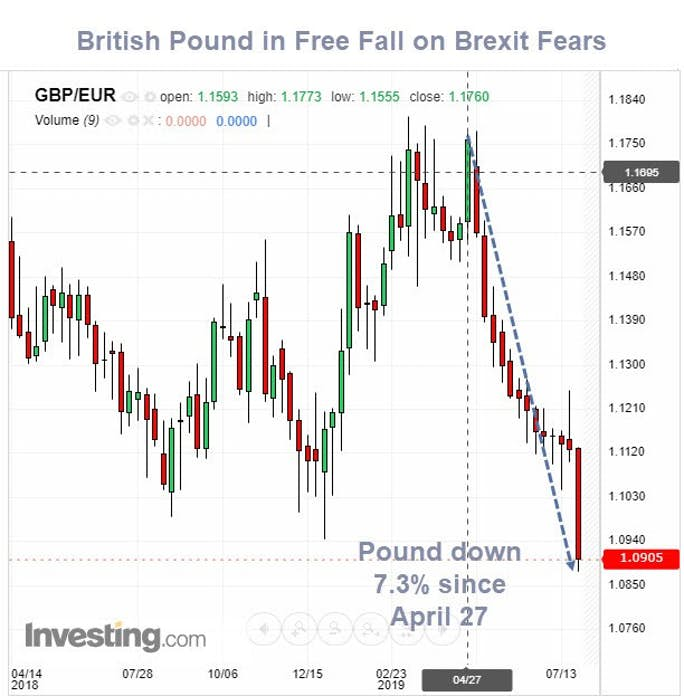
A falling currency is good for exporters and bad for importers. The British Pound has been falling in anticipation of Brexit.
Reason 3: Balance of Trade
In the event of no deal, WTO tariffs kick unless the EU offers to work out a trade deal. Under WTO rules, the EU could do that and rules allow a lengthy 10 years to get it done. The EU should agree to do that, but with animosity rising, it probably won't.
In a rising tariff setup, exporters will suffer far more than importers. Germany has an enormous trade surplus with the UK.
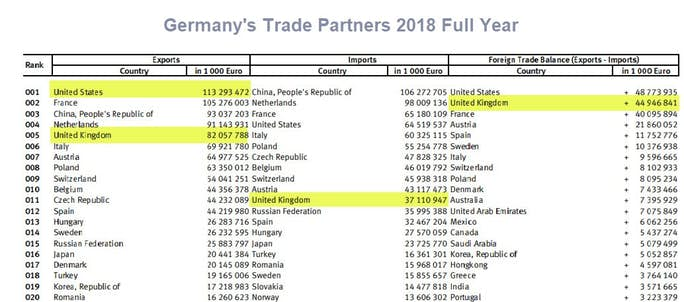
Image from Order of Rank of Germany's Trading Partners.
Angela Merkel is very concerned about German exports as well she should be.
Throw in the increasing chance of Trump putting tariffs on German cars and the EU will get crucified. A very severe German recession is in the cards and the EU faces a double whammy of Brexit plus Trump.
Note that a falling currency will mitigate some of the Tariff damage on UK exporters while compounding the problems for the EU.
Reason 4: Fishing Rights
In Brexit, the UK halts all EU fishing rights. EU fishermen will get clobbered.
Reason 5: Trade Deals
The UK will be able to make its own trade deals and set tariffs how it pleases.
Reason 6: Rules and Regulations
The UK will finally be free of inane EU rules and regulations on basically everything but especially agriculture.
Reason 7: Brexit Fees and Pay to Play Fee
Some dispute this, but the UK can halt the Brexit breakup fee. Boris Johnson has threatened to do that. Regardless, the UK will stop paying into the EU coffers even it does pay the breakup bill. The EU has budgeted for UK payments. When the UK stops paying, the EU will have to raise taxes to cover the difference.
Reason 8: Long Term Consequences
Both the EU and UK will suffer in the event of no deal but the long-term consequences strongly favor of the UK.
Author
Mike “Mish” Shedlock's
Sitka Pacific Capital Management,Llc

















