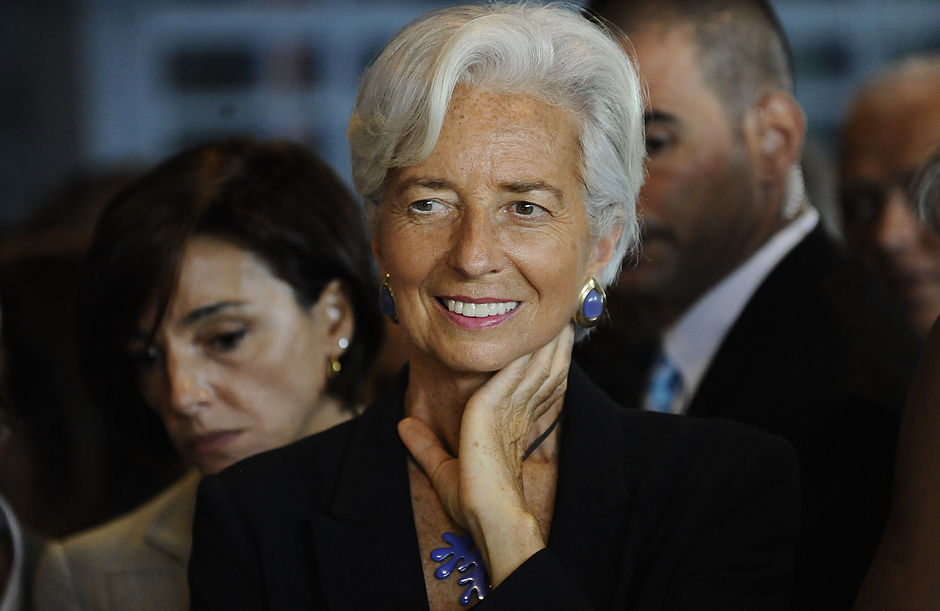
ECB President Lagarde confirmed that the direction of travel is clear

Markets
Core bonds closed near/below Monday’s sell-off lows despite a very brief intraday rebound attempt. US yields closed up to 2 bps higher at the front end with German yields grinding 2.5 bps – 3.5 bps higher across the curve. During overnight Asian trading, the US Note future keeps drifting away. We set out before that this move, together with USD strength (EUR/USD closed below 1.08 for the first time since August 1st), is a momentum trade going into US Presidential elections. Both president-candidates are running on a platform of fiscal stimulus (Trump > Harris) on top of already bloated public finances. Yesterday’s Bund underperformance was somewhat at odds, especially at the front end of the curve, with most ECB comments tilting to the soft side. ECB Centeno doesn’t believe that the projected inflation uptick in the final months of the year will reach much above 2%. At the same time, the EMU is not growing, investment is almost flat and labor market resilience is faltering. He therefore sees a risk of undershooting the inflation target, suggesting a gradual continuation towards neutral policy rate levels. Centeno sees neutral at about 2% or slightly below. If data deteriorate further, Centeno is willing to step it up (50 bps rate cut) on the path to neutral. ECB President Lagarde confirmed that the direction of travel is clear and that the pace will be determined on the basis of backward- and forward-looking elements pointing to inflation sustainably returning to the 2% inflation target. That’s expected to happen somewhere next year. Some components likes services inflation remain sticky, but wage pressure for example shows signs of abating. With these comments, Lagarde in any case doesn’t push back against building market odds (50/50) that the ECB could lower its policy rate by 50 bps in December already. Tomorrow’s PMI surveys are the first of a number of data in the long build-up to that meeting. ECB Holzmann pointed out that the disinflation process is running faster than expected with ECB Villeroy flagging significant downside risks to both growth and inflation, suggesting that the ECB can’t err on the side of leaving its restrictive policy in place for too long. ECB Rehn warned as well that weaker growth could increase disinflationary pressures. Today’s eco calendar contains another avalanche of central bank speakers while eco data are confined to EMU consumer confidence and the release of the Fed’s Beige Book. We don’t fight ruling market trends.
News and views
The IMF in its updated World Economic Outlook lowered global output growth in 2025 by 0.1 ppt to 3.2% while keeping the one for this year unchanged at 3.2%. US forecasts were lifted for both 2024 and 2025 to 2.8% (+0.2 ppts) and 2.2% (+0.3 ppts) on stronger consumption. Persistent weakness in manufacturing in Germany and Italy pushed the euro area prognosis down for this year (0.8%, -0.1 ppt) and 2025 (1.2%, -0.3 ppts). China over the same horizon was cut to 4.8% and left unchanged at 4.5% respectively. Inflation should slow from 5.8% this year to 4.3% in the next. The new estimates come with several warnings. Risks are building to the downside and uncertainty is growing on geopolitics and regional conflicts, the rise of protectionism and potential trade disruptions. Tariffs and trade uncertainty could shave 0.5 ppt of global economic output in 2026, the IMF’s chief economist said. It once again stressed the need to stabilize borrowing. Risks to the debt outlook are heavily tilted to the upside “With little political appetite to cut spending amid pressures to fund cleaner energy, support aging populations and bolster security.” The same IMF last week warned that global debt would top the $100tn mark, or 93% of GDP, by the end of this year.
A Chinese policy think tank called on the country’s leaders to issue CNY 2tn (or some $280bn) of special treasury bonds to set up a stock market stabilization fund, a national business newspaper reported. As a part of its quarterly report on the economy, the Institute of Finance & Banking (IFB) said this could steady the market by buying and selling blue-chips and ETFs. The central bank’s governor Pan Gongsheng last month said that a study of such a potential setup of such a stabilization fund was under way. The IFB also proposed more investment by long-term capital to act as a stabilizer, suggesting China could raise the ceiling of stock investment by insurance companies and the national pension fund.
Author
KBC Market Research Desk
KBC Bank