Dollar bulls awaken as Yellen announces twin tightening
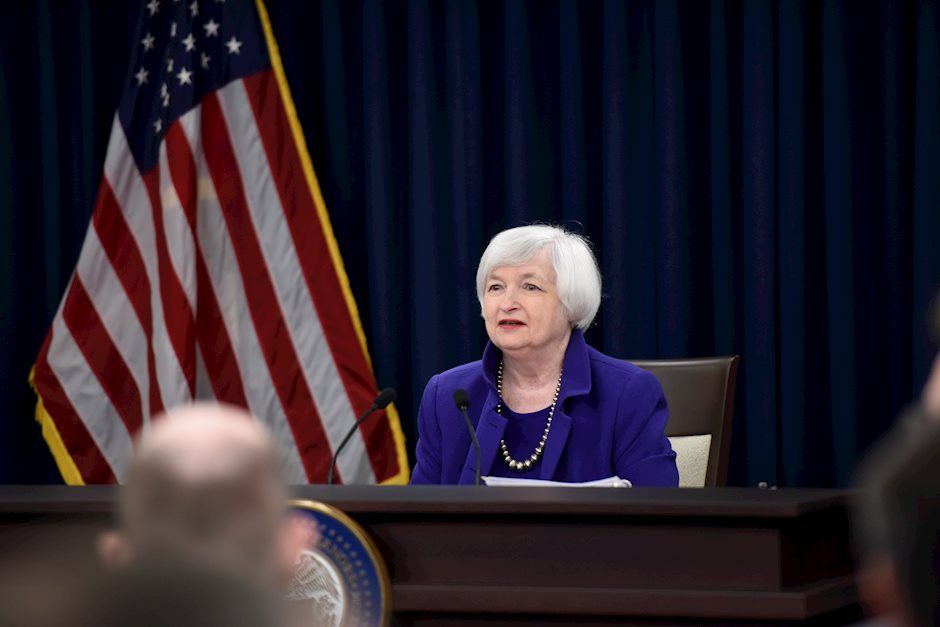

The struggling greenback has finally found a lifeline after the Federal Reserve maintained its intention to raise interest rates in 2017 and begin the process of trimming the balance sheet.
Before the Fed announced its decision, there were high expectations that monetary policymakers would drag interest rate expectations lower for 2017. This sentiment was due to persistently low inflation and the negative impact of Hurricanes Harvey and Irma on economic growth. Instead, the U.S. central bank decided to look past low inflation and said the harm of the Hurricanes would have no lasting economic impact.
The relatively hawkish statement and unchanged interest rates projections for 2017 and 2018, have forced market participants to adjust their expectations for an interest rate hike in December 2017, from a chance of 50% to above 70%. The repricing has boosted U.S. 2-year treasury bills by 5 basis points or 3.5%, to trade at the highest levels since Nov 2008, while the longer-dated 10-year bond yields hovered near a one-month high.
The primary beneficiary of the higher bond yields was the U.S. dollar, which rose to a two-month high against the Yen and sent the Euro below $1.19. For a couple of years, economists have been predicting the end of the three decades bull bond market, but this has never occurred due to investors pessimistic long-term inflation outlook. It is yet to be seen whether the reversal in yields will resume towards the end of the year.
The Consumer Price Index (CPI) and Personal Consumption Expenditure (PCE) for the next two to three months, are likely to be primary drivers of the U.S. dollar until the year-end. Janet Yellen herself does not know whether the slowdown in inflation is transitory or persistent, she simply described the slowdown as a "mystery" and said if the fed view changes on inflation, it would require an alteration in monetary policy.
Surprisingly, U.S. stock indices did not fall on a hawkish Fed. I believe lowering the estimated long-term neutral interest rates from 3% to 2.8%, prevented stocks from falling as overstretched valuations will continue to look acceptable, every time long-term interest rates are dragged lower. Back in 2012 longer run interest rates were seen around 4.25% and if they remained close to this level, it would have been tough to justify a PE ratio of 24 on S&P 500. However, it does make sense now.
Currency traders should continue to focus on interest rate differentials, as it will remain the primary driver of FX markets. Safe havens will also come under further pressure if U.S. yields manage to recover further and given no geopolitical surprises. If gold ended Friday below $1,295, this would attract sellers with the potential of testing the 50% retracement from $1,204 to $1,357 around $1,280.
Author
Hussein Al Sayed
ForexTime (FXTM)
Hussein Sayed is the Chief Market Strategist for the Gulf and Middle East region at FXTM.