Does anyone remember the Fed? War and Oil are the real plot twist

A couple of weeks ago, the Federal Reserve’s decision on March 16 was all that mattered for markets. Now, investors hardly remember it. The Iran war has changed everything market players thought about monetary policy paths, and not just for the Fed.
Let’s recap: The Fed adopted a cautious path in 2025 as inflation held above its 2% target, while US President Donald Trump's tariff policy prompted concerns about rising price pressures. That fueled the president's anger, who would have preferred much lower interest rates. Chair Jerome Powell refused to follow anything but data and maintained rates on hold, despite multiple White House maneuvers to twist his hand.
The arm-wrestling spurred uncertainty and led to sharp losses in the US Dollar. Things got a bit better in terms of uncertainty when President Trump nominated Kevin Warsh as the next Fed Chair, as Powell’s term ends next May.
Financial markets started betting on three modest interest rate cuts throughout 2026, as the employment sector recovered from its recent setback, while tariffs showed no clear impact on inflation. It’s worth noting, however, that inflation never hit the 2% goal.
The unexpected war
The US-Israel joint decision to launch massive attacks on Iran changed it all. Crude Oil prices skyrocketed amid supply disruptions through the Strait of Hormuz. The USD soared as investors rushed into safety. And inflation-related worries returned to the table.
Not only have rate cuts been dismissed, but speculative interest has started adding bets on worldwide interest rate hikes.
Meanwhile, US inflation remained above 2%, with the latest PCE Price Index at 2.8% (although the core annual reading hit 3.1% in January), while the annual CPI stood at 2.4% in February.
According to the CME FedWatch Tool, odds incline towards the Fed to remain on-hold at least until the September meeting, when odds for an on-hold decision stand roughly at 49%. That’s a big change compared with the three cuts that were priced just three weeks ago.
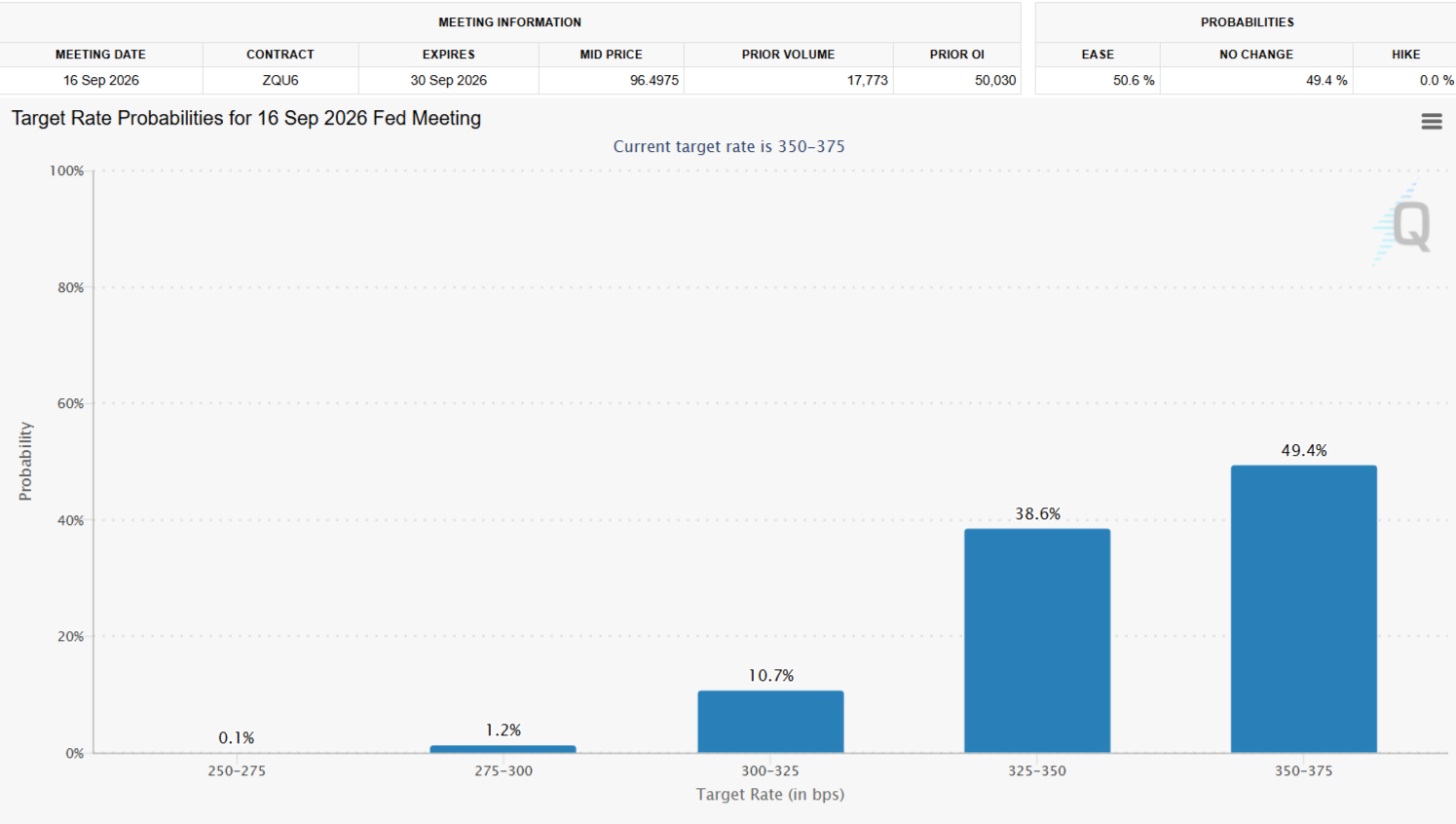
Odds for three interest rate cuts through 2025 indeed faded. So far, market players refrain from piling up on interest rate hikes, considering US President Trump's desire and upcoming Kevin Warsh leadership. But if the war continues, March inflation data will be worrisome enough to twist the Fed’s hand.
The upcoming Federal Reserve’s monetary policy announcement will be something to watch. Powell, who always prefers to focus on macroeconomic developments, will likely face uncountable questions about his future, the future of the Fed, and his thoughts on the impact of the Iran war on the American economy.
Powell will likely drop his usual caution when speaking and, despite keeping interest rates on hold, add some market noise through strong personal opinions, as, at this point, he has nothing else to lose. With war and the resurgence of inflation colliding, investors may soon discover that the path for US interest rates is far less predictable than it looked just a few weeks ago.
Author

Valeria Bednarik
FXStreet
Valeria Bednarik was born and lives in Buenos Aires, Argentina. Her passion for math and numbers pushed her into studying economics in her younger years.