Dip in manufacturing output: Not the droids you're looking for

Summary
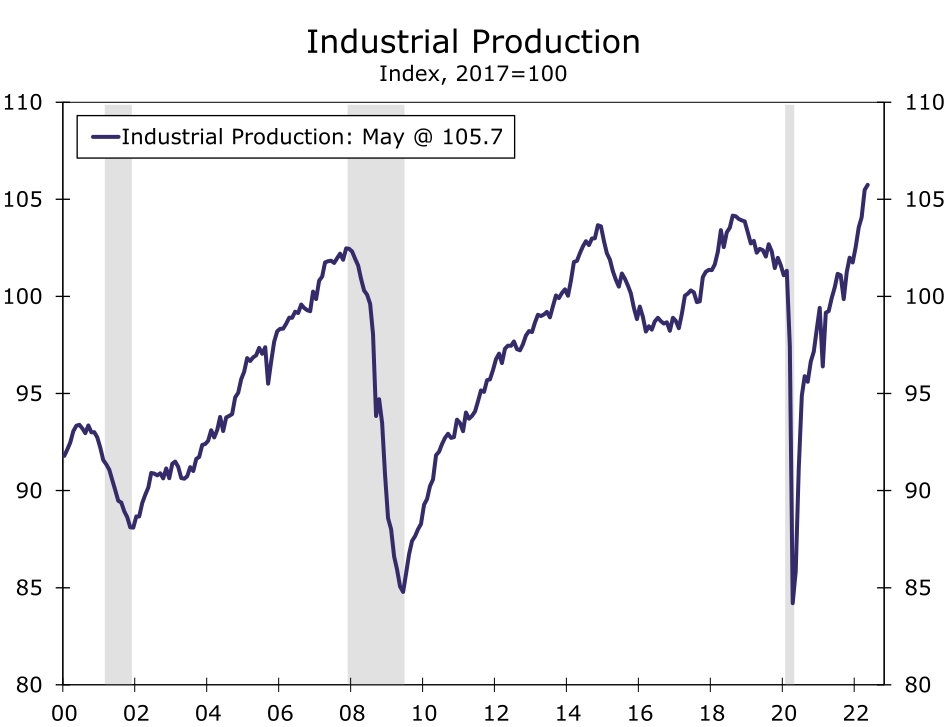
The scant 0.1% dip in manufacturing production says more about the cooling housing market than it does about the state of manufacturing. We are braced for an eventual slowing in factory activity, but this is not it. Utilities and mining output both rose.
Source: Federal Reserve Board and Wells Fargo Economics
Modest Production Pick-Up Despite Housing-Related Drag
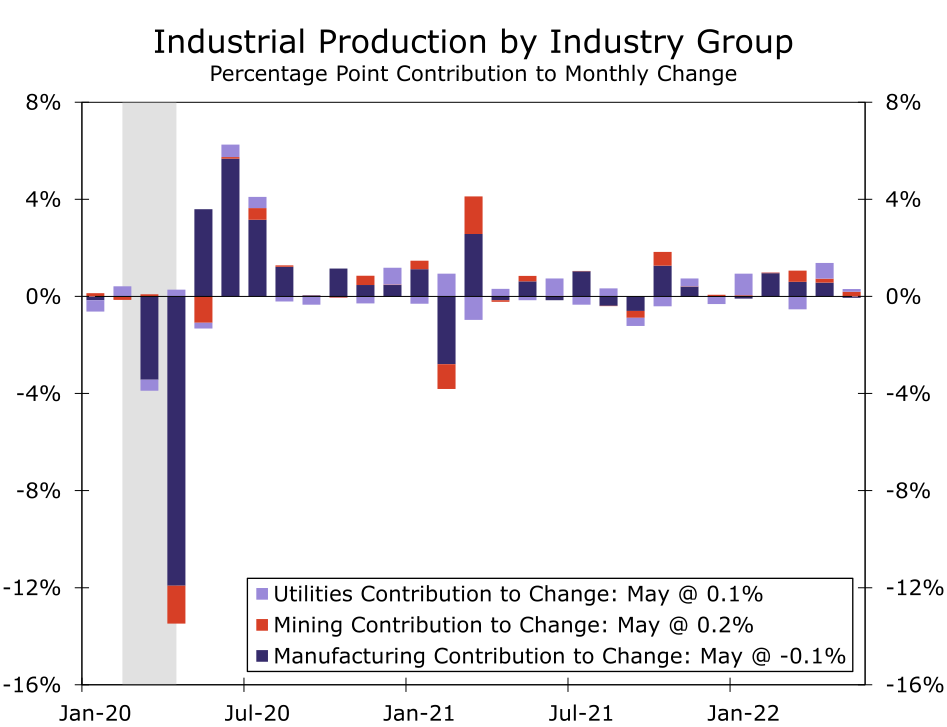
U.S. industrial production rose half as much as expected in May, posting a 0.2% increase. The manufacturing category was down 0.1%. On the heels of our recent recession call, we are tempted to pile on with how this shows a weakening in manufacturing, but the fact of the matter is: this is actually a decent report. An upward revision lifted an initially reported increase of 1.1% in April to a 1.4% jump after revisions. That puts the level of output slightly above expectations.
Durable goods production slowed 0.2% in May. The decline here was largely a function of wood products output, which fell 2.6% on the month. Appliance production also tracks with housing, and it too was down on the month. The residential construction space is already experiencing significant slowing in the wake of the Fed's earlier rate hike and with mortgage rates jumping to their highest since 2008 this week, the space is likely to see further cuts.
Most other durables categories were higher, most notably automotive, which rose 1.1%. Earlier this week we saw weakness in the May retail sales report which was partially attributable to weak auto sales. While dealers are worried about wilting consumer sentiment and rising rates, the key obstacle here is still the supply chain problem. On that basis, improvement in motor vehicle production could help fill the open spaces on dealer lots.
Utilities production rose 1.0% as an expected drop in natural gas output was offset by a gain in electric output. With a heat dome baking a large swath of the southern part of the country during the first half of June, there is scope for another gain in utilities in next month's report. Output in the mining sector rose 1.3% in May, marking the eighth consecutive gain for this category.
Source: Federal Reserve Board and Wells Fargo Economics
Source: U.S. Department of Commerce and Wells Fargo Economics
Improving Supply and Record Backlog Suggest Delayed Hit to Capex
The economy is still facing severe supply issues, but our Pressure Gauge points to continued improvement with lead times improving and inventories gradually being rebuilt. As businesses are increasingly able to source the materials and the workers they need, there is a case for a more sustainable growth trajectory for the manufacturing sector, despite a more pronounced slowdown elsewhere. This is particularly true when compared to other parts of the economy like housing and consumer spending, both of which are arguably under greater pressure from a rising interest rate environment. We have seen a pullback in investment plans more recently and higher borrowing and material costs amid lower margins will likely present a headwind to capital spending in the second half of this year. But the need to chip away at a record amount of backlog should support manufacturing activity in the near-term even as demand begins to slow.
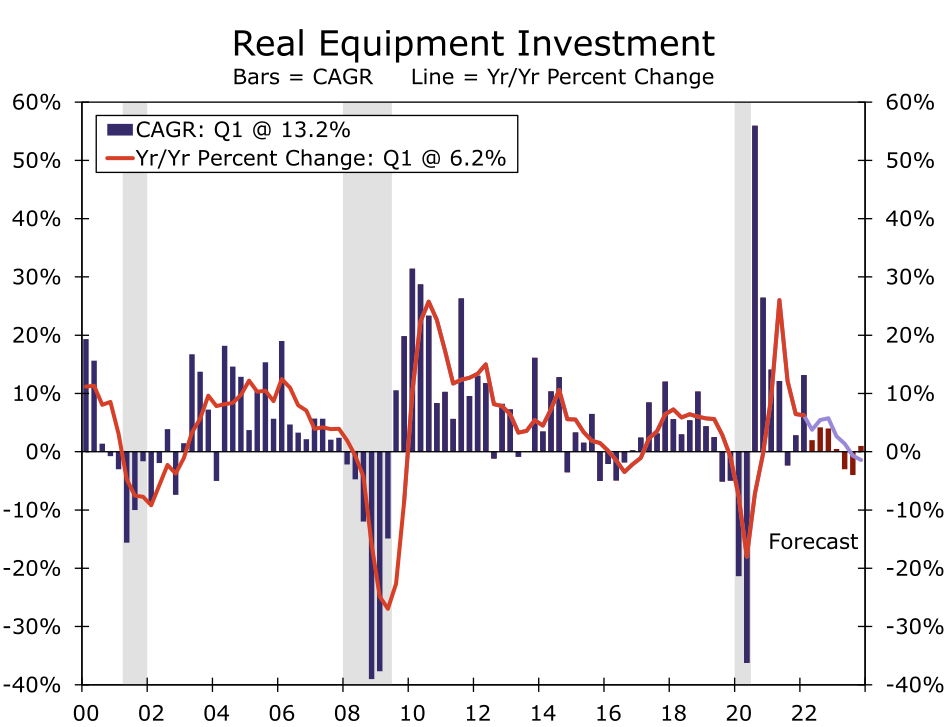
In our latest forecast update released this week, where we are now calling for a mild recession mid next year, we have downgraded our forecasts for equipment spending. After starting the year at a solid pace, cap-ex spending is slowing, and we now look for equipment to rise 5.3% this year before being up at just a 0.5% annualized pace in 2023.
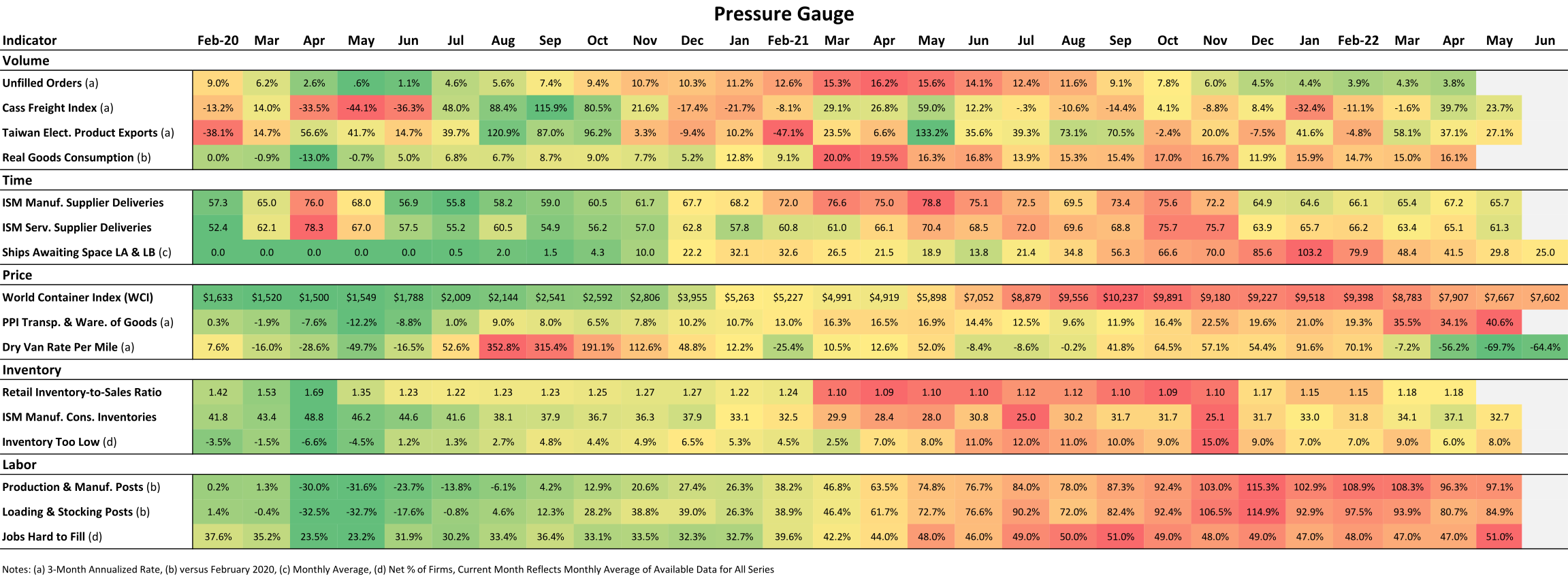
Source: U.S. Department of Commerce, Bloomberg Finance L.P., Taiwan Ministry of Finance, Institute for Supply Management (ISM), Drewry, U.S. Department of Labor, National Federation of Independent Business (NFIB), Indeed.com and Wells Fargo Economics
Author
Wells Fargo Research Team
Wells Fargo

















