Despite import decline, net exports to slice Q2 real GDP growth


Summary
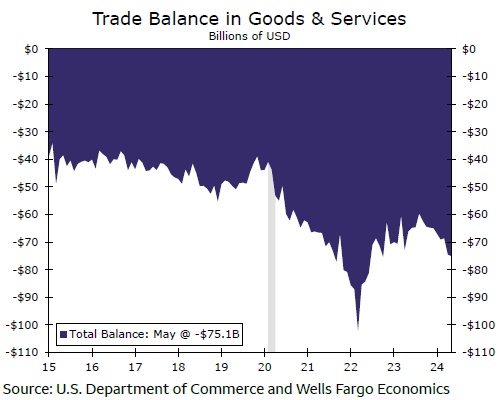
The U.S. international trade balance worsened for the second straight month in May, leaving the deficit at its widest position since late 2022. A resilient domestic U.S. economy and steady dollar strength are supportive of a widening deficit this year. Net exports are now tracking to slice a full percentage point or more from Q2 real GDP growth.
Un-steady as she goes
U.S. exports and imports both slipped by over $1 billion in May, but the drop in exports was about 1.5 times as large as that in imports, which caused the deficit to widen. Specifically, the trade balance worsened to a deficit of $75.1 billion in May, leaving the deficit nearly 16% larger than when the year started. The sharp adjustment lower comes down to the underlying resilience in U.S. demand and steady U.S. dollar strength, both of which leave imports more resilient than exports this year.
Continued spending among U.S. households and some stabilization in capex should help support import growth as inventory levels remain well managed and show little sign of being overstocked. Dollar strength is also supportive of imports but is a challenge for exports. The trade-weighted dollar index is up 4.1% since the start of the year, which leaves U.S. goods more expensive on the global market, weighing on demand for exports.
Author
Wells Fargo Research Team
Wells Fargo

















