Coronavirus Pushed VIX Above Its Average - Apple's Earning Low Liquidity

European markets have set aside some of the concerns about Coronavirus. Speculators are back in town and ready to support the markets. For them, the current sell-off is an opportunity. Having said this, the theme isn’t the same across global markets as they are still under the influence of this virus.
Asian markets suffered heavy losses as the efforts continued to curb the spread of Coronavirus. Investors are not sure how to measure the economic damage of this virus, and this very fact makes them nervous. The fear of unknown pushed the Japnese equity markets towards their worst two days losses—something which we have not seen since August last year.
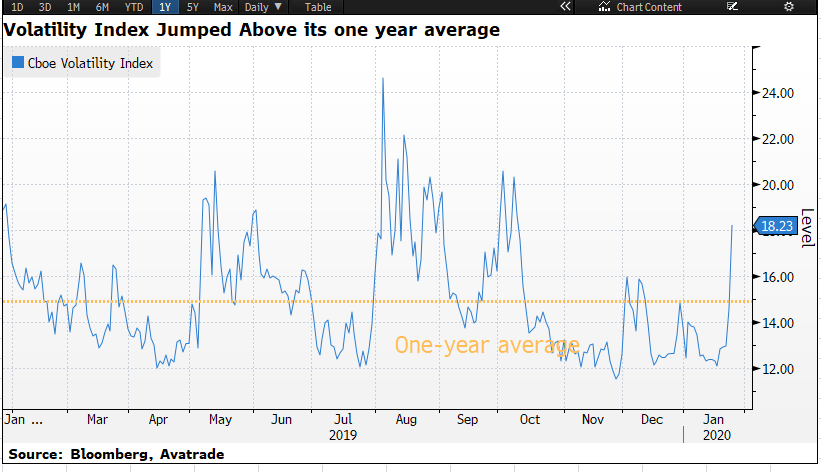
Looking at the global markets and risk sentiment, we do not think that investors are going to be fully in love with riskier assets until or unless we hear the news that the virus situation has improved. This is the reason the volatility index, the VIX, has jumped beyond its one year average while the equity indices tumbled. The one year average for the index sits at 14.94 while it closed at 18.23 yesterday.
Apple: Watch The After Hour Liquidity
As for the earning season, Apple’s earnings report has the potential to set off plenty of market volatility. The tech giant is expected to report its’ earnings after the US market. Apple plans to increase its iPhone output by 10% during the first half of 2020 or in other words, by 80 million units. Investors are going to focus on their webcast carefully and they will guage the disruption caused due to the Coronavirus. This is because all iPhones are produced in China. If the company confirms that the current situation is nothing but a short term hurdle then the market participants are going to take that as a sign of confidence.
Investors should keep in mind that liquidity isn’t abundant during the after-hour trading and anything which comes out of blue, like the revenue warning by Apple in 2019, it could inspire a flash crash.
Author

Naeem Aslam
Zaye Capital Markets
Based in London, Naeem Aslam is the co-founder of CompareBroker.io and is well-known on financial TV with regular contributions on Bloomberg, CNBC, BBC, Fox Business, France24, Sky News, Al Jazeera and many other tier-one media across the globe.