BOE Preview: Omicron eliminates rate hike chances, voting pattern critical to GBP/USD reaction
- The Bank of England is set to refrain from rate hikes due to the Omicron uncertainty.
- GBP/USD would tumble if such a decision is unanimous.
- Wider support for a rate hike or a surprise increase could send sterling soaring.

Another "unreliable boyfriend" rate decision? Reports used that term against Bank of England Governor Andrew Bailey after he oversaw a decision to leave interest rates unchanged in November, contrary to hints of an increase in borrowing costs. That market whipsaw may have been justified.
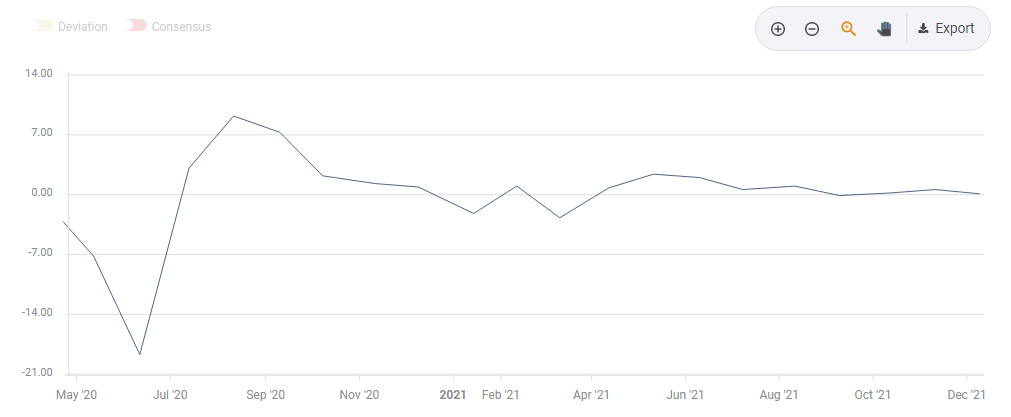
Since that early November "Super Thursday," the mood has changed, as covid cases in Britain increased and the world became familiar with the Omicron variant. Another factor that may cause policymakers to wait-and-see is slowing growth. Britain's economy expanded by only 0.1% in October, reflecting softening conditions after the reopening, shortages of labor and goods and other factors.
Source: FXStreet
The consensus is to wait until more data about the variant and its economic impact is evident, and to raise rates only in February – the BOE's next event that includes new economic forecasts and a press conference.
However, two members voted to bump up borrowing costs already in November. They argued that inflation is rising and the labor market is doing well. Since then, job statistics showed that the furlough scheme's expiry had no impact on unemployment. On the contrary, jobless claims continued falling even in November.
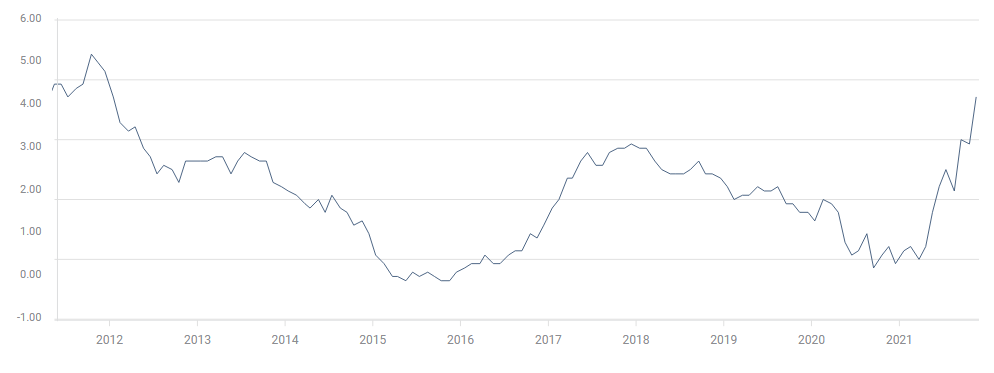
Inflation hit 4.2% YoY in October, the highest in nearly ten years.
Source: FXStreet
BOE outcomes and reactions
In the more likely case that the BOE leaves rates unchanged, markets will first move by the voting pattern. Another 7:2 vote against raising rates is the most likely scenario, as most members tend to stick to their opinions. That would be marginally pound-negative, as that majority is significant.
Nevertheless, if the accompanying statement contains a clear hint that the BOE would move in February, almost regardless of Omicron, sterling could still eke out a minor gain in case of such a 7:2 vote.
There is room for an even broader rejection to hikes, such as an 8:1 vote or even a unanimous 9:0 consensus to keep borrowing costs at 0.10%. A capitulation of hawks is fuel for bears – sterling would fall in such a scenario.
The opposite scenario of broader support for a hike cannot be ruled out. One thing that did change since last month is that the bond-buying scheme concluded. That may have been necessary for some members to support raising rates. That would be pound-positive.
Another factor that could support a more hawkish outcome such as a 6:3 or 5:4 vote to leave rates unchanged is the Federal Reserve's decision on the previous night. If the Fed significantly accelerates its taper program – thus bringing forward a rate hike – BOE members would be encouraged to follow. The Fed tends to lead, others to follow.
Can the minority that supported rate hikes in November become a majority? It is hard to see the hawks mustering more backing given the Omicron uncertainty, but other considerations such as inflation, jobs shortage, rising home prices, and other factors mean this scenario is a possibility. Sterling would leap hundreds on pips on this low-probability scenario.
Conclusion
The BOE is set to leave rates unchanged in December after coming close to raising them in November. Uncertainty about covid is the main factor holding policymakers back. The Monetary Policy Committee's voting pattern is critical to sterling's moves.
Author

Yohay Elam
FXStreet
Yohay is in Forex since 2008 when he founded Forex Crunch, a blog crafted in his free time that turned into a fully-fledged currency website later sold to Finixio.