BOE and Carney choose prudence

Governor Carney's relatively positive assessment for the UK economy and mollifying comments on the EU trade negotiations helped the sterling retain its advantage after the bank left rates at 0.75%.
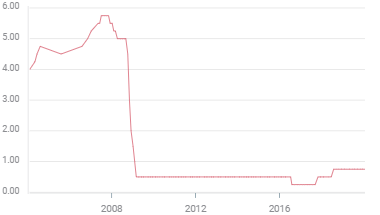
Market expectations prior to the announcement were split nearly even on whether the Bank of England Monetary Policy Committee (MPC) would cut the bank rate to head off any economic disruption from the Brexit trade talks.
UK bank rate
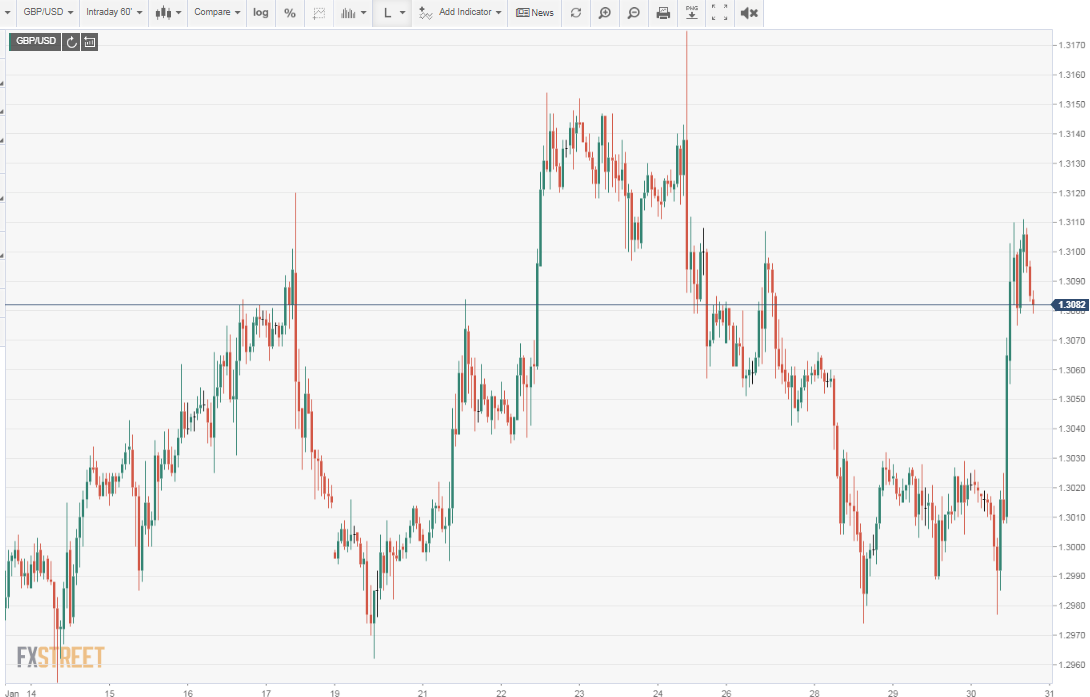
At the release of the 7-2 vote for hold the sterling vaulted higher to just over 1.3100. It was the strongest for the UK currency against the dollar in three sessions but well within the range of the last two weeks.
The unexpectedly large Conservative victory in the December 12th vote had pushed the sterling almost five figures higher to 1.3516, then its highest in 18 months but the subsequent range has been largely between 1.2900 and 1.3200.
The MPC decision reflected the improvement in business sentiment since the general election and the sense that the reduction in trade tensions, both with the EU and globally had improved the UK’s prospects.
“Global business confidence and other manufacturing indicators have generally picked up. Domestically, near-term uncertainties facing businesses and households have receded,” noted the MPC statement.
“Business have reported a sharp rise in investment intentions in the most recent survey,” said departing Governor Mark Carney in his press conference following the release.
The guarded optimism was despite the bank’s own forecast that British economy would only grow at an average 1.1% over the next three years. Estimates for the fourth quarter were dropped to zero in this report. In November the forecast had been 0.2% and in December that was cut to 0.1%. Preliminary GDP figures for the fourth quarter will be issued on February 11th.
Brexit is set to become law at 11 p.m. London time tomorrow, January 31st , capping a more than 20 year campaign by membership opponents whose surprise victory in the June 24th 2016 referendum has roiled UK and continental politics ever since. British and EU leaders will now commence negotiations that are to define the new trade relationship between the two sides and are supposed to be completed by the end of this year.
The bank’s base economic analysis is based, as the MPC statement says, “…On the assumption of an immediate but orderly move, at the beginning of next year, to a deep free trade agreement between the United Kingdom and the European Union.” While this is a logical and in the end likely scenario the path to get there will not be without many impediments. The UK departure itself has soured the relationship and there are probably as many hardliners in the EU Parliament as in Westminster.
Even with this year’s slowing growth and the uncertainty around the economic relations with the UK’s largest trading partner, the BOE, along with the Bank of Canada was one of the few central banks that did not cuts rates or provide extra liquidity to their economies this year.
In one sense the reluctance to reduce rates last year, even though the Fed, the Reserve Bank of New Zealand and the central bank of Australia did, and today’s decision is easily explained.
With the main interest rate at less than 1% and difficult trade negotiations barely started and after one of the most tumultuous years in British politics, the majority of the governors wanted, quite sensibly, to save their limited rate ammunition for a visible target. Things will have to be a good deal worse in the British economy before the BOE abandons precaution.
Author

Joseph Trevisani
FXStreet
Joseph Trevisani began his thirty-year career in the financial markets at Credit Suisse in New York and Singapore where he worked for 12 years as an interbank currency trader and trading desk manager.