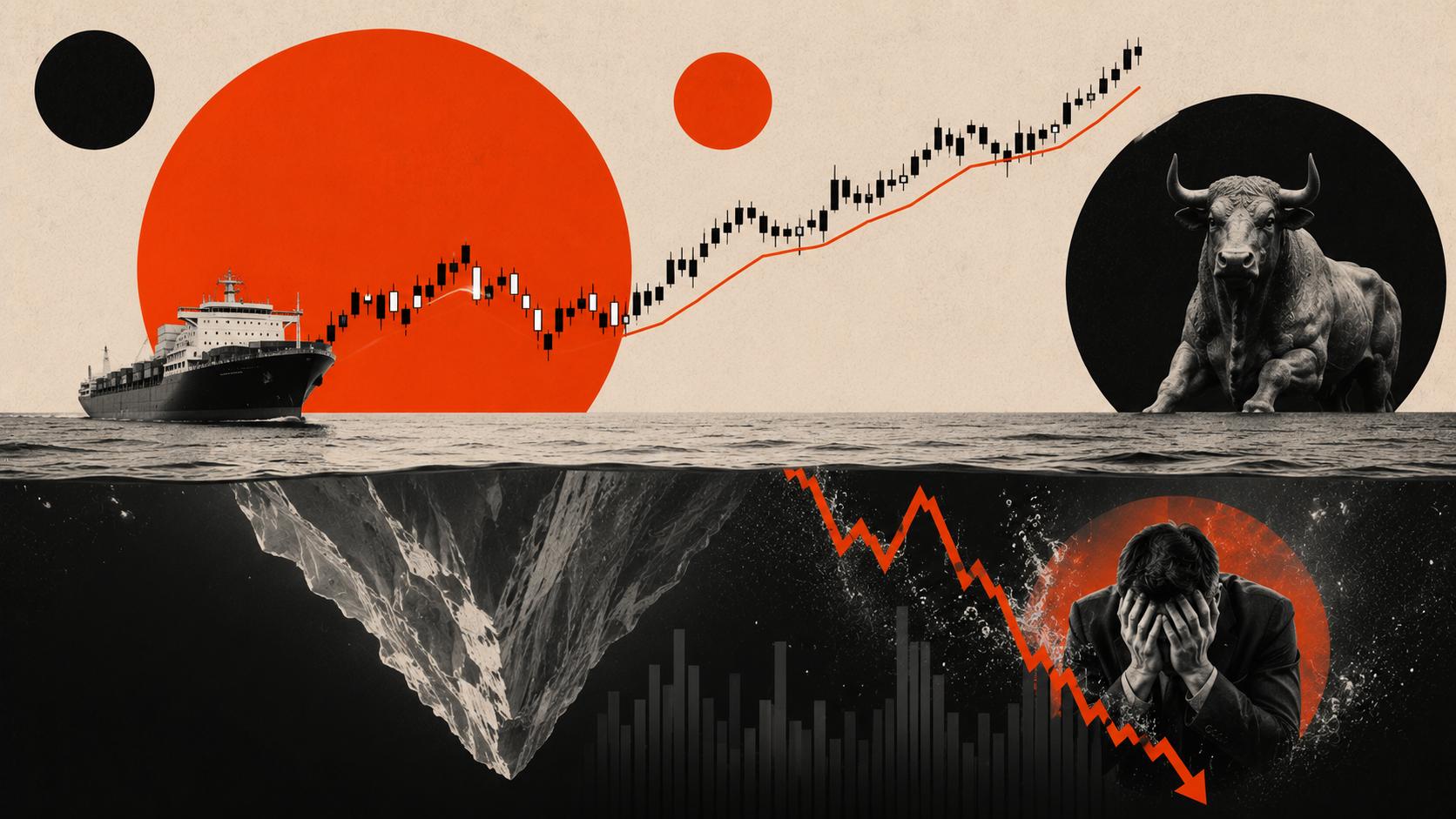
Big banks call for recession and possible stock market crash

The converging forces of price inflation and economic contraction continue to weigh on asset markets.
The Dow Jones Industrials got clobbered by 1,000 points on Wednesday and is headed for its eighth weekly loss in a row.
Meanwhile, precious metals markets are finally finding some footing. After declining for four straight weeks, gold and silver is advancing in this week’s trading.
Markets are experiencing big swings as new recession warnings are flashing. Big box retailers reported disappointing sales numbers this week while major investment banks downgraded their economic outlooks. Analysts at Bank of America, Morgan Stanley, and Wells Fargo are warning of a looming recession and possible stock market crash.
Here’s commentary from financial advisor Steven Van Metre:
Steven Van Metre: First it was Bank of America calling for a crash, now it's Morgan Stanley. Let's check this out. Well, Morgan Stanley warns ingredients for a global recession are on the table, and markets need to confront the possibility of an economic downturn. With inflation at the highest level in 40 years, the Federal Reserve taking increasingly aggressive action to cool consumer demand and prices, the risk of a global recession is on the rise, according to Morgan Stanley's economist.
Now Wells Fargo is saying that a recession is unavoidable. Wells Fargo's CEO Charlie Scharf said Tuesday there was no question that the U.S. is headed for an economic downturn. The Federal Reserve has raised rates twice this year and plans to keep doing so, part of its bid to cool the economy and curb red-hot inflation.
If the stock market and economy continue to deteriorate, then the Federal Reserve won’t be able to follow through with its ambitious rate hiking plans. It may even have to reverse course and try to reliquefy the financial system should it suffer a hard landing.
Of course, Fed chairman Jay Powell assures us the economy remains strong. Just two weeks ago, we shared a quote of Powell claiming that nothing suggests the economy is close to or vulnerable to a recession.
Some of America’s top economists and CEOs would beg to differ. So would millions of stock market investors who are seeing their portfolios shrink. And so would millions of Americans who are being forced to cut back on spending in order make ends meet.
If a recession does in fact take hold in the months ahead, it wouldn’t be the first time the Fed has gotten its economic forecast completely wrong.
Whether Powell actually believes the economy is still in good shape is another question. It’s possible he feels compelled to lie about it to try to avoid causing panic.
Regardless, savvy investors aren’t basing their decisions on pronouncements by officials. They are positioning themselves for both recession risk and inflation risk.
This could be the most difficult environment ever faced by any investor who didn’t live through the late 1970s stagflation period.
During stagflation, there are no safe havens in conventional financial markets. Stocks lose value as corporate profit margins get pinched. And bonds lose out to inflation.
Some investors will seek refuge in other asset classes such as real estate and cryptocurrencies. But the housing market now faces an affordability crisis thanks to rapid price increases and surging mortgage rates. By some measures, a median-priced home has never been less affordable versus household incomes.
Existing home sales have now declined for three months straight. Some analysts believe prices will have to come down as well.
As for cryptos, that asset class in recent months has suffered a meltdown of over $1 trillion in value.
Last week, turmoil hit the so-called stable coin market when one heavily hyped coin turned out to be anything but stable. In a bizarre sequence of events, the supply of Terra and Luna tokens hyperinflated, causing their prices to crash. Some billionaires and hedge funds got caught up in the disaster.
Bitcoin enthusiasts insist no such thing could happen to the largest and most well-known cryptocurrency. But at the end of the day, no digital asset can be guaranteed to retain its value over time.
Hard assets that have intrinsic utility will always be worth something. But during a recession, economically sensitive commodities such as base metals and crude oil can suffer from demand destruction.
The hard assets least correlated to the economic cycle are precious metals. Demand for gold and silver often goes up during broader downturns as investors seek safe havens.
Although gold and silver have underperformed broad commodity indexes so far during this massive inflation run up, they will likely begin outperforming as the economy tanks and stagflation takes hold.
To receive free commentary and analysis on the gold and silver markets, click here to be added to the Money Metals news service.
Author

Mike Gleason
Money Metals Exchange
Mike Gleason is a Director with Money Metals Exchange, a national precious metals dealer with over 500,000 customers.