Bank of England Preview: Three things that will move the pound on “Super Thursday”
- The Bank of England is set to leave its policy unchanged but publish new economic assessments.
- Hints about more QE would boost the pound despite fears of independence.
- Reopening the door to negative rates may weigh on sterling.

Summer is about to become hotter – after a steaming hot weekend, pound traders are ready for more sweat around the Bank of England's decision. While many are on vacation, the "Old Lady" as the bank is known is set to stir markets with its rate decision, meeting minutes – and the Monetary Policy Report, which makes it a "Super Thursday."
GBP/USD has been on a tear, benefiting from the dollar's weakness and shrugging off new lockdown measures in northern England, Brexit, and relations with China.
Will the BOE bail out the bears? The answer depends on three factors.
1) So far, so V?
The headline above belongs to Andy Haldane, Chief Economist at the Bank of England. He said the recovery came sooner and faster than previously expected. One significant figure that has remarkably bounced back is retail sales, which are down only 1.6% year over year in June:
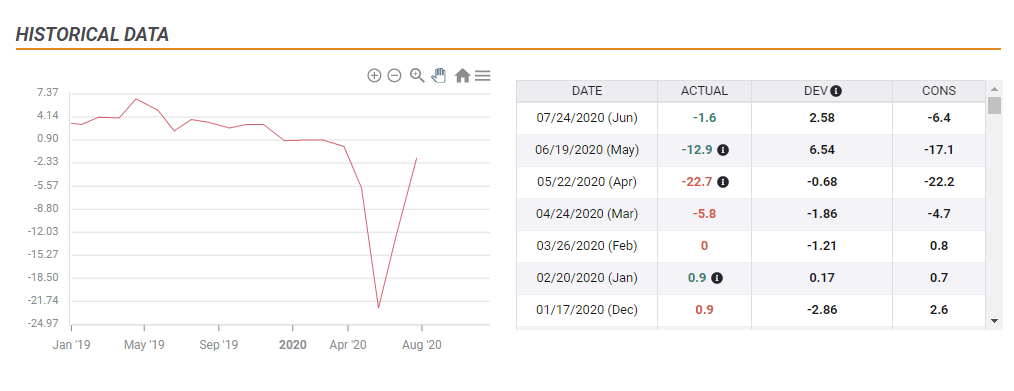
Does the BOE as a whole agree that the economy is bouncing back to normal? Even if British consumers are active, the UK also depends on exports – and the greater world is still struggling. Moreover, Prime Minister Boris Johnson announced a slowdown of the reopening, and that may also be factored by the bank.
The BOE is set to paint a mixed picture, but where will it lean-to? If Andrew Bailey, Governor of the Bank of England, paints a picture of cautious optimism, of a country emerging from the crisis, the pound could advance. Conversely, taking a page from the Federal Reserve's book and saying that there are signs of softening, could cause suffering to sterling.
These quarterly reports feature growth and inflation forecasts – which are hard to produce with the fast-moving nature of the disease. The BOE may stress that its figures are only "scenarios" and not forecasts. Nevertheless, figures looking more like a V – or at least a tight Nike swoosh – could be positive for the pound, while a long recovery path could be detrimental to the currency.
2) Financing the stimulus
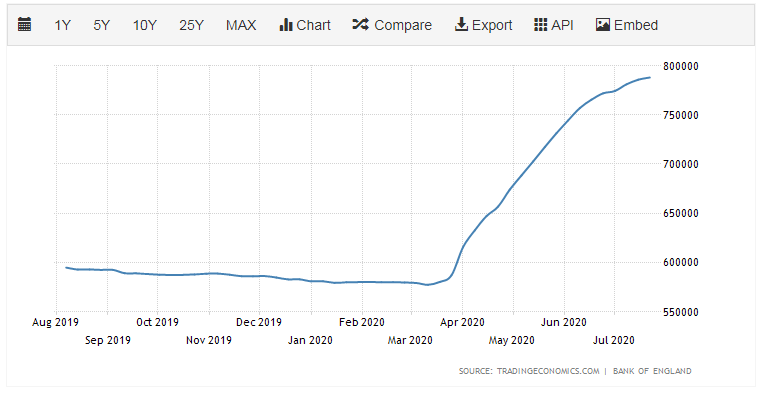
Back in June, the BOE announced it is topping up the bond-buying scheme by £100 billion to a total of £745 billion. Members of the Monetary Policy Committee expressed willingness to continue supporting the government's efforts to stabilize the economy and help it recover.
The bank's balance sheet has jumped in recent months:
Source: Trading Economics
However, some expressed worries that the bank is turning into the financing arm of the Treasury – losing its hard-fought independence. While inflation remains low, direct monetary funding is frowned upon in various circles – yet not among investors.
Both in the UK and the eurozone, announcement of more money printing boosted the respective currencies as they implied more fiscal support.
After the recent addition, it seemed that the BOE is taking a break and said they are slowing down the pace. If Bailey surprises investors with a willingness to increase the plan, sterling could shine, while markets will likely shrug off a message of continuation.
3) Specter of negative rates
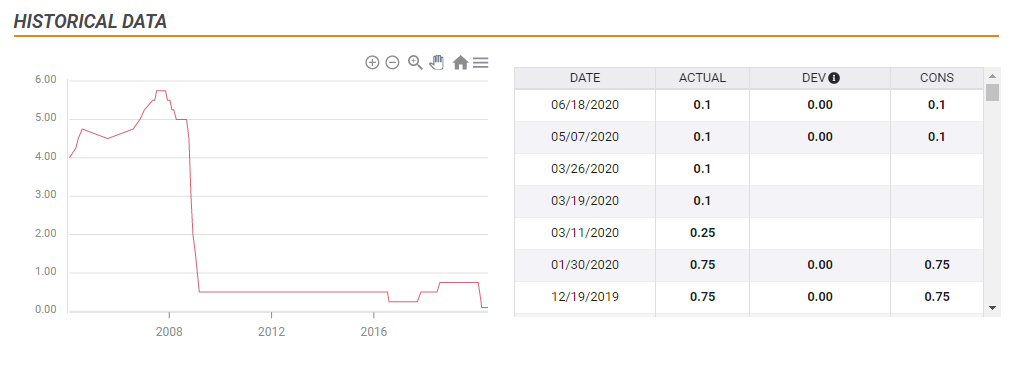
Bailey dealt a blow to the pound when he said that setting negative rates is "under active consideration" – but since hinted such a move is not imminent. He slashed overnight borrowing costs to 0.1% – the lowest in the BOE's 300+ years history – on his fourth day on the job in the turbulent days of March.
BOE interest rate:
However, the governor and some of his peers who also seemed to warm up sub-zero rates have since cooled down on the idea. Most of the stimulus coming from charging commercial banks to park money with the BOE comes from the effect on the exchange rate – a weaker pound would boost inflation and exports.
However, the overall effect on the real economy – as demonstrated by the eurozone and Japan – is minor. Moreover, it substantially hurts banks' profitability – and that probably contributed to shelving the policy.
If the bank surprises by opening the door to setting negative rates – either by seeing one member voting for a cut or via a message from Bailey – sterling could stumble. As long as it remains only a theoretical option, it will likely be ignored by traders.
Conclusion
The BOE is set to leave its policy unchanged but its views on the economy will probably rock the pound. Additional QE could boost sterling while hints about sub-zero borrowing costs would send it lower.
Author

Yohay Elam
FXStreet
Yohay is in Forex since 2008 when he founded Forex Crunch, a blog crafted in his free time that turned into a fully-fledged currency website later sold to Finixio.