Bank of England Preview: Fast recovery or trio of troubles? Bank's tone to set pound's direction
- The BOE is set to leave rates unchanged but its tone is set to rock the pound.
- Recovery from coronavirus has been rapid and may hold back the bank from hinting new stimulus.
- Higher uncertainty about Brexit, coronavirus, and the furlough scheme may result in a concerned message.

Glass half-full or half-empty? That is the dilemma for the Bank of England as it convenes for its September decision. Officials have been hinting that a change in policy is unlikely after slashing rates to 0.1% and raising the Quantitative Easing program to a total of £745 billion earlier this year.
Nevertheless, the BOE is set to rock the pound via its updated views on the economy. The accompanying meeting minutes will probably reveal a contrast between the relatively upbeat recovery and growing uncertainty – our outright fear about the next few months.
Promising recovery
The UK economy suffered badly from coronavirus and the ensuing lockdowns. However, it has rebounded better than many had expected. Andy Haldane, Chief Economist at the BOE, said "so far, so V" at some point – referring to a V-shaped graph of economic performance.
While most economists probably do not share the view of such a sharp comeback, the bounce has been impressive. Examining four-top-tier figures released in mid-August, they all exceeded economic expectations. Unemployment remains low, Gross Domestic Product tanked in the second quarter but rebounded, and even inflation is off the lows.
These economic figures are enough for the BOE to hold its horses at this junction. However, it may hint new action down the road if conditions deteriorate, and there are three reasons for them to fall.
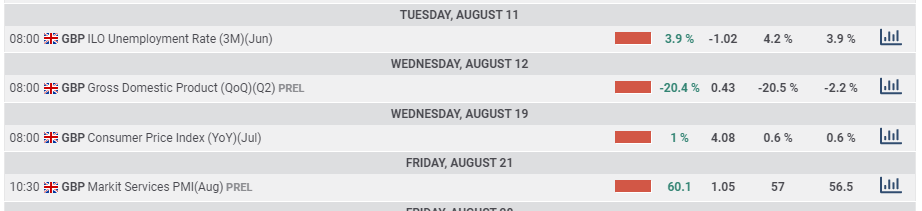
Source: FXStreet Economic Calendar
Trio of troubles
1) Brexit uncertainty:
Instead of advancing toward a post-transition period trade deal, Prime Minister Boris Johnson is moving to violate the divorce bill signed last year. Parliament is debating a controversial bill that the government admits to breaking international law on customs arrangements. Brussels responded by laying down an ultimatum to slap sanctions if Britain fails to rescind the legislation by the end of the month.
While the BOE is unlikely to comment on politics, it may stress that Brexit uncertainty has risen and poses a downside risk to the economy, potentially sending sterling lower.
2) Coronavirus cases rising:
The UK imposed new restrictions following an increase in COVID-19 infections – most notably prohibiting gatherings of more than six people. The worrying trend poses a risk to the economy ahead of winter, when the situation may further worsen.
The bank may conclude that most of the "low hanging fruit" of the recovery has already been picked, and the disease now risks a full return to normal. On the other hand, officials are also following positive developments regarding approving a vaccine. Their approach may be more nuanced on the topic.
3) The fate of the furlough scheme
Britain's impressively low unemployment rate of 3.9% is a result of the government's successful furlough scheme – paying people unable to work most of their salaries. The program expires in October and Chancellor Rishi Sunak said it is unsustainable, adding that many people will lose their jobs.
A cliff-edge fall of the scheme would deal a devastating blow to the economy and the BOE may hint that it is ready to buy more bonds to help fund a tapering down of the program. That would be pound-positive.
Conclusion
The BOE is set to leave its policy unchanged in September but its views on recent developments – and the outlook moving forward are likely to rock the pound. The encouraging recovery so far is countered by uncertainty related to Brexit, the virus, and the furlough scheme.
More Lagarde gives the euro some legs, but the rabbit hole is near – how central banks move currencies
Author

Yohay Elam
FXStreet
Yohay is in Forex since 2008 when he founded Forex Crunch, a blog crafted in his free time that turned into a fully-fledged currency website later sold to Finixio.