Back-to-back declines in real PCE mean a tough start to 2023


Summary
The 2.1% real PCE growth reported in yesterday's GDP report masked some underlying details which were revealed in today's personal income and spending report. The upshot is that consumer spending did more than lose momentum, it actually declined in the final two months of the year.
Consumer flame flickers
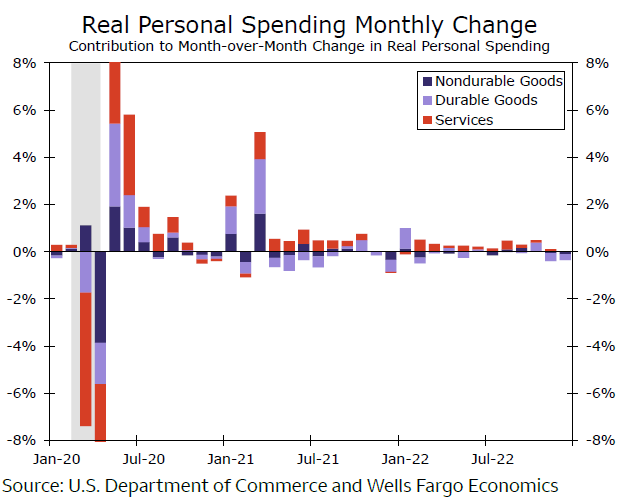
The staying power of consumer spending flickered out in the fourth quarter. Despite a modest and temporary jump in the saving rate in December, the bills are just stacking up too fast for many American households. After adjusting for inflation, spending on food, energy and other non-durable goods is now down for two months in a row. The weakness is more evident in big-ticket durable goods items where real spending is down four out of the past five months—the largest of those monthly declines were in November and December. Perhaps the most disconcerting development is that real service spending stalled in December. Without the offset from this larger category that typically plods along even during recessions, overall consumer spending ended the year with the only two monthly declines in real spending stacked up back-to-back. The way the GDP math works, that makes it very difficult for first quarter real PCE spending to come in positive.
Yes, yesterday's GDP report for the fourth quarter revealed real personal consumption expenditures rose at a 2.1% annualized pace during the quarter. But a weak end to the year frames the first quarter of this year poorly. The economy was clearly losing momentum as the quarter progressed and today's personal income and spending report applies the actual numbers to that theme.
Overall real consumer spending increased 0.4% in October before giving up half of that gain, falling 0.2% in November then tumbling another 0.3% in December.
The weakening in November was concentrated on the goods side, particularly real durable goods spending, which fell 2.1% marking the worst monthly drop in big ticket outlays of the year. Spending on non-durables was down only slightly. The November goods weakness was partly offset by a modest 0.2% increase in real services outlays. The help from services vanished in December though as real spending outlays stalled. Another drop in real durable goods, this time 1.6% along with a 0.4% drop in non-durable goods resulted in the overall decline of 0.3% in real spending (chart).
Author
Wells Fargo Research Team
Wells Fargo

















