Australian Employment Preview: Rebound from Delta lockdowns may not be enough for the aussie
- Australia to add 200K jobs in November, Unemployment Rate to drop to 5%.
- RBA sees the economy as likely to return to its pre-Delta path in the first half of 2022.
- Post-Delta upturn in US jobs already priced in? AUD/USD looks vulnerable amid the Fed.

Australia’s labor market may see an upturn in November, the latest employment report due to be published by the Australian Bureau of Statistics (ABS) is likely to show this Thursday.
The employment indicators are expected to show labor market optimism, as the economy emerges from the Delta covid variant outbreak-induced lockdowns that extended from August through October.
Employment scenarios improves, RBA optimistic
Having witnessed a slump in the employment sector in October, the OZ economy is expected to see an addition of a whopping 200K jobs in November. The Unemployment Rate is expected to drop to 5% from the 5.2% jump seen previously. The Participation Rate is forecast to rise sharply to 65.5% last month when compared to the previous figure of 64.7%. In October, the Australian economy lost 46,3K jobs during a period when half the economy was still in lockdown.
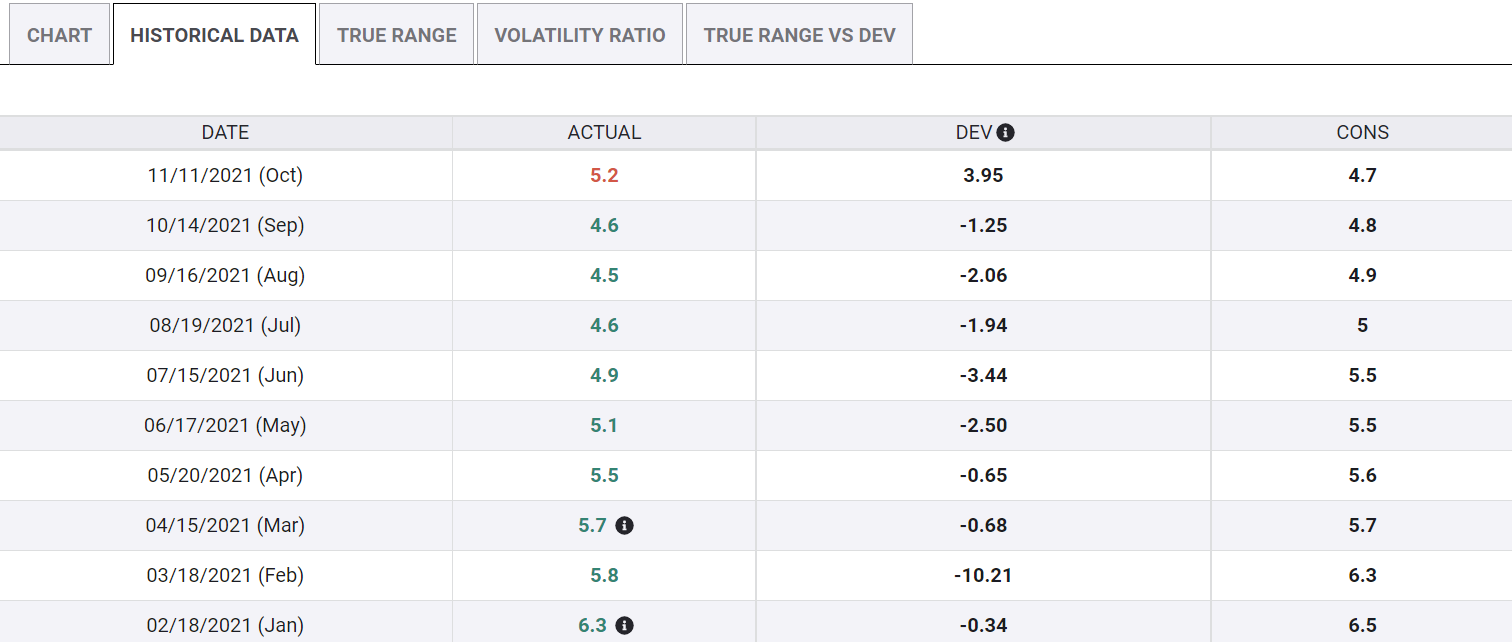
Source: FXStreet
The expected recovery in the Australian labor market follows robust Australia & New Zealand Banking Group’s (ANZ) monthly job ads data, which surged 7.4% in November to reach above their pre-pandemic level.
Australia's rising job ads suggest strong employment growth ahead while reinforcing the Reserve Bank of Australia’s (RBA) confidence in the post-Delta economic recovery.
At its November monetary policy decision, the Reserve Bank of Australia (RBA) kept its monetary policy settings unadjusted, with the Official Cash Rate (OCR) on hold at a record low of 0.10% and weekly bond purchases at AUD4 billion.
The RBA sounded upbeat about the economic outlook, however, citing that “the economy is expected to return to its pre-Delta path in the first half of 2022” versus H2 2022 in the November forecasts.
The central bank also mentioned, “the omicron strain is a new source of uncertainty, but it is not expected to derail the recovery.”
AUD/USD probable scenarios
AUD/USD traders are positioned for the critical jobs data just when Australia has reopened borders to vaccinated skilled migrants and foreign students after a nearly two-year ban on their entry. Meanwhile, the all-important US Federal Reserve (Fed) monetary policy decision is scheduled on Wednesday, which is expected to set the tone and direction for markets heading into the year-end holidays.
Fed sentiment may overshadow the impact of the Australian jobs data, therefore, prompting a limited reaction in the aussie dollar.
In the lead-up to the Fed showdown and the Australian jobs data, markets have already discounted faster tapering by the Fed and a significant improvement in the labor market for Australia in the reported month.
AUD/USD, thus, could ‘sell that fact’ on an upbeat jobs report, as the recent uptick in the price is likely to remain capped below the 0.7190 hurdle.
The Relative Strength Index (RSI) is inching higher but remains below the central line, suggesting that upside attempts appear shallow. A sustained break above the latter could prompt buyers to challenge the bearish 200-Simple Moving Average (SMA) at 0.7243.
On the flip side, a disappointing Australian jobs report combined with the risk-off mood in markets could knock the aussie back down towards the weekly lows of 0.7090. The next downside target is envisioned at the 0.7050 psychological level.
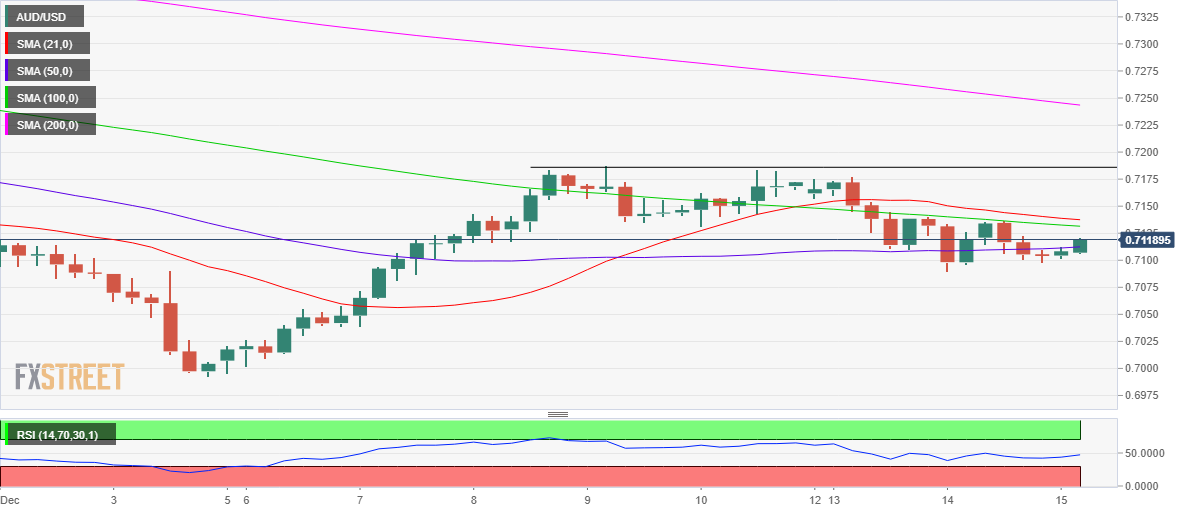
AUD/USD: Four-hour chart
Author

Dhwani Mehta
FXStreet
Residing in Mumbai (India), Dhwani is a Senior Analyst and Manager of the Asian session at FXStreet. She has over 10 years of experience in analyzing and covering the global financial markets, with specialization in Forex and commodities markets.

















