Aussie softens as RBA cuts growth forecast


H1 forecast slashed
In its Statement on Monetary Policy released this morning, the Reserve Bank of Australia trimmed its 2020 growth forecasts to reflect the impact of the recent drought, bushfires and the outbreak of the coronavirus.
The RBA slashed the June 2020 GDP growth forecast to 1.9% from 2.6% previously, while the December forecast was trimmed to 2.7% from 2.8%. Looking further ahead, it raised both the June and December 2021 forecasts to 3.1% from 3.0%. The bank mentioned that its estimates were based on a technical assumption of one 25-bps cut to its benchmark rate in mid-2020. Market pricing currently assigns a 51% probability of a rate cut at the June meeting.
There was only one small adjustment to inflation forecasts, with the June 2020 core inflation outlook reduced to 1.75% from 2.0% previously.
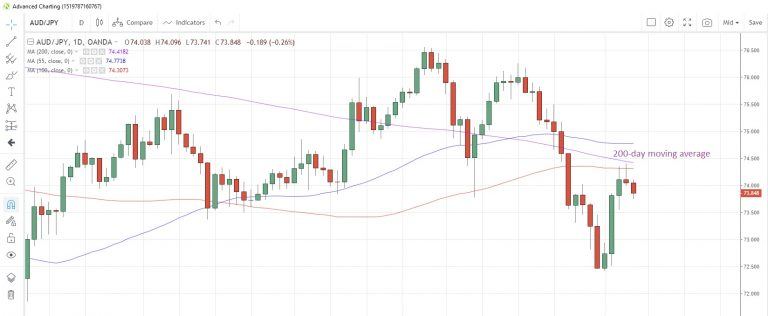
The Australian dollar traded softer after the statement, losing 0.15% versus the US dollar and 0.33% versus the Japanese yen. AUD/JPY is retreating from the 200-day moving average at 74.418, which has capped prices since January 27.
AUD/JPY Daily Chart
Source: OANDA fxTrade
Coronavirus update
Unconfirmed rumours are circulating that the city of Shenzen, just across the border from Hong Kong, is in lockdown due to the coronavirus. The number of global cases of the virus continues to rise, reaching 31,472 this morning, with 31,162 of them located in mainland China. Japan’s reported cases jumped after more victims quarantined on a cruise ship were diagnosed. The Japan total is now at 86, second in the cases league table. The number of virus-linked deaths has hit 638, with still only two reported outside of the Chinese borders (Source: John Hopkins University).
China’s trade data pending
China’s trade numbers for January are due anytime, with economists expecting a drop in both exports and imports due to the timing of the Lunar New Year break this year. Estimates suggest imports fell 6.0% y/y while exports slid 4.8%. As a result, the trade surplus is seen narrowing to 38.6 billion from $47.2 billion.
Nonfarm payrolls in focus
The US economy probably added 160,000 jobs in January, according to the latest survey of economists, more than the 145.000 recorded in December. Robust PMI data and an improvement in the employment index (up to 46.6 from 45.2) within the ISM manufacturing PMI might suggest the upside may be vulnerable this month, not forgetting the blowout in the ADP number last Wednesday. The unemployment rate is seen unchanged at 3.5% while average hourly earnings are expected to rise 0.3% from a month earlier, an acceleration from the 0.1% gain seen in December.
For the European session, the focus will be on German industrial production and trade data for December. The former is seen falling 0.2% m/m while for the latter, both imports and exports are expected to show a rebound from the previous month, rising 0.2% and 0.5%, respectively.
Author
Andrew Robinson
MarketPulse
A seasoned professional with more than 30 years’ experience in foreign exchange, interest rates and commodities, Andrew Robinson is a senior market analyst with OANDA, responsible for providing timely and relevant market commentar