|

AUD/USD Forecast: Remains vulnerable to extend losses

  • The move from trade deals to coronavirus in China impacts equity markets.
  • Aussie has underperformed despite improvement in global sentiment and better-than-expected Australian labor report.
  • AUD/USD bearish, could stabilise if it recovers 0.6830/40.

The AUD/USD pair is about to end the week with a modest decline, hovering around 0.6830. It bottomed late on Friday at 0.6819, the lowest level in six weeks. Previously it recovered boosted by Australian data. The rally found resistance below 0.6880 and then pulled back toward the weekly lows.

The pair was affected by a stronger US dollar and from concerns about the new coronavirus in China. Also, speculations about more easing from the Reserve Bank of Australia (RBA) continues to weigh on the Aussie. The improvement in economic data across the globe and even from Australia did not help AUD/USD sufficiently. The jobs report showed the Australian economy added 28,900 jobs and also retail sales came in above expectations. Those macroeconomic numbers removed pressure from the RBA to cut rates gains in February but further easing is still considered by market participants.

From a fundamental perspective, analysts argue that global manufacturing may have bottomed out following the preliminary PMIs in Japan, UK, US and Europe; that could offer support to the aussie. The key risks in the short-term continue to be Australian data and the spread of the virus.

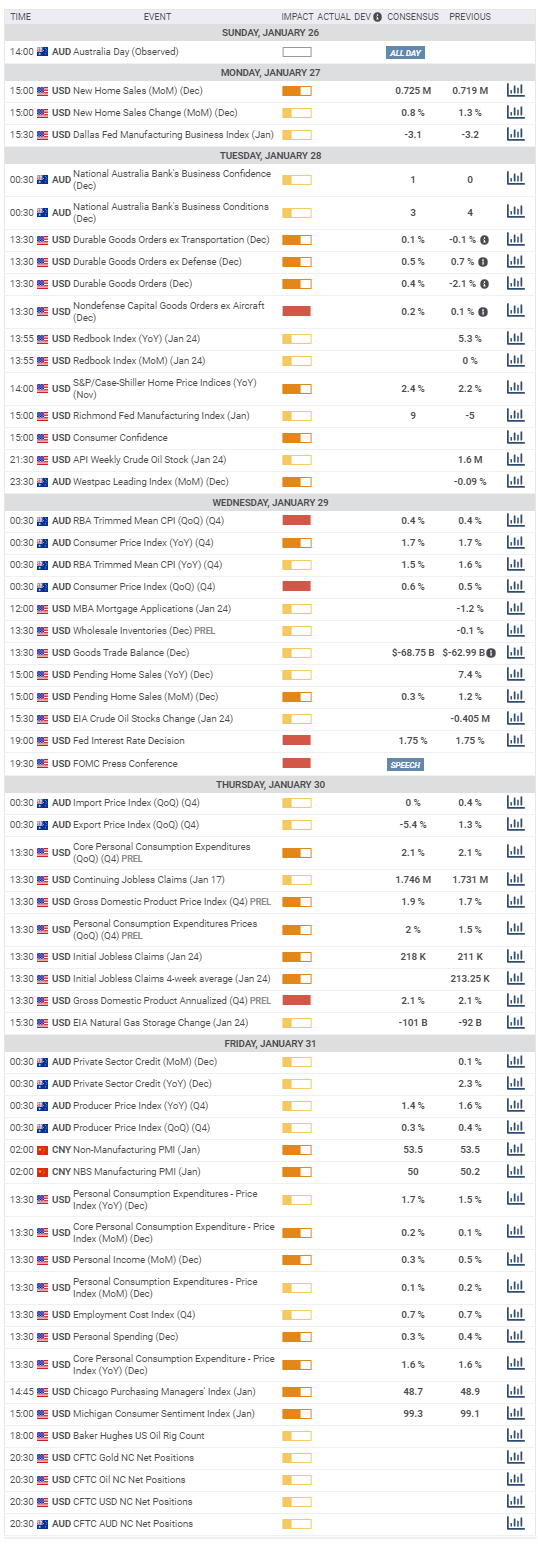
Next week, official data on China's manufacturing and non-manufacturing PMI is due. In Australia, the key report will be inflation. The annual Consumer Price Index is seen at 1.7% over the fourth quarter. In the US, the Federal Reserve will have its meeting. Monetary policy is expected to remains unchanged. Another relevant report will be US Q4 GDP growth on Thursday. Markets are ignoring Trump’s impeachment while tensions in the Middle East eased over the last days but remains a risk.
AUD/USD Technical Outlook

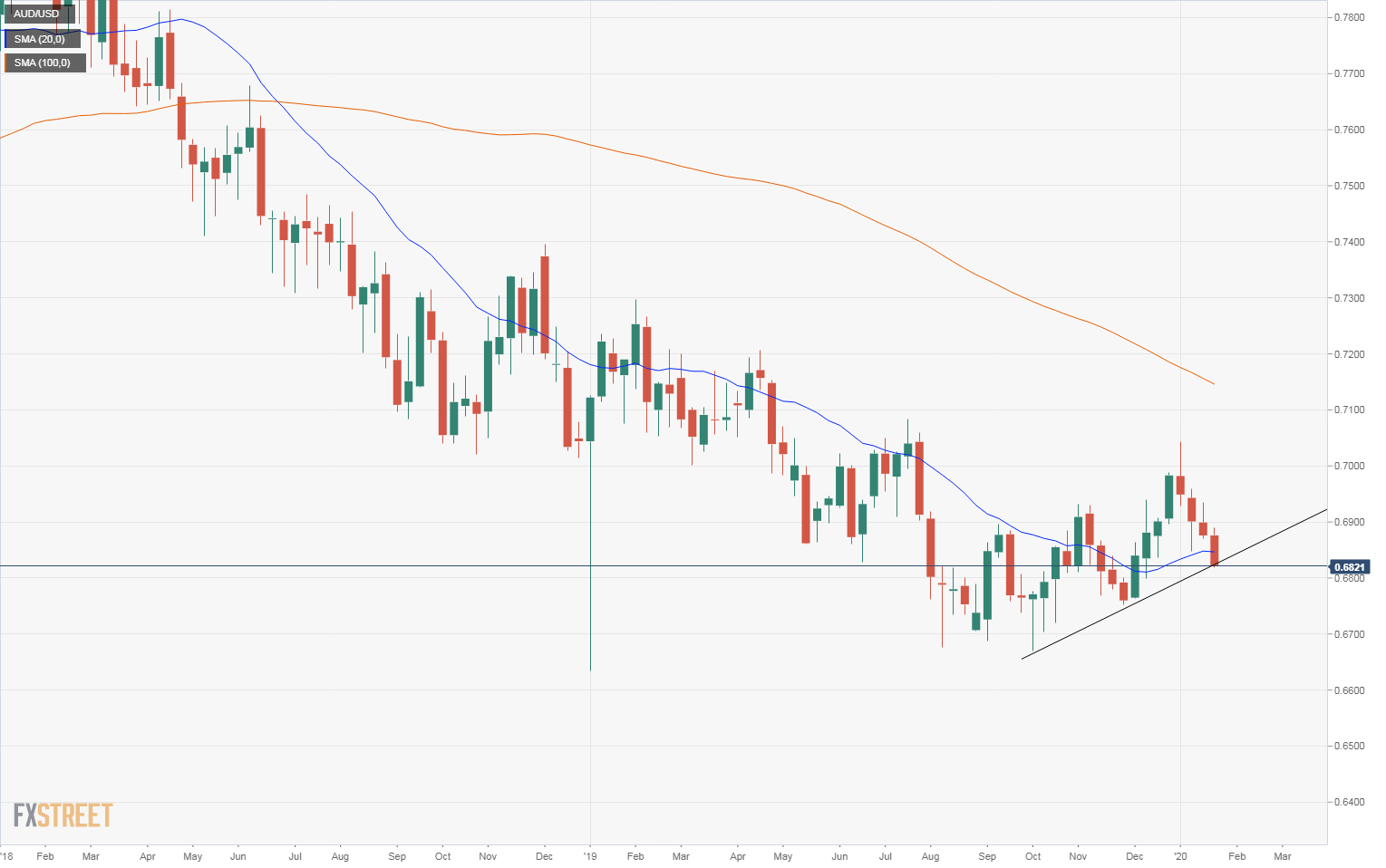
The AUD/USD pair continues to retreat from its December multi-month high around 0.7030. The inability to firmly recover the 0.6850 area highlights that negative outlook has momentum. On a weekly basis it is the fourth consecutive decline and the first close under the 20-week SMA since November of last year. A potential positive for the bulls is that only one time over the last years, it dropped during five consecutive weeks.

The daily chart shows AUD/USD testing an ascendant trendline from October lows, offering some support around 0.6825/30 and also near the 100 SMA at 0.6840. If it consolidates below 0.6825/30 more losses seems likely.  The next strong support is seen at 0.6795/0.6800, followed by 0.6765.

If the Aussie manages to remain above 0.6830, it could point to some stabilisation but still within a bearish case, as technical indicators point south, momentum below 100 and price under the 20 SMA. A daily close above 0.6860 would alleviate the bearish pressure, and it could extend to the 20 SMA at 0.6880.  Above, the pair has room to rise further, targeting 0.6920.


AUD/USD sentiment poll

The FXStreet Forecast Poll indicates that the market still see weakness in the AUD/USD pair over the short-term but it also shows expectations of a recovery, in the period from one to three months. Despite some optimism for a move to the upside in a one month period, it is seen mostly trading around current or lower levels in three months.

The Overview chart shows the monthly and quarterly moving average turned south again but still above the current price, although not very far. While some analysts forecast it will trade above 0.70 in three months, others see the pair vulnerable for a break below 0.6700.

Author

Matías Salord

Matías started in financial markets in 2008, after graduating in Economics. He was trained in chart analysis and then became an educator. He also studied Journalism. He started writing analyses for specialized websites before joining FXStreet.


More from Matías Salord
Share:

Markets move fast. We move first.

Orange Juice Newsletter brings you expert driven insights - not headlines. Every day on your inbox.

By subscribing you agree to our Terms and conditions.

Editor's Picks

EUR/USD rebounds after falling toward 1.1700

EUR/USD gains traction and trades above 1.1730 in the American session, looking to end the week virtually unchanged. The bullish opening in Wall Street makes it difficult for the US Dollar to preserve its recovery momentum and helps the pair rebound heading into the weekend.

GBP/USD steadies below 1.3400 as traders assess BoE policy outlook

Following Thursday's volatile session, GBP/USD moves sideways below 1.3400 on Friday. Investors reassess the Bank of England's policy oıtlook after the MPC decided to cut the interest rate by 25 bps by a slim margin. Meanwhile, the improving risk mood helps the pair hold its ground.

Gold stays below $4,350, looks to post small weekly gains

Gold struggles to gather recovery momentum and stays below $4,350 in the second half of the day on Friday, as the benchmark 10-year US Treasury bond yield edges higher. Nevertheless, the precious metal remains on track to end the week with modest gains as markets gear up for the holiday season.

Crypto Today: Bitcoin, Ethereum, XRP rebound amid bearish market conditions

Bitcoin (BTC) is edging higher, trading above $88,000 at the time of writing on Monday. Altcoins, including Ethereum (ETH) and Ripple (XRP), are following in BTC’s footsteps, experiencing relief rebounds following a volatile week.

How much can one month of soft inflation change the Fed’s mind?

One month of softer inflation data is rarely enough to shift Federal Reserve policy on its own, but in a market highly sensitive to every data point, even a single reading can reshape expectations. November’s inflation report offered a welcome sign of cooling price pressures. 

XRP rebounds amid ETF inflows and declining retail demand demand

XRP rebounds as bulls target a short-term breakout above $2.00 on Friday. XRP ETFs record the highest inflow since December 8, signaling growing institutional appetite.