AUD/USD Forecast: Going down under, jobs, Fed to the rescue?
- The AUD/USD tumbled down amid a stronger US Dollar and trade fears.
- The Australian jobs report and the Fed decision stand out.
- The technical picture shows downside Momentum is gaining ground.

Greenback comeback, trade fears
The AUD/USD moved mostly on moves in the US Dollar. Trade tensions remained high on the agenda as the White House is reportedly working on new tariffs aimed at China and as Donald Trump extends his cabinet reshuffling to Secretary of State Rex Tillerson and potentially to additional moderates. The relief rally that the Aussie enjoyed after receiving an exemption from tariffs faded away.
Australian data was OK with the Westpac Consumer Sentiment advancing by 0.2% and Consumer Inflation Expectations accelerating to 3.7%. Chinese data was even more encouraging: an annual rise of 7.2% in Industrial Output in Australia's No. 1 trade partner.
Australian events: Jobs report and RBA minutes
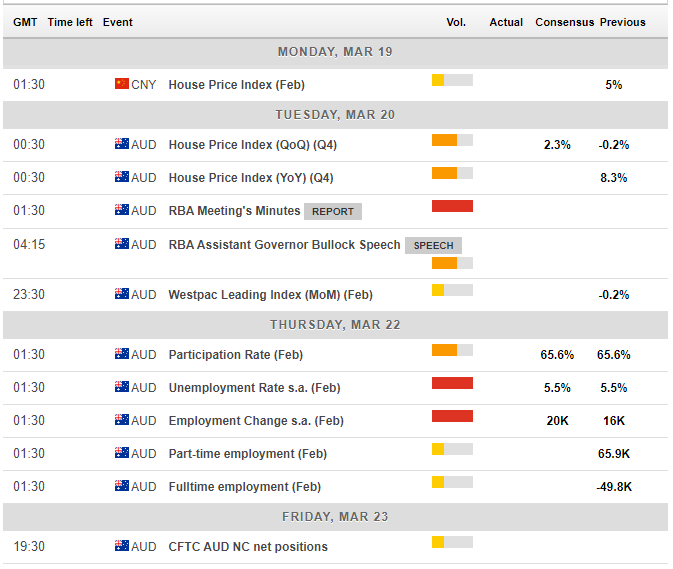
The House Price Index on Tuesday will be eyed as fears of growing household debt creep in. The more important event on Tuesday is the RBA Meeting Minutes. The previous release showed worries about wages and debt, and it will be interesting to see if this sentiment is echoed once again. The RBA Assistant Governor Michelle Bullock will also have her say on Tuesday.
The main event comes on Thursday with the jobs report. Australia is expected to report a rise of 20,000 jobs in February, slightly above the figures back in January. The Australian Unemployment Rate is projected to remain unchanged at 6.5%. If the data meet expectations, watch out for the distribution between full-time and part-time positions.
Here are the events that will shape the Australian dollar as they appear on the economic calendar:
US events: All about Powell
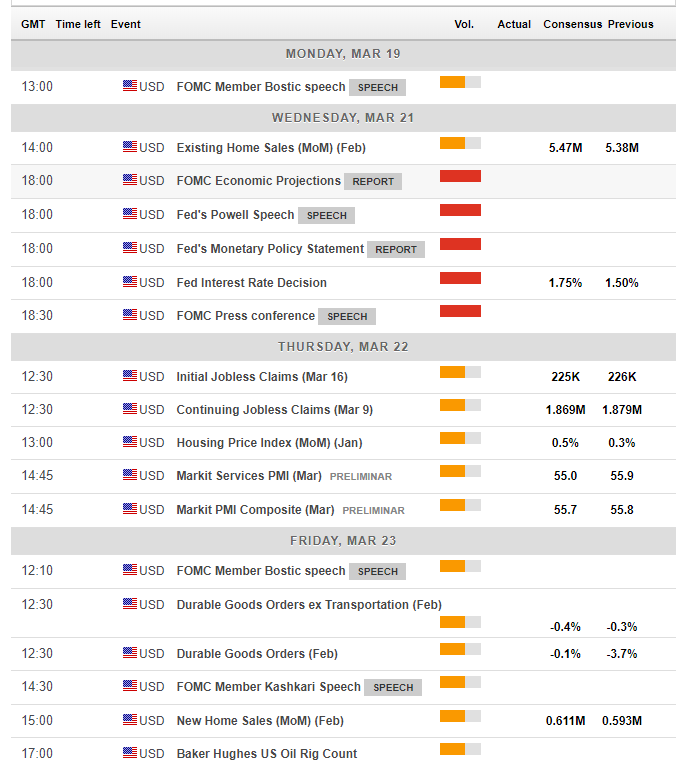
The Federal Reserve is the center of attention. Fed Chair Jerome Powell is set to raise the interest rate in his first decision. Markets will focus on the dot-plot, where the Fed forecasts the path of hikes looking forward. An upgrade from three to four hikes is certainly possible.
Fiscal stimulus and robust job growth are encouraging but wages are not going anywhere fast, and neither is inflation. So, the event also consists of other forecasts and a press conference by the new Chair. He may offer a more nuanced view here.
See: Fed Preview: Dollar-friendly dot-plot before a Powell punishment?
The US will also publish New and Existing Home Sales as well as Durable Good Orders, a measure of investment that could have an impact after the Fed-fest is fully digested.
Here are the more critical US events from the forex calendar:
AUD/USD Technical Analysis - now it is bearish
The technical picture was somewhat complicated last week, but the pair has chosen a direction: to the downside. The RSI leans lower, well below 50 and still above 30, indicating further losses. Momentum has accelerated to the downside. The pair also broke down below the 50-day Simple Moving Average and also the 200-day one after battling both lines.
Support awaits at 0.7710, the March 1st low. Below that line, we are back to levels last seen in 2017, with 0.7650 serving as an essential line before the bottom of the range at 0.7500.
Looking up, 0.7770 switches to resistance. It capped the pair earlier in March. Next up is 0.7900, a found number that was stubborn resistance in March. The 0.8000 level is the last one to watch.
What's next for AUD/USD?
While the Fed may not go all in with hawkishness, the Australian Dollar will need more support to stabilize after the recent tumbling down. Jobs are unlikely to be that panacea especially as trade fears escalate. We may see further falls.
The FXStreet Forecast Poll shows a bearish sentiment, in line with the opinions expressed here.
Author
Yohay Elam
FXStreet
Yohay is in Forex since 2008 when he founded Forex Crunch, a blog crafted in his free time that turned into a fully-fledged currency website later sold to Finixio.

















