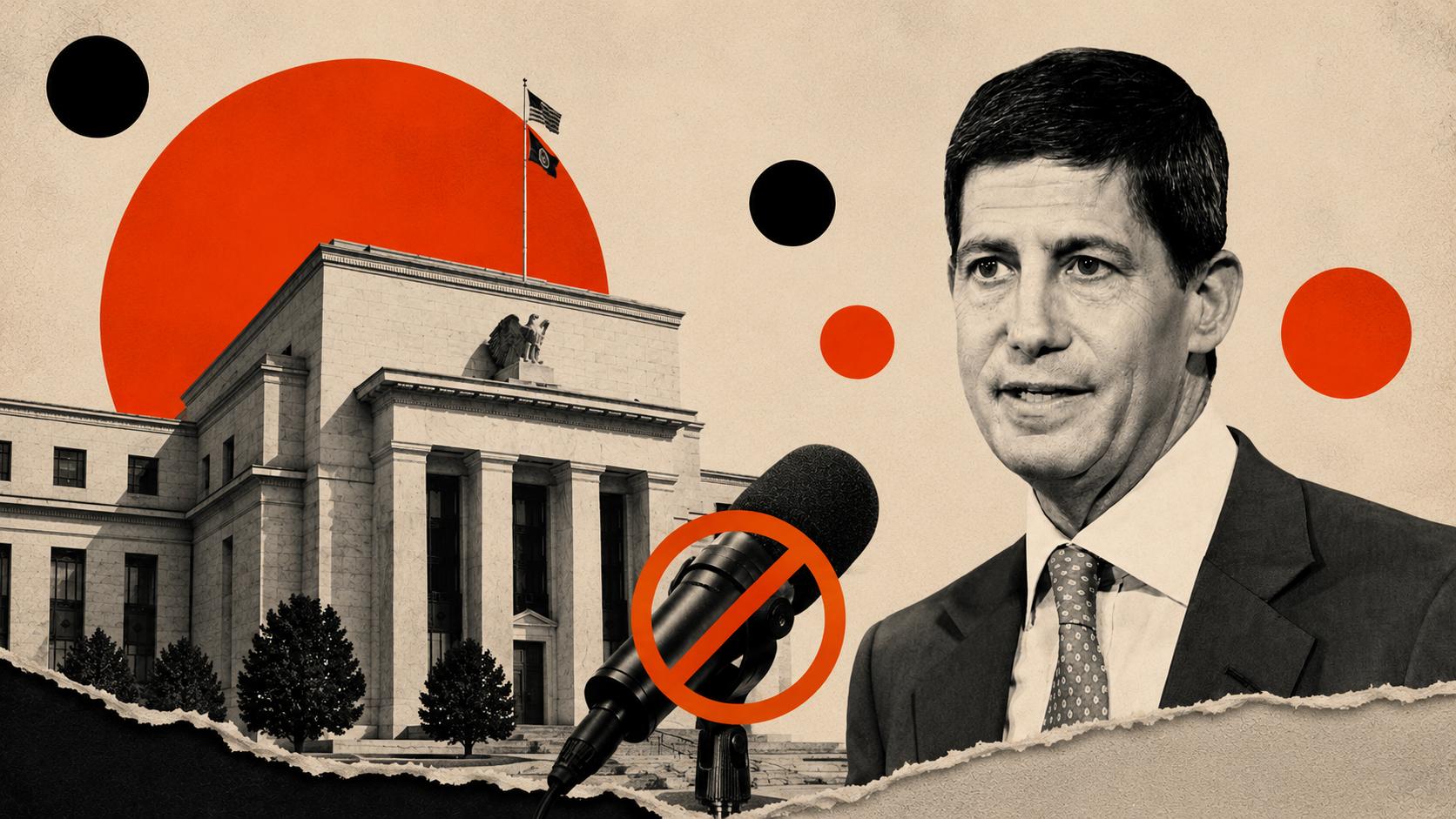
Asia wrap: Korea’s "Ant army" gets another stress test as the AI trade starts to rotate
- Korea’s 8% opening flush was not just another bad session. It was a live stress test for the leveraged AI and semiconductor complex.
- The Korean Butterfly Effect has been reduced, while the Rubber Band Effect is increasingly happening intraday as quants adapt to Korean 3x ETF flows.
- Payrolls are the next volatility trigger. A +175k print would likely force markets to rethink how much Fed tightening is still sitting in the shadows.
- Gold near $4,100 and USD/JPY trading through 162 suggest the market remains comfortable with Warsh allowing the data to drive expectations. The real instability remains in the AI rotation beneath the surface.
Korea’s “Ant army” gets another stress test
Global equities are still carrying the bruises from the US chip sell-off, but nowhere has the damage been more immediate than in Seoul. The KOSPI opened with an 8% flush, another reminder that Korea has become the world’s most concentrated expression of leveraged semiconductor optimism. It later clawed back some ground to trade roughly 3% lower, while Japan’s Nikkei was down around 1.2%. European futures were pointing to a broadly flat open, with pan-European contracts up just 0.1%, while Nasdaq futures rose 0.3% and S&P 500 futures added 0.2%.
Some are blaming quarter-end rebalancing, although that explanation feels a little too convenient given that the calendar has already turned. Rebalancing may have helped light the match, but it does not explain why the room was full of dry timber. The more important issue is that investors are beginning to ask how long the AI party can run at its current pace, particularly after reports that Meta may look to sell excess AI compute. That does not mean the AI build-out is over. But it does raise an awkward question: if hyperscalers are already thinking about excess capacity, do they still need to keep buying every hot chip that comes off the production line?
That is the fault line now opening beneath the market. The AI trade is not collapsing, but it is rotating in fast motion, repricing, and becoming far less forgiving of crowded positioning. Korea is simply where the stress shows up first because the country has turned into the natural home of the three-times leverage assault. Retail flows, leveraged ETFs and momentum machines have created an ecosystem where every large move starts to feed itself.
The Korean Butterfly Effect has been reduced. The market is no longer treating every KOSPI air pocket as a global contagion event, because traders have become more familiar with the mechanics behind it.
What used to look like a shockwave is increasingly being recognised as a localised leverage event: three-times ETF flows, retail momentum, forced de-risking and thin exits all feeding into one another. The Ant Army can still move the index violently, but the spillover into global risk is becoming less automatic.
That is why the Rubber Band Effect is now happening intraday rather than across several sessions. As quants adjust their parameters to account for Korean 3x ETF flows, the reflexive sell-off is being met faster by systematic buying, volatility targeting adjustments and short-covering. The market is effectively learning the rhythm.
The danger is that this works until the move stops being mechanical. If the underlying AI narrative genuinely weakens, the models will discover that a familiar Korean flush is not always just another rubber band snap. Sometimes the elastic has already been stretched too far.
There may also be some pre-event risk reduction ahead of US payrolls. The dispersion around today’s NFP is wide, and consensus sits near +115k, with a whisper closer to +130k. A print north of +175k would be a different conversation altogether. The market may be prepared for a decent number, but it still looks vulnerable to confusion if payrolls come in modestly stronger than expected without delivering a clear signal on wages or unemployment.
The cross-market picture suggests investors have taken Warsh’s softer inflation tone to heart. Gold is edging back toward $4,100, USD/JPY has slipped back through 162, and short-dated US rates have steadied after initially falling 5-6bp following his Sintra appearance. Warsh offered little fresh guidance and avoided endorsing either a more hawkish or dovish path, leaving markets to draw their own conclusions from the data.
The market read Warsh’s comments as less hawkish than expected. With no fresh tightening signal, short-dated US rates slipped 5-6bp and the dollar eased modestly. But in effect, he has left the market to do the Fed’s work for him, allowing rates and the dollar to respond to the data rather than trying to steer every move with a speech.
That leaves today’s jobs report as the next real test. The unemployment rate is expected to hold at 4.3%, and the Fed’s working assumption appears to be that, with labour-force growth subdued, even a soft payroll number does not automatically mean unemployment has to rise. Unless payrolls miss badly and previous months are revised sharply lower, the dollar should remain reasonably supported.
DXY is sitting near the middle of its one-week range. Another 150k-plus payrolls print could send it back toward 101.50-101.80 as traders lean further into the possibility that the Fed may hike sooner than currently expected. A print above +175k would likely create a much sharper reaction, especially if wages remain firm.
The wild card remains Japan. A soft US number would offer Tokyo a cleaner window to sell USD/JPY aggressively, so anyone leaning long dollars into payrolls needs to stay nimble. At USD/JPY near 162, traders are no longer simply trading rate differentials. They are trading rate differentials with an intervention risk premium sitting on top.
The euro has softened a little on the crosses after weaker eurozone inflation data raised doubts about whether the ECB needs to follow through with a September hike. Markets are still pricing around 15bp of tightening, although the debate is far from settled. Energy subsidy expiries at the end of June could push inflation higher again over the coming months, which means September is not yet off the table.
For now, though, the Fed-dollar story remains the dominant summer trade. EUR/USD could revisit the 1.1300 area if the market continues to price a 50bp Fed hike this year. The longer-term path is less straightforward. If the Fed ultimately does not hike, EUR/USD could move back into the 1.16-1.18 range into November and December.
The calm on the surface is real enough. Equity futures are stabilising, FX is catching its breath and rates are waiting for payrolls. But below the surface, the AI trade is rotating, leverage is being stress-tested and Korea remains the place where the market’s hidden turbulence becomes visible first.
Author

Stephen Innes
SPI Asset Management
With more than 25 years of experience, Stephen has a deep-seated knowledge of G10 and Asian currency markets as well as precious metal and oil markets.