Gold outlook: Higher rates, stronger Dollar and the search for a new catalyst

Gold entered 2026 as one of the market’s strongest performers, fuelled by geopolitical tensions, tariff uncertainty and widespread expectations that the Federal Reserve would begin cutting interest rates. But the precious metal fell more than 14% in the second quarter 2026, its steepest quarterly decline since 2013, as investors reassessed nearly every pillar that had supported the rally so far.
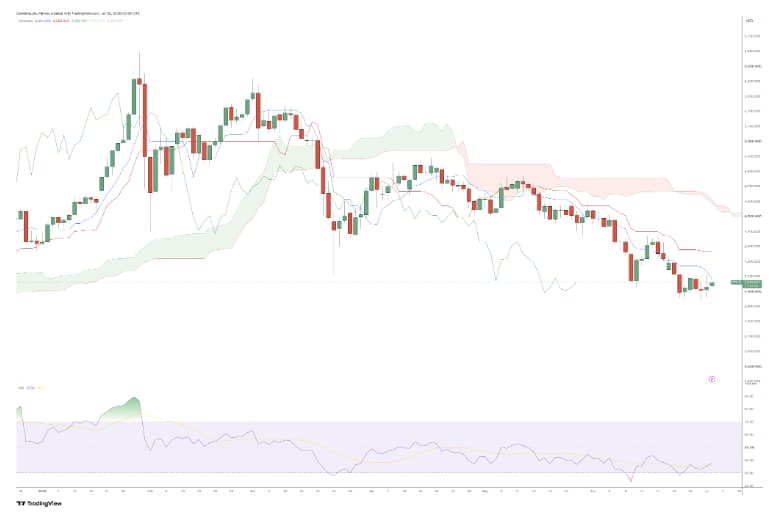
Why did Gold post its worst quarter in 13 years?
The most important shift has been monetary policy. Gold does not generate income, making its relative attractiveness highly sensitive to interest rates and bond yields. When central banks lower borrowing costs and real yields decline, the opportunity cost of holding bullion falls. This year, however, markets have moved in the opposite direction.
Persistent inflation, driven by higher energy prices following the conflict with Iran and the lingering effects of tariffs, has forced policymakers to maintain a restrictive stance. The European Central Bank already tightened policy in June, while investors have rapidly repriced expectations for the Federal Reserve under Chair Kevin Warsh.
Rather than anticipating rate cuts, markets have been increasingly preparing for additional tightening. Bank of America now expects the Fed to deliver three consecutive rate hikes between September and December, lifting the federal funds rate to 4.25%-4.50%, reflecting concerns that core inflation remains well above the central bank’s objective.
Rising rate expectations have pushed Treasury yields higher while simultaneously strengthening the US Dollar, creating a double headwind for gold. Higher yields increase the return available on fixed-income assets, while a stronger Dollar makes gold more expensive for international buyers and historically weighs on precious metals priced in the US currency.
The broader investment environment has also reduced demand for defensive assets. Despite geopolitical uncertainty, US equity markets have continued to rally, supported by robust corporate earnings and optimism surrounding artificial intelligence-driven productivity gains. During the second quarter, the S&P 500 and Nasdaq recorded their strongest quarterly performances since 2020, while first-quarter earnings for S&P 500 companies surged 25% year-over-year. As investors rotated back into equities and other risk assets, demand for traditional safe havens naturally weakened.
Just twelve months ago, the consensus across Wall Street pointed toward a sustained rally for gold. Today, that optimism has cooled significantly. Major institutions are dialing back their projections; Goldman Sachs, for example, recently cut its year-end gold target from $5,400 to $4,900 per ounce. Under an even more restrictive monetary scenario, the bank believes gold could retreat toward $4,440.
Taken together, higher real yields, a stronger Dollar, resilient economic growth and improving investor confidence have fundamentally altered the macro backdrop. Rather than reflecting a collapse in gold’s long-term investment case, the recent correction illustrates how sensitive the metal remains to shifts in monetary policy expectations and global capital flows.
Where could Gold trade in the second half of 2026?
Although gold has suffered its sharpest quarterly decline in more than a decade, the longer-term structural case for the precious metal remains intact. The question for investors is no longer whether gold retains its role as a strategic asset, but which catalyst will be powerful enough to reignite the next leg of the bull market.
According to the World Gold Council, current prices broadly reflect today’s macroeconomic environment: moderate global growth, inflation that remains above central bank targets and expectations that policymakers will keep interest rates restrictive for longer. Under this baseline scenario, gold is likely to trade within a relatively narrow range around current levels during the second half of 2026 rather than embark on another sustained rally.
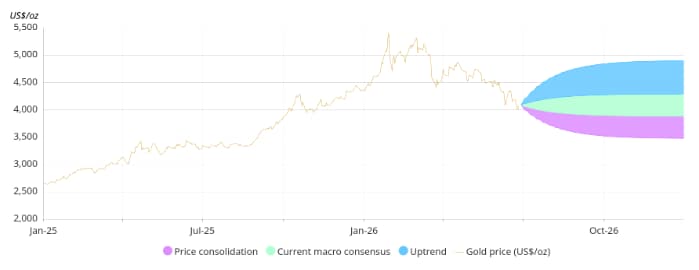
A decisive breakout would likely require a meaningful change in the macro landscape.
One potential trigger would be a deterioration in global economic activity. Signs of recession, weaker labour markets or slowing corporate earnings would likely revive demand for defensive assets while increasing expectations that central banks will eventually pivot towards monetary easing. A second catalyst would be renewed geopolitical tensions capable of reigniting safe-haven demand. Finally, a reversal in interest-rate expectations, particularly if inflation begins to moderate more quickly than anticipated, could lower real yields and restore one of gold’s most supportive fundamental drivers.
The World Gold Council’s scenario analysis suggests that these conditions could allow gold to recover toward $4,500 per ounce, while a combination of multiple supportive catalysts could eventually lift prices back toward the $5,000 mark. Conversely, if economic growth remains resilient, bond yields continue rising and financial markets stay relatively calm, gold could experience additional downside. Even then, analysts believe declines may be limited by renewed physical buying and long-term strategic demand.
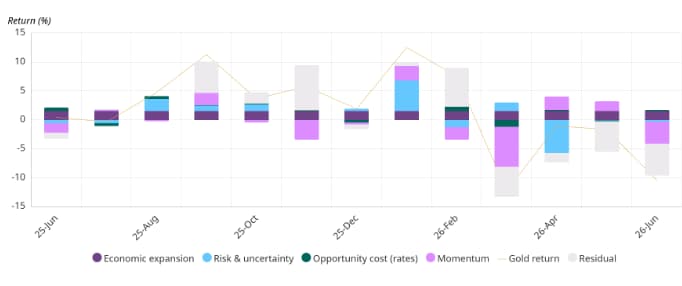
One of the strongest pillars supporting gold continues to come from central banks. While private investors have reduced exposure in response to higher interest rates, official institutions remain net buyers of bullion.
A recent global reserve management survey found that, for the first time, more central banks expect to reduce their US Dollar allocations over the coming decade than increase them, reflecting growing concerns over geopolitical fragmentation and the stability of the international monetary system. As reserve diversification accelerates, gold has become an increasingly important strategic asset within sovereign portfolios.
The survey also showed that a record share of central banks intends to increase gold holdings over the next one to two years despite historically elevated prices. More than half of respondents cited geopolitical risk as the primary motivation, while nearly two-thirds expect gold to trade between $5,000 and $6,000 per ounce by mid-2027. This suggests that official-sector demand remains driven less by short-term price considerations than by long-term reserve diversification and protection against geopolitical uncertainty.
Ultimately, gold’s outlook will continue to depend on the interaction between four key forces: economic growth, geopolitical risk, real interest rates and the US Dollar. While higher yields currently dominate the narrative, structural demand from central banks and the potential for future policy easing suggest that the secular bull market may be paused rather than over.
Stay up to date with what's moving and shaking on the world's markets and never miss another important headline again! Check ActivTrades daily news and analyses here.
Author

Carolane de Palmas
ActivTrades
Carolane graduated with a Masters in Corporate Finance & Financial Markets and got the AMF Certification (Financial Markets Regulator in France). Afterward, she became an independent trader, investing mostly in European and American stocks/indices.