All eyes on Fed’s Warsh
Preview: Warsh takes the podium at Jackson Hole today, but do not expect fireworks. Elsewhere, it's still the Nvidia show.
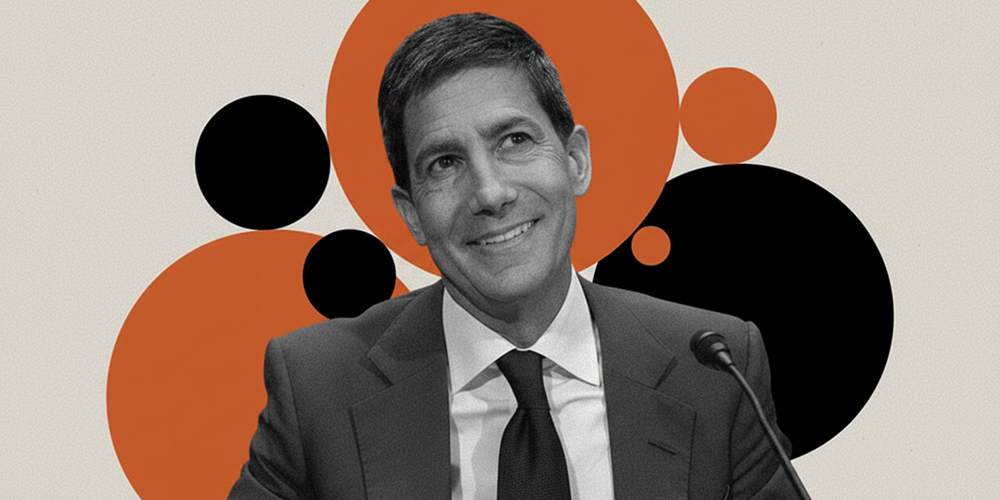
What can we expect from Fed Chairman Kevin Warsh today?
Although the annual Jackson Hole symposium opened yesterday, the market is honing in on one man: Fed Chairman Kevin Warsh. While the Fed has often used this stage to outline its interest-rate trajectory, Warsh has been explicit that he is not in the business of providing forward guidance.
As a result, Warsh has offered no direction on what conditions would justify tightening or easing policy. Despite a tight-lipped Chairman, Fed officials have continued to frame their expectations for the economy and rates, effectively emphasising how divided the Fed is right now and putting Warsh in the role of leading from behind.
Personally, I very much doubt we will hear anything of substance from Warsh today. You may recall that at the Chairman’s post-press conference in July, he said he wanted to frame the big questions at Jackson Hole – productivity, demographics, and the global economy amid supply shocks – rather than preview September’s meeting.
However, this could be a good opportunity for Warsh to outline his view of current economic conditions – perhaps to help build consensus. Frankly, though, I do not envy his position. Think back to only a few months ago, when he took the Fed Chair spot; a lot has happened since.
Fed members are clearly divided on inflationary pressures. You may remember that 3 of 12 Fed voting members called for a rate hike at the July meeting, and the minutes showed that most Fed participants agreed that if inflation did not ease, policy firming would be necessary.
While July CPI and PPI came in softer, July PCE data modestly increased at the headline – reaching 3.7% YY, matching June’s reading – while remaining unchanged at the core level. With inflation above the 2% target since February 2021 – that is, 65 months – how does the Fed plan to bring inflation back to target? This is the question markets want answered.
Additionally, the US and Iran continue to square off: a conflict that was only supposed to last four weeks has now entered its sixth month. This has created a chaotic backdrop for oil prices and, of course, inflation expectations. We also have the AI trade bolstering equities, and an economy that is stable, growing by 1.5% in Q2 26 (per the recent second estimate).
The labour market also shed jobs in July, and US Treasury Scott Bessent recently announced that the Treasury will ‘at least’ double its bond buybacks to control the long end of the yield curve. However, as you saw, yields erased the entire relief rally within 48 hours, with the 30-year having hit a 19-year high beforehand.
As you can see, a lot is going on, and market participants are craving details. However, I am not holding my breath here.
Market scoreboard: Dollar debasement trade gaining traction
Away from Jackson Hole, yesterday’s market action was dominated by Nvidia and its earnings report, including blowout guidance. You will recall that the company’s CFO, Colette Kress, delivered a rare, long-term full-year outlook alongside guidance for the upcoming quarter, pointing to roughly 70% revenue growth next year. This sent the NVDA stock up nearly 9% on Thursday.
Although all major US equity benchmarks gained on Thursday, breadth was one-sided, with technology (XLK) leading the gains and only about 150 S&P names rising against 350 fallers. Asia struggled to sustain that enthusiasm this morning, with Korean chipmakers slipping even as Taiwanese suppliers and Japan's Nikkei edged higher. European equity index futures point to a modestly positive open, while US equity index futures are mixed.
Elsewhere, oil prices are on track for weekly losses, with WTI and Brent crude snapping a two-week winning streak. This is largely due to developments in Iran, which is drawing up a list of conditions to allow freedom of navigation through the Strait of Hormuz. The US is still not in the picture, however.
I would be remiss not to mention the gold price. Versus the USD, the yellow metal is on track for its best month since 1999 – daily support is in play around US$4,585, with resistance overhead between US$4,857 and US$4,764 calling for attention.
In FX, the USD index ended broadly flat on Thursday – albeit off its best levels – with US Treasury yields higher across the curve, albeit largely stable right now.
I also want to note that BTC/USD is on track to add 3% this week, following last week’s 23% rally. Daily resistance at US$80,540 is active, and any follow-through upside would essentially swing the technical pendulum towards another layer of resistance at US$85,120.
Author

Aaron Hill
FP Markets
After completing his Bachelor’s degree in English and Creative Writing in the UK, and subsequently spending a handful of years teaching English as a foreign language teacher around Asia, Aaron was introduced to financial trading,