AI selloff: What bonds and credit markets reveal


The recent selloff in US technology stocks has left investors with a difficult question. Are we simply looking at a correction after months of strong performance, or is the market starting to reflect deeper problems in the economy?
The Nasdaq 100 has lost as much as 16.3% from its record high, while the Philadelphia Semiconductor Index has experienced an even sharper decline. At the same time, US Treasury yields have fallen, credit spreads have widened, and expectations surrounding Federal Reserve policy have started to shift again.
Interestingly, some of Wall Street's biggest strategists are already looking beyond the correction. Morgan Stanley continues to expect the S&P 500 to reach 8,000 points by year-end, while other forecasts range between 7,700 and 8,200.
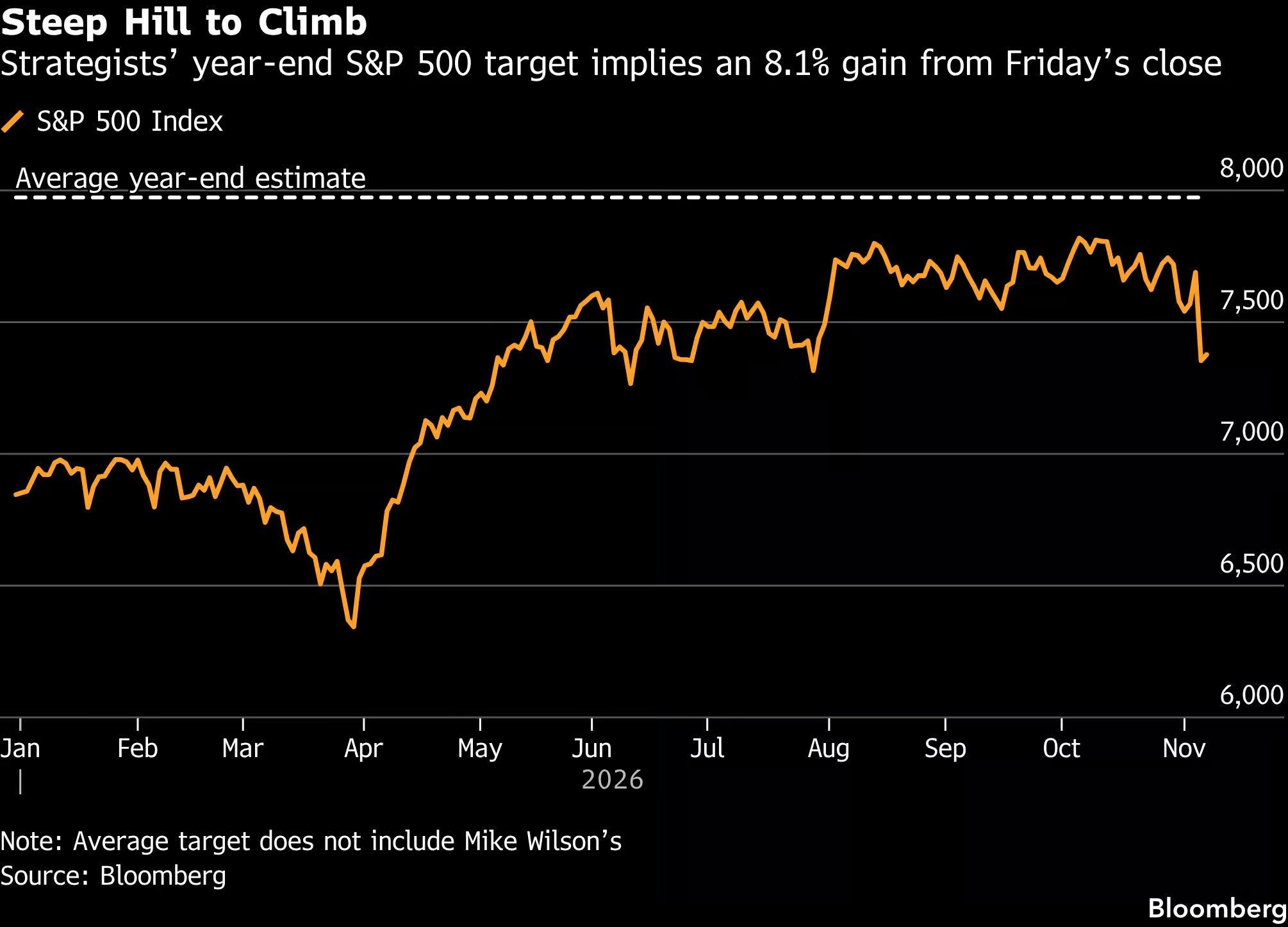
Those targets suggest that investors still see considerable upside. But I think there is another part of the market that deserves just as much attention right now.
While everyone is watching whether technology stocks can recover, the bond and credit markets may be giving us a better understanding of what is actually happening beneath the surface.
And what they are showing is not entirely reassuring.
Falling Treasury yields are not necessarily bullish
One development that caught my attention during the recent correction was the decline in US Treasury yields.
On November 5, the 10-year Treasury yield fell to approximately 4.84%, while the 2-year yield declined to around 4.46%.
At first glance, this should be good news for equities, especially technology companies. Lower yields generally reduce the discount rate applied to future earnings, which can make higher stock valuations easier to justify.
But there is an important difference between yields falling because inflation is cooling and yields falling because investors are becoming nervous.
In the first case, lower yields can support the economy. Borrowing becomes less expensive, businesses may find it easier to invest, and consumers can benefit from more favorable financing conditions.
In the second case, investors may simply be moving their money into government bonds because they are worried about what comes next.
Both scenarios can push Treasury yields lower, but they tell us very different things about the economy.
This is where I believe corporate credit markets become particularly useful.
The US high-yield credit spread widened from approximately 332 basis points on November 4 to 348 basis points on November 5.
In other words, investors were demanding more compensation for holding riskier corporate debt, even while Treasury yields were declining.
That is worth paying attention to.
A company does not borrow money at the Treasury yield alone. Its actual financing costs also depend on the credit premium investors demand.
If Treasury yields decline by 20 basis points but credit spreads widen by the same amount, the company may not benefit from cheaper financing at all.
This becomes particularly important for highly leveraged businesses or companies that regularly need to raise new capital.
So when I see Treasury yields falling while credit spreads are widening, I would be careful about treating that as a straightforward bullish signal for equities.
Lower yields are helpful, but only if the broader financing environment is improving as well.
The AI correction is becoming a question of profitability
The recent decline in AI-related stocks has brought back a discussion that was probably unavoidable at some point.
Over the past few years, investors have rewarded companies involved in artificial intelligence, semiconductor production, cloud computing and data center infrastructure with increasingly high valuations.
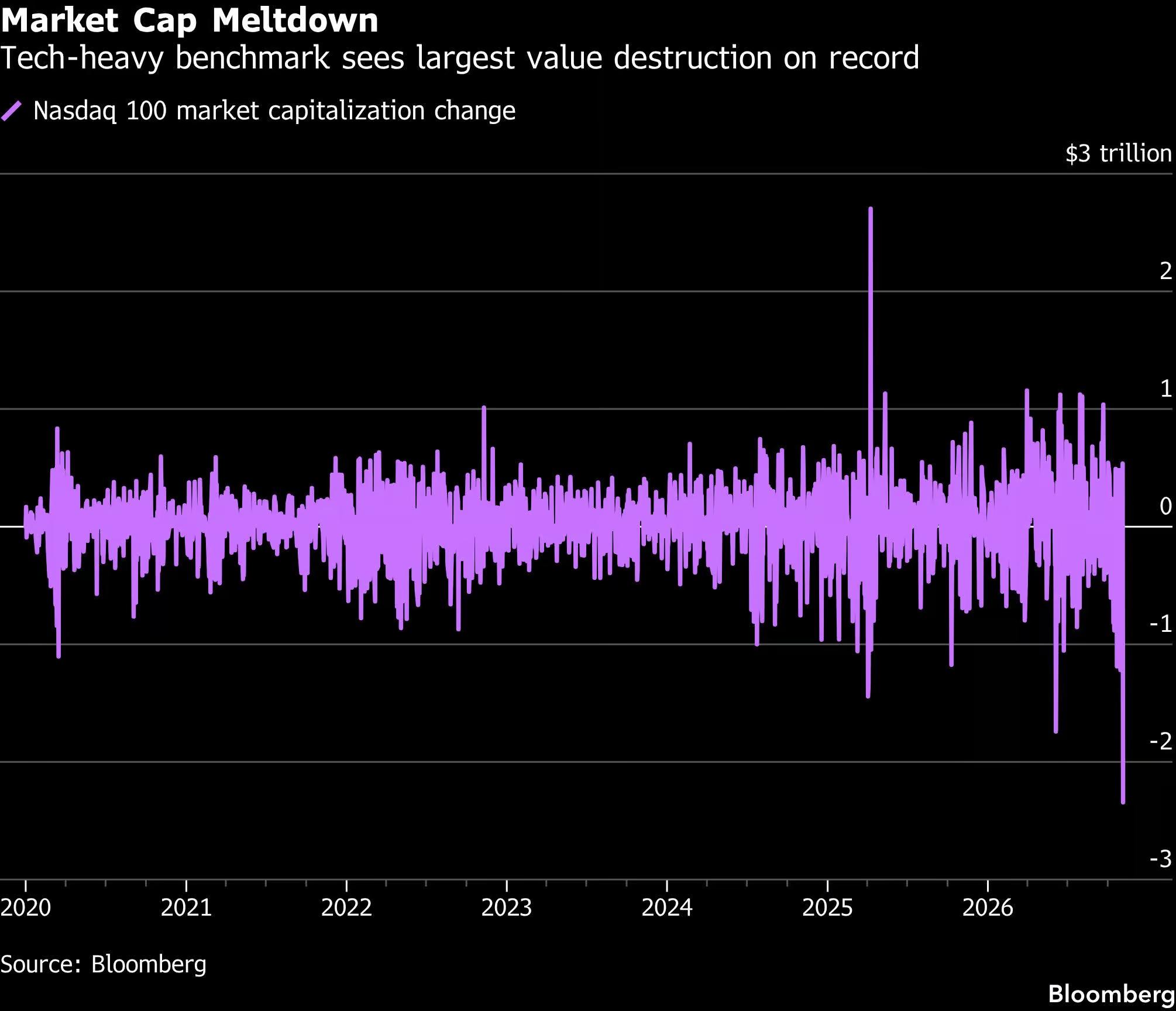
Much of that optimism has been built around the expectation that AI investment will continue expanding rapidly.
And there is little doubt that companies have been committing enormous amounts of capital to this industry.
The question is how much of that spending will eventually turn into sustainable earnings and cash flow.
Investors are now looking at those commitments more carefully, especially as financing conditions remain relatively restrictive.
Political uncertainty has made the situation more complicated.
Following the US midterm elections, concerns about possible regulatory restrictions on new data center projects have increased, particularly in Texas.
If major infrastructure projects face delays or additional requirements, the consequences could spread across the AI supply chain.
For semiconductor manufacturers and infrastructure providers, slower investment growth could mean weaker demand than previously expected.
For companies such as Alphabet and Amazon, however, the situation is slightly different.
If they reduce capital expenditure without significantly affecting revenue growth, their free cash flow could actually improve.
That is what makes the current correction interesting to me.
Not every company involved in AI faces the same risks, and not every reduction in investment spending is necessarily negative.
We may be entering a phase where the market becomes more selective.
Instead of rewarding companies simply because they are expanding their AI investments, investors may increasingly ask whether those investments are producing reasonable returns.
For the Nasdaq, this creates a more challenging environment.
Falling Treasury yields might support valuations, but that benefit can disappear quickly if earnings expectations begin to deteriorate.
A sustainable recovery would therefore need more than just lower interest rates.
The Federal Reserve faces a difficult balance
The latest US employment report has added another complication to the outlook.
October nonfarm payrolls increased by approximately 165,000, well above expectations of around 65,000. The unemployment rate declined to 4.1%, while previous employment figures were revised higher.
These are not the kind of numbers that would normally suggest an economy urgently needs monetary support.
The labor market is still showing resilience, and that matters for the Federal Reserve.
At the same time, we have an equity market that has experienced significant losses and a credit market where investors are demanding higher risk premiums.
The Fed is therefore dealing with two very different signals.
Economic activity, particularly employment, is holding up relatively well. Financial markets, however, are showing signs of increasing caution.
Following the stronger employment figures, Treasury yields recovered as investors reassessed the possibility of further monetary tightening.
The 2-year yield moved toward 4.51%, while the 10-year recovered to approximately 4.86%.
What I find interesting is how quickly the market has moved between concerns about financial stability and expectations of a more restrictive Federal Reserve.
If employment remains strong and inflation continues to be a concern, the Fed has little reason to change its policy simply because technology stocks have fallen.
But if credit conditions continue to deteriorate, the situation could eventually become more difficult.
Higher financing costs can affect corporate investment, refinancing activity and ultimately employment.
The Fed may not have to respond to that immediately, but it certainly cannot ignore it if the pressure becomes more widespread.
For now, I think the interaction between inflation, labor market resilience and financial conditions will remain one of the most important drivers across global markets.
What does this mean for currencies, gold and oil?
The effects of these developments are not limited to American equities.
Currency markets are particularly sensitive to changes in interest rate expectations and risk sentiment.
For the US dollar, the picture is somewhat mixed.
Stronger economic data and expectations of further Federal Reserve tightening can support the dollar because higher relative interest rates make dollar-denominated assets more attractive.
We saw that following the November 6 employment report, when EUR/USD declined toward 1.1142.
However, the dollar can also strengthen when investors become more cautious and move toward liquidity and defensive assets.
This means dollar strength does not always tell us the same story.
A stronger dollar driven by resilient economic growth is different from a stronger dollar driven by financial stress.
For EUR/USD, I would therefore pay attention not only to Treasury yields, but also to the difference between US and European growth expectations and the respective monetary policy outlooks.
USD/JPY presents another interesting relationship.
When US Treasury yields decline, the interest rate advantage of holding dollars over yen can narrow.
At the same time, periods of market uncertainty can encourage investors to unwind carry trades, potentially increasing demand for the Japanese currency.
If US yields continue falling while global equities remain under pressure, USD/JPY could therefore face additional downside pressure.
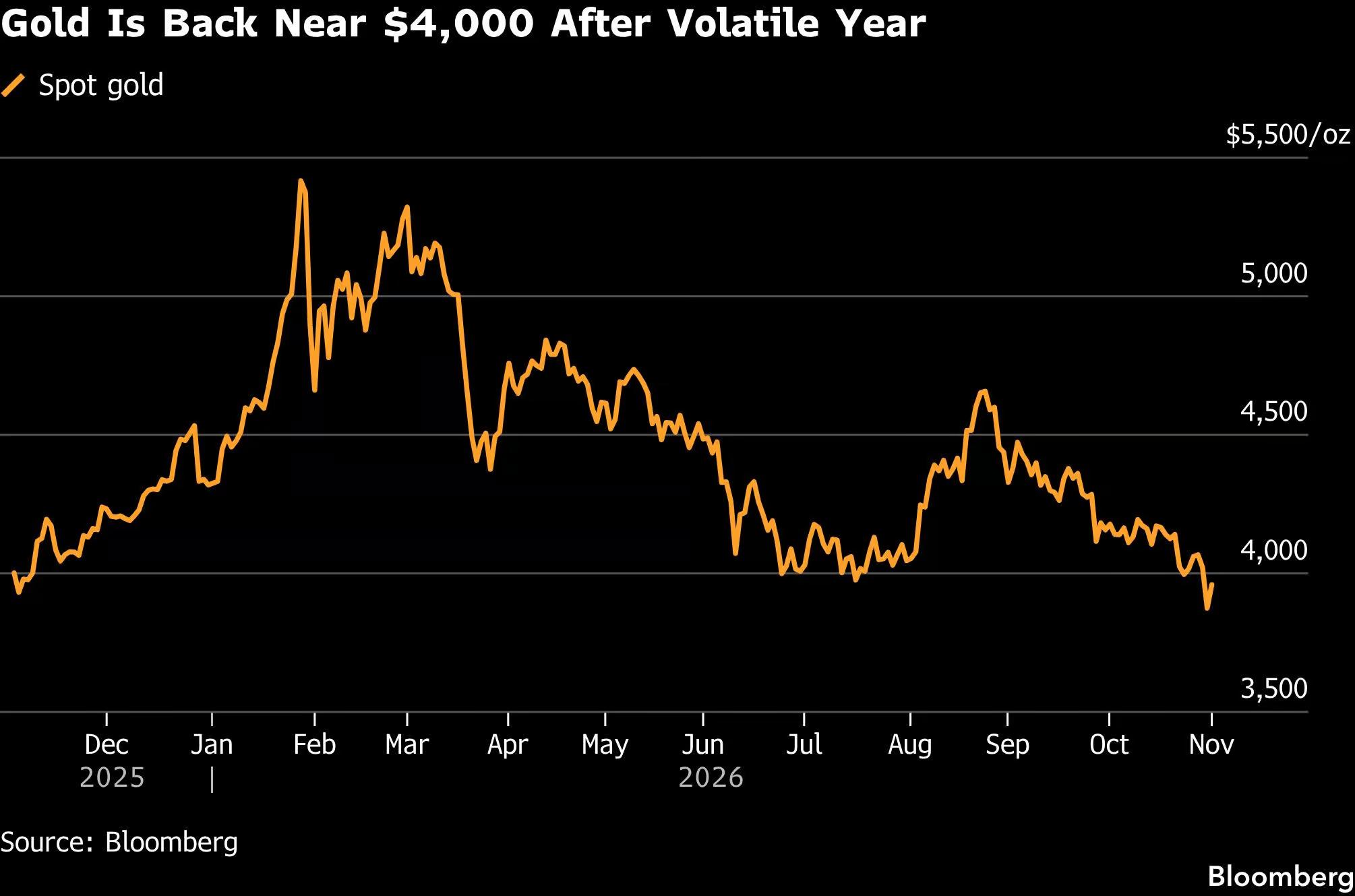
Gold is also sensitive to these developments.
Lower real yields generally reduce the opportunity cost of holding gold, while uncertainty in financial markets can support demand for defensive assets.
However, stronger employment data and renewed expectations of Federal Reserve tightening could push real yields higher and strengthen the dollar, limiting gold's upside.
Oil adds another important factor.
Lower energy prices can help reduce inflationary pressure and improve purchasing power, particularly in economies that depend heavily on energy imports.
But here, too, the reason behind the decline matters.
If oil prices fall because supply conditions are improving, that can be positive for the economy.
If they fall because global demand is weakening, the same price movement could point toward slower economic growth.
For central banks, that distinction is important.
Energy prices influence inflation, while demand conditions affect business investment, consumption and employment.
Looking at currencies, gold and oil together can therefore provide a broader picture of how investors are interpreting the economic environment.
Global equities may not recover at the same pace
Another point worth considering is that a recovery in the S&P 500 would not necessarily mean every equity market follows the same path.
The index has recently shown signs of stabilization around its 200-day moving average, and several Wall Street strategists are becoming more optimistic.
But I would be interested to see whether a recovery becomes broader rather than remaining concentrated in a small group of large technology companies.
Consumer-oriented businesses and healthcare companies have already attracted attention as possible beneficiaries of a rotation away from technology.
Asian markets face a different situation.
South Korea and Japan are closely connected to the global semiconductor industry. Companies such as SK Hynix and Samsung depend heavily on demand for advanced computing infrastructure and memory chips.
If expectations surrounding AI investment continue to weaken, the impact could reach well beyond the American technology sector.
Europe, meanwhile, faces its own challenges.
The region remains sensitive to global industrial demand, energy prices and international trade conditions.
The political situation in Washington could add another source of uncertainty.
Following the US midterm elections, there is a possibility that Democrats and Republicans find common ground when it comes to protecting American economic and technological interests.
That would not necessarily lead to a more accommodating trade relationship with Europe.
For the DAX and other European indices, this means a recovery on Wall Street would not automatically resolve the underlying economic challenges.
A more convincing recovery in Europe would likely require improving global demand, more stable financing conditions and a better outlook for industrial activity.
Financial stability remains the broader risk
Beyond the immediate correction in equities, I think there is another issue that deserves attention.
The relationship between banks, governments and central banks has become increasingly important as debt levels have risen.
The recently reported banking crisis in Paraguay has once again raised questions about regulatory oversight, confidence in financial institutions and the political consequences of banking instability.
That does not mean a global banking crisis is imminent.
But it is a reminder of how quickly financial problems can become much larger when confidence begins to weaken.
Banks are particularly sensitive to changes in interest rates, asset valuations and funding conditions.
When interest rates rise, the value of longer-duration fixed-income assets can fall. If funding costs increase at the same time, the pressure on bank balance sheets can become more significant.
Central banks must therefore balance their inflation objectives against the potential consequences of restrictive monetary policy for the financial system.
This becomes even more difficult when governments are heavily indebted.
Higher interest rates increase public financing costs, while weaker financial conditions can put additional pressure on banks and businesses.
There is also the question of how investors behave when they expect central banks to intervene during periods of serious market stress.
The idea of a Fed Put has been part of financial markets for years.
If investors believe that major losses will eventually be met with monetary support, they may be more willing to take risks while conditions remain favorable.
Of course, central bank intervention is not guaranteed, and it does not necessarily prevent investors from suffering losses.
Still, I think this expectation is an important part of understanding how risk is priced.
The real challenge for central banks is maintaining credibility on inflation while also preventing financial instability from developing into something more serious.
Outlook: What would confirm a sustainable recovery?
I do not think the possibility of a year-end rally should be dismissed.
After the recent correction, some parts of the equity market may offer more attractive valuations than they did a few weeks ago.
But I would want to see more than a few positive trading sessions before becoming convinced that the market has established a sustainable recovery.
For equities, improving market breadth would be a good starting point.
If more sectors begin participating in the recovery, rather than just a handful of large technology companies, that would make the move more convincing.
I would also watch corporate earnings expectations, particularly within the semiconductor and AI infrastructure industries.
The bond market remains equally important.
If Treasury yields decline because inflation is easing while economic activity remains resilient, that could create a healthier environment for equities.
If yields continue falling primarily because investors are seeking safety, I would interpret that differently.
Credit spreads may provide an additional piece of confirmation.
Narrowing spreads would suggest that investors are becoming more comfortable with corporate risk and financing conditions.
Continued widening, especially alongside falling Treasury yields, would be a reason for caution.
The same logic applies to currencies and commodities.
A stronger dollar supported by economic resilience sends a different signal from dollar strength driven by financial stress.
Gold rising because real yields are declining is not necessarily the same as gold rising because investors are worried about the financial system.
These differences may seem small, but they matter when trying to understand the broader market.
For the coming weeks, I would therefore pay less attention to whether individual indices manage to recover a certain percentage of their losses and more attention to whether the different asset classes begin telling a consistent story.
Conclusion
The recent correction has created an interesting situation.
Wall Street strategists are already discussing the possibility of a year-end rally, yet the signals coming from Treasury markets, corporate credit and monetary policy remain mixed.
The US labor market is still showing resilience, which gives the Federal Reserve reasons to maintain a restrictive stance.
At the same time, widening credit spreads suggest that investors are becoming more cautious about taking corporate risk.
For me, this is where the main question lies.
A recovery in equities supported by stable credit markets, resilient earnings and improving investment expectations would be far more convincing than a rally driven mainly by short-term buying after a sharp selloff.
The Nasdaq and S&P 500 could certainly recover from their recent losses. But whether that recovery lasts will depend on what happens outside the equity market as well.
Author

















