A key week for EUR/USD: ECB decision and US inflation in focus

The EUR/USD enters a potentially decisive week with monetary policy on both sides of the Atlantic once again driving the currency pair. The European Central Bank is widely expected to raise interest rates on September 10, while the release of U.S. inflation data on September 11 could determine whether the Federal Reserve follows with a rate hike of its own next week.
The ECB decision is largely anticipated, meaning the market reaction could depend less on the 25-basis-point move itself and more on the central bank’s guidance about what comes next. In the United States, meanwhile, the August consumer-price index could change expectations for the September 15-16 Federal Reserve meeting. That creates scope for increased volatility in the EUR/USD pair, particularly because the FX pair seems to be consolidating after a rebound.
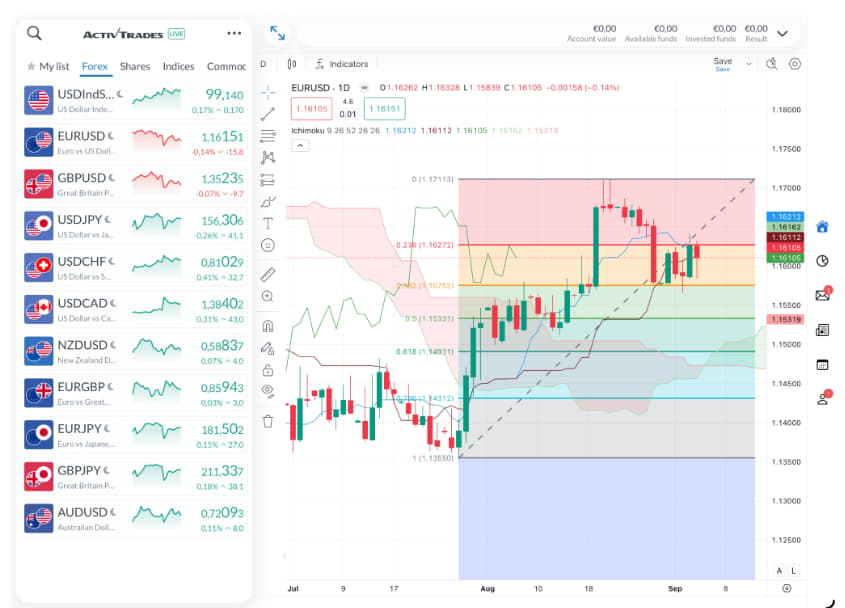
ECB and Fed policy divergence could drive EUR/USD volatility
Eurozone inflation accelerated to 3.3% in August from 2.9% in July, according to Eurostat’s preliminary estimate, marking its highest level since September 2023. The increase was largely driven by energy prices, with energy inflation accelerating to 14.3% from 10.3%. Core inflation, however, eased slightly to 2.4% from 2.5%.
This release has strengthened expectations that the ECB will continue tightening monetary policy despite the risk that higher energy costs could weigh on economic activity. All 65 economists surveyed by Reuters expected the ECB to raise its deposit rate by 25 basis points to 2.50% on September 10.
The hike itself, therefore, should not come as a major surprise to markets. Instead, traders are likely to concentrate on ECB President Christine Lagarde’s communication and the updated economic projections. The key question is whether the ECB considers September’s increase the end of the tightening cycle or whether it leaves the door open to additional hikes. This distinction could prove important for the EUR/USD’s trajectory.
Reuters’ latest economist poll found that 91% of respondents expect the deposit rate to finish 2026 at 2.50%, while 78% expect it to remain there through the middle of 2027. Interest-rate markets, however, have been more hawkish and have been pricing the possibility of another increase.
The energy shock makes the ECB’s communication particularly important. Continued geopolitical tensions and elevated oil and gas prices could keep headline inflation above target for longer, potentially forcing policymakers to maintain a restrictive stance. Economists surveyed by Reuters now expect eurozone inflation to return to the ECB’s 2% target only toward the end of 2027.
For the euro, a clearly hawkish ECB could therefore provide support, particularly if policymakers signal that another rate increase remains possible.
The other side of the EUR/USD equation is the Federal Reserve.
The U.S. August employment report has already complicated the picture. Nonfarm payrolls increased by 162,000 in August, significantly exceeding expectations, while the unemployment rate remained at 4.1%. Additionally, the change for July was revised up, from -23,000 to +21,000. The stronger labour-market figures pushed market expectations for a September Fed hike higher. Reuters reported that fed funds futures were pricing a roughly 57% probability of an increase late on Friday.
That leaves the August CPI report as a potentially decisive catalyst. The U.S. Bureau of Labor Statistics is scheduled to publish the figures on Friday, September 11. July CPI showed annual inflation at 3.4%, while core inflation stood at 2.5%. Economists surveyed by Reuters expect August CPI to rise 0.4% month-on-month, with core CPI increasing 0.2%.
A hotter-than-expected inflation reading could reinforce expectations for a September Fed hike and potentially strengthen the dollar. Conversely, evidence that underlying inflation is continuing to moderate could reduce the probability of immediate tightening, weighing on the dollar and potentially supporting the EUR/USD.
The CPI report arrives only days before the Fed’s September 15-16 meeting, leaving little room for markets to ignore the data. Fed Governor Christopher Waller has already indicated that he would favour keeping rates unchanged if the upcoming inflation figures confirm that price pressures are cooling.
EUR/USD daily technical outlook
The pair has recovered significantly from its summer lows, rebounding by roughly 3.13% from around 1.1355. This recovery allowed the EUR/USD to break above the Ichimoku cloud on the daily chart. However, the rebound has lost momentum around the 1.1674 area. The EUR/USD is currently trading near 1.1611 and appears to have entered a consolidation phase, with the pair broadly confined between resistance around 1.1674 and support near 1.1559.
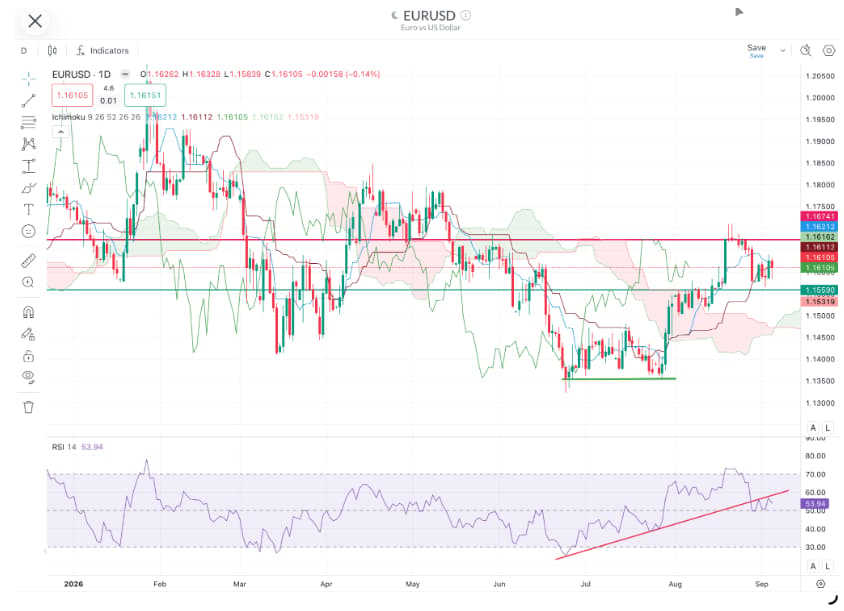
This range could become particularly important as the ECB and U.S. CPI approach. A sustained break above 1.1674 would represent a significant technical development. It would indicate that buyers have regained control after the recent consolidation and could open the way toward higher levels.
A break below 1.1559, by contrast, would weaken the current bullish structure and suggest that the recent recovery is losing momentum. Such a move could expose the pair to further downside as traders reassess the sustainability of the summer rebound.
Momentum indicators provide a relatively neutral signal at present. The 14-period Relative Strength Index is around 53.94, keeping it slightly above the key 50 threshold but without real moment or heading towards overbought territory. The RSI has also struggled to extend higher after approaching an ascending support trendline that has developed from the oversold low reached at the end of June. This suggests that neither buyers nor sellers currently have a decisive advantage.
The Ichimoku configuration nevertheless remains worth monitoring. The earlier move above the daily cloud improved the medium-term technical picture, but the failure to establish a sustained move above 1.1674 means confirmation is still lacking. For traders, the coming economic events could therefore provide the catalyst needed to break the current range.
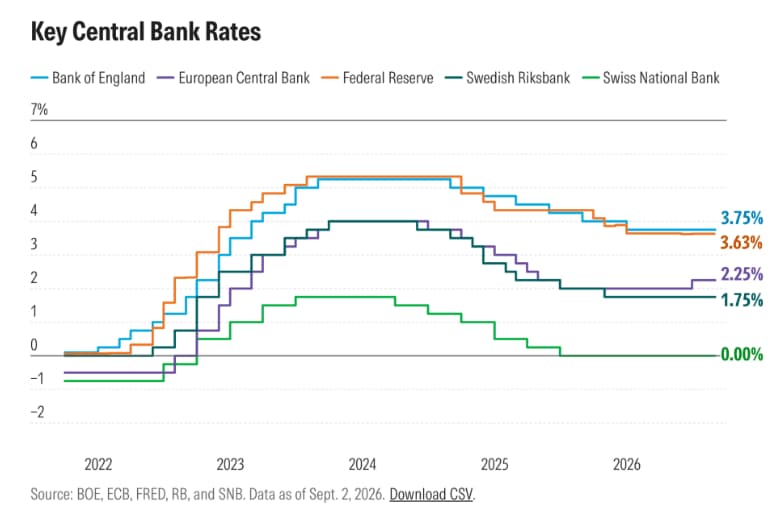
A hawkish ECB combined with softer-than-expected U.S. inflation would represent the clearest bullish combination for the EUR/USD. Such a scenario could increase expectations for further ECB tightening while simultaneously reducing the probability of a near-term Fed hike, narrowing the expected interest-rate differential between the euro and dollar.
The opposite combination would be potentially bearish for the pair. A hawkish ECB that is fully priced in, followed by stronger-than-expected U.S. inflation, could revive expectations for Fed tightening and strengthen the dollar. In that scenario, the 1.1559 support level could come under significant pressure.
There is also a third possibility: both central banks could deliver hawkish signals. If the ECB raises rates but signals that September could be its final move, while U.S. inflation remains elevated, the dollar could regain an advantage despite the ECB’s tightening.
The ECB decision may establish the initial direction, but U.S. inflation could ultimately determine whether the pair breaks out of its current range. With EUR/USD trading close to the middle of the 1.1559-1.1674 range, the market seems to be waiting for a catalyst. The key levels to watch: 1.1674 on the upside and 1.1559 on the downside. A decisive break of either boundary could provide a stronger signal about the next directional move.
Until then, traders should expect potentially intraday swings around the ECB decision, U.S. PPI and Friday’s CPI release. With monetary-policy expectations finely balanced on both sides of the Atlantic, the EUR/USD could be particularly sensitive to even relatively small surprises in the data.
Stay up to date with what's moving and shaking on the world's markets and never miss another important headline again! Check ActivTrades daily news and analyses here.
Author

Carolane de Palmas
ActivTrades
Carolane graduated with a Masters in Corporate Finance & Financial Markets and got the AMF Certification (Financial Markets Regulator in France). Afterward, she became an independent trader, investing mostly in European and American stocks/indices.

















