Muted reaction to a very strong NFP

The American labour market did much better in August according to the data released on 4 September, bucking the trend of weakening in recent months. However, the dollar’s initial movements after the release were modest as traders await upcoming inflation on 11 September. This article summarises the latest job report then looks briefly at the charts of GBPUSD and USDJPY.
Overall the NFP in September was particularly strong, nearly triple the consensus:
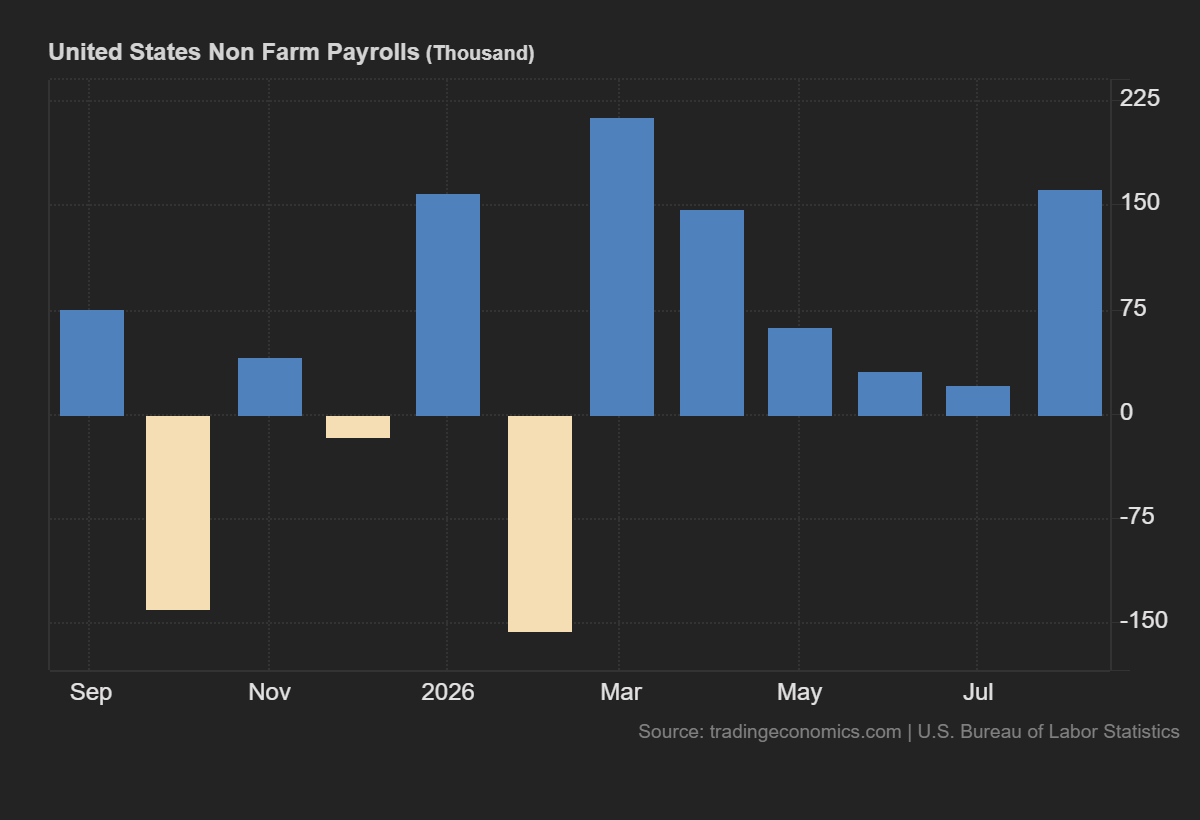
162,000 total nonfarm is the best for five months. Many of the individual sectors offset losses in the previous month, such as food service and education. The combined change for June and July was revised upward by 55,000; July’s revised 21,000 remains below the approximately 70,000 required to match trends in population but is certainly less bad than the negative figure initially reported. Unemployment meanwhile remained at 4.1%, down slightly from the beginning of the year.
The narrative of a weaker job market in the USA had been strong for much of the summer but now has a serious challenge. Compared to the first eight months of 2025, the situation is clearly better. This might encourage the Fed to hike rates in September as a majority of traders currently expected: the probability of a single hike on 16 September is about 60% according to CME FedWatch. There has been no large change in the probabilities for the end of 2026, with a small plurality still expecting one hike and 37% two.
The next key release from the USA is inflation on Friday 11 September. As of 4 September, there was no consensus available yet, but early estimates suggested the annual core rate holding at 3.4%. Traders might often expect inflation to be higher when the NFP the previous week was particularly positive, other things being equal, and this might be even more so now that oil has made an overall large gain since the beginning of August. However, expectations will continue to fluctuate within the next few days.
Cable declines after a bumper NFP
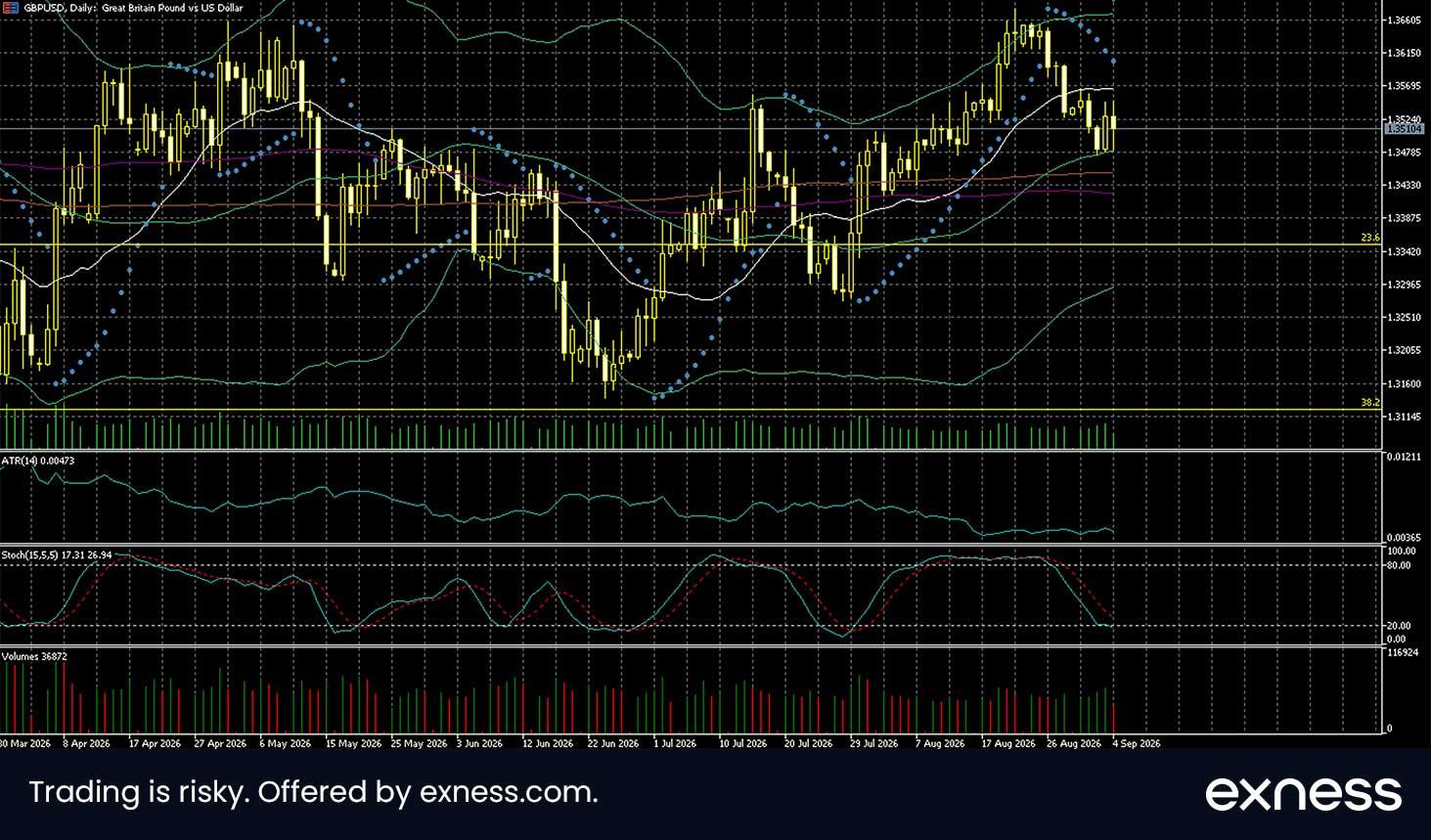
4 September’s strong American job report pushed cable down somewhat although with high volatility. Both the Fed and the BoE seem likely to hike once before the end of the year with the possibility of two hikes from the Fed. Long-term traders are looking ahead to the upcoming British budget at the end of October given the recent situation in bond markets: yields from British decade gilts reached fresh 19-year highs on 1 September above 5.25%.
The 50 SMA from Bands seems to be the most important short-term dynamic support which might resist further testing. If it’s broken, the price might continue down to the value area between the 100 and 200 SMAs. Volume hasn’t increased significantly in the last few days while ATR remains low and the slow stochastic signals oversold. Immediate continuation lower then seems questionable but American inflation on 11 September might jumpstart more movement.
The obvious target for a short-term bounce would be the 20 SMA around $1.356. From there, the price might move lower again. After such a strong NFP, an ongoing round of gains for cable seems questionable unless there’s a notable shift in sentiment on British politics or American inflation is significantly lower than expected.
Dollar-Yen remains weaker even after a strong NFP
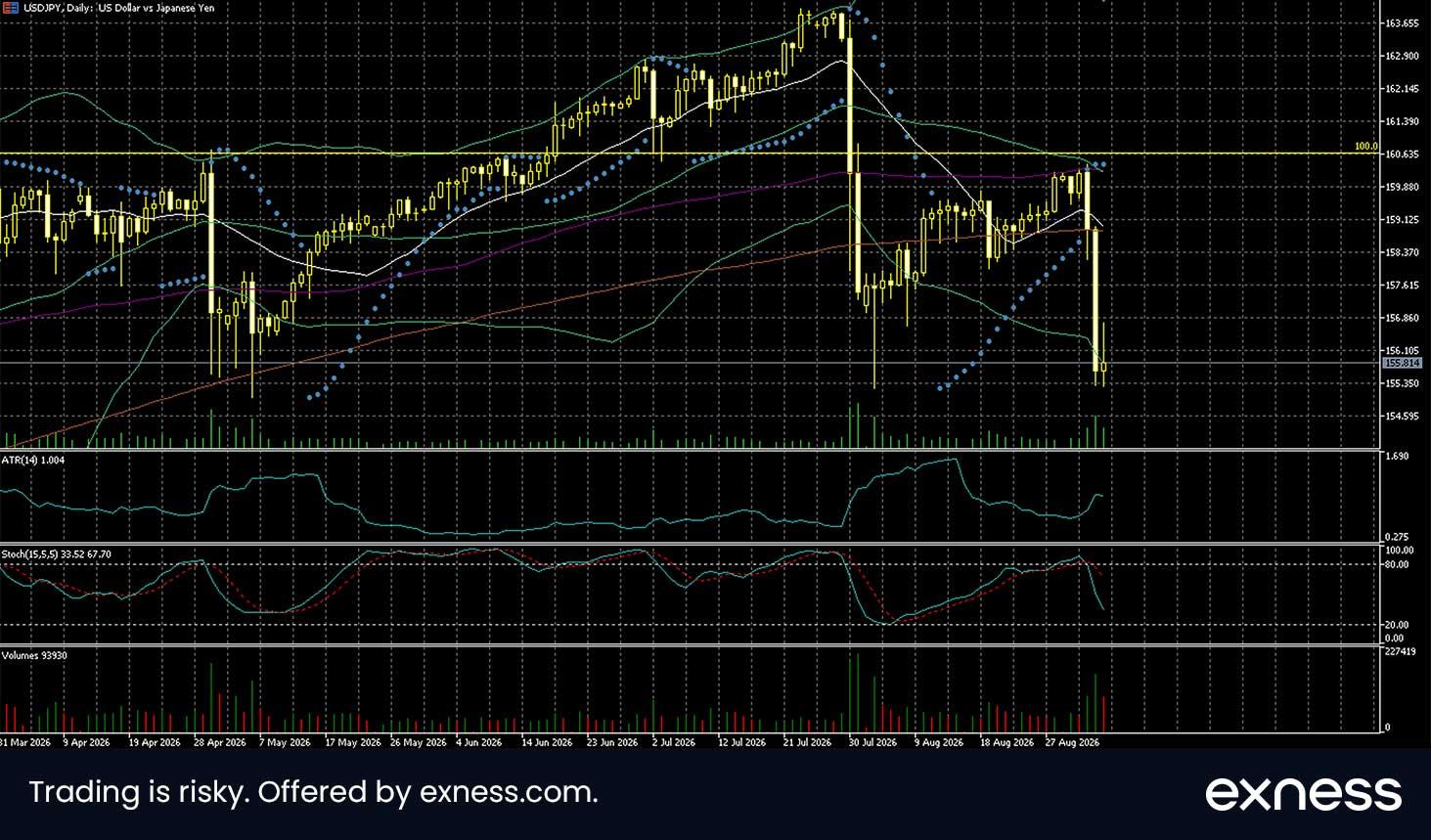
USD/JPY fell sharply on 2 and 3 September as traders increasingly expected another intervention to support the yen. So far it’s not clear whether this will occur imminently but there has been widespread speculation that the BoJ conducted a rate check. Sentiment on the yen also improved as a growing majority of traders expects two more hikes this year, one on 18 September and another in December. The majority expecting the Fed to hike this month remains relatively small around 60%.
This is a challenging situation for traders because confirmation of further intervention would likely push the price significantly lower, possibly as far as February’s lows near ¥152, but no intervention might see the overall uptrend resume gradually. The area around ¥155 seems to be confirmed as a support for now, so absent intervention the price might bounce from there if tested again, while ¥160 is a possible static resistance although quite far from the current price.
In the context of large fundamental and sentimental developments, moving averages are less useful, so the recent death cross of the 50 SMA below the 100 can probably be ignored for now. Volume for CFDs has surged since 2 September but it appears that many sellers took profits after the very strong NFP on 4 September. American inflation around 11 September might make the situation clearer if there’s no big news from the Japanese authorities in the meantime.
Author

Michael Stark
Exness
Michael has been investing since 2007 and trading CFDs since 2013. He favors considering both fundamental and technical analysis where possible, with a focus on swing and position trading.