A Guide to the UK General Election 2017 for interested Domestic & Foreign consumers!
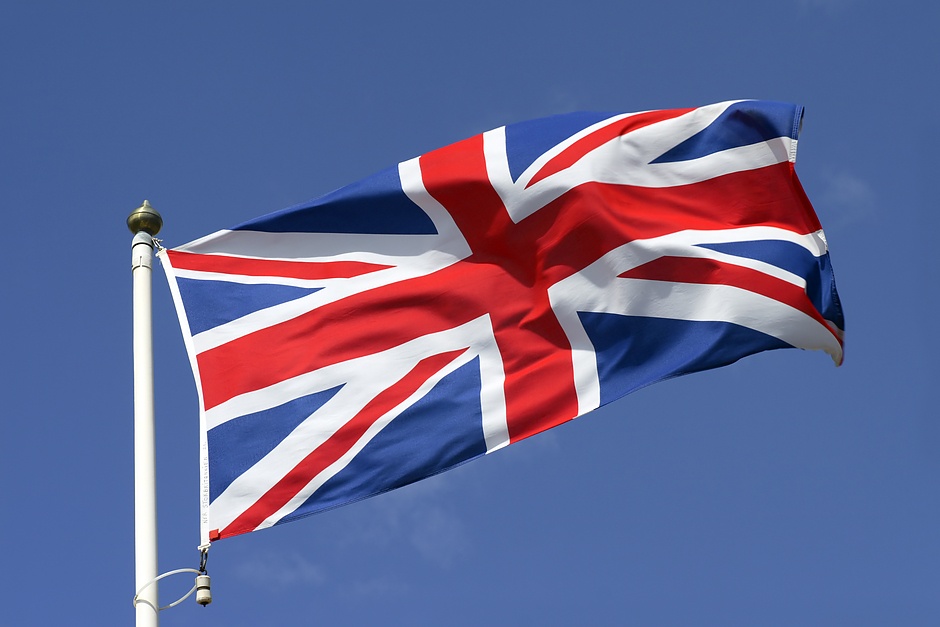

The UK General Election 2017 voting in person will take place on Thursday, the 8th of June 2017 between 07.00 – 22.00 London time with the individual Constituency (Constituency = an area comprising about 60,000 voters) results announced soon thereafter as votes cast are counted and 'Declared' during the early morning hours of Friday the 9th of June. However, the particular Parliamentary Democracy that we have can be confusing to non UK & even some UK, Commonwealth & EU citizens. The best (and most amusing) explanation I have seen of how it works can be found on the following Newsweek International video…
Practical Considerations & Practical Constituencies
In addition to any potential Exit Poll results that may be carried out by polling organisations and then released after 22.00 London time on the 8th of June, a number of key Constituencies have been found in the past to be early identifiers for the remaining Constituencies and are therefore regarded as 'bellwether' Constituencies which have in the past swung the markets, notably GBPUSD overnight! Much has been made of the target for most political parties and he has been known as variously 'white van man', 'Essex man' & most recently 'conservatory man' as aspirational voters – both male & female whom the various parties have courted. In the past Constituencies such as Basildon in Essex & Dover in Kent have been seen in the past to be a barometer for the whole UK and whichever major party they voted for, thus went the country. The following is a more detailed guide to likely Constituencies when Declared may prompt some market reaction.
There is always a race between local Constituencies to be the first to Declare as it highlights to the waiting media, the UK & the world this particular part of the nation. It will most likely be Houghton & Sunderland South but there is competition from the nearby Constituencies of Sunderland Central plus Washington & Sunderland West. First genuine results rather than exit polls can be expected just after 23.00 on the 8th or just before 00.00 on the 9th and may cause some market moves on the proportion of just this one part of the country has voted. Results will then come in slowly reaching a high point between 03.00 – 04.00. Estimated timings per hour are for Constituencies (or 'Seats') are…
- 23.00 – 00.00 2
- 00.00 – 01.00 2
- 01.00 – 02.00 13
- 02.00 – 03.00 73
- 03.00 – 04.00 173
- 04.00 – 05.00 204
- 05.00 – 06.00 108
- 06.00 – 07.00 52
- 07.00 – 08.00 16
Then there is a period of no anticipated Declarations until -
- 12.00 – 13.00 6
- 13.00 – 14.00 1
Within 12 hours we ought to have 643 of the 650 Seats Declared. However, things go wrong and counts and recounts get delayed. In addition we have another factor; verification of at least 20% of ALL Postal Votes is required by law and this may also add some time. One thing in favour of a faster count is that the law now requires counting to begin within 4 hours of the Polling Stations closing unless extraordinary circumstances prevent such happening.
Bellwethers & Controversial Constituencies
So – to the 'bellwethers' & controversial Constituencies, which are likely to show the way things may be. Each below has the approximate time in brackets of their Declaration (London time on Friday) after the name of the constituency.
- Nuneaton (01.00) – potential Labour target with a Conservative majority of 4,882 in 2015. An early reporter & indicator.
- Battersea (01.00) – Conservative majority in 2015 of 7,938. They have elected the same as the governing party since 1987.
- Vale of Clwyd (01.30) – Conservative win in 2015 from Labour by just 237.
- A group of Scottish Constituencies (02.00) – they come out at a similar time and will indicate how the SNP (Scottish nationalists) have progressed.
- Chester (02.30) – slim Labour majority of just 93.
- Islington North (02.30) – Labour leader Jeremy Corbyn’s Seat.
- Gower (03.00) – it is the tightest Seat in the UK with a Conservative majority of just 27.
It was won from Labour in 2015 who had held prior to 2015 for over a hundred years.
- Croydon Central (03.00) – held by Conservative Housing Minister Gavin Barwell who has the smallest majority in London of just 165.
He could be the first Minister to lose his Seat if tactical voting comes about.
- Derby North (03.00) – slim Conservative majority of just 41.
- Middlesbrough South and Cleveland East (03.00) – Labour majority of 2,268 in 2015 but voted by about 7,000 in favour of UKIP last time.
The Conservatives are hoping they will now turn to them.
- Bristol North West (03.00) – has elected the same as the governing party since 1974.
Basildon South & Thurrock East (03.00) & Basildon & Billericay (04.00) – Basildon was traditionally the first key marginal Constituency to declare in past elections.
However, the Seat has now been broken up & merged into the other Constituencies of Basildon South & Thurrock East
which has the majority of the previous constituents and Basildon & Billericay which has a minority.
- Loughborough (03.30) – has elected the same as the governing party since 1974.
- Dartford (04.00) – oldest bellwether in the country. It has elected the same as the governing party since 1964.
- wickenham (04.00) – Conservative gain in 2015 with a slim majority of 2,017 from the Lib Dems. They are hoping to get it back.
- Bridgend (04.00) – chief Conservative target in Wales with a Labour majority in 2015 of just 1,927.
- Orkney & Shetland (04.00) – the Lib Dem’s most marginal seat with a slim majority of 817 from 2015.
- Maidenhead (04.00) – Conservative leader Theresa May’s Seat.
Berwickshire, Roxburgh & Selkirk (04.30) – SNP’s most marginal Seat with a majority of 328 in 2015.
- Wakefield (05.00) – traditional Labour Seat with a slim majority of 2,613 from 2015 but which voted Leave in the recent EU Referendum.
- Brighton Pavilion (05.00) – Green Party co-leader Caroline Lucas’s Seat.
- Boston & Skegness (05.00) – Conservative in 2015 but in which UKIP leader Paul Nutall is standing.
- Halifax (05.30) – Labour majority of 428 from 2015. It is the smallest Labour majority in a Leave voting Constituency.
- Reading West (06.00) – has elected the same as the governing party since it was formed in 1983.
- Morecambe & Lunesdale (06.00) – Lib Dem leader Tim Farron’s Seat.
Projections for Parliament!
As I write, the Election polls are showing conflicting indications. However, one thing evident. The gap between the two major Parties – ruling Conservative Party and opposition Labour Party – is narrowing.
I have gathered the following views on the possible composition of the new Parliament after the General Election.
- Conservatives 354 – 368.
- Labour 206 – 224.
- SNP 46 – 54.
- Liberal Democrats 5 – 10.
- Plaid Cymru (Welsh nationalists) 1 – 3.
- Green Party 0 – 1.
- UKIP 0 – 1.
- Others – up to 19.
- Conservative majority of 60 – 86 Seats.
One pollster has stood out from the others with different results using different methodologies. They are YouGov and I thought it appropriate to separately show their latest indications below.
- Conservatives 304.
- Labour 266.
- SNP 46.
- Liberal Democrats 12.
- Plaid Cymru (Welsh nationalists) 2.
- Green Party 1.
- UKIP 0.
- Others – up to 20.
- Their indication is for a ‘hung’ Parliament with the Conservatives 22 Seats short of a majority.
Not counting the Speaker of the House of Commons who though elected (Conservative) is regarded as neutral and also the member of the Northern Irish party - Sinn Fein who whilst elected have always chosen not to take up their seats in Parliament, the majority needed to form a Government has been reduced from 326 Members to in reality 321....ish!
Past experience suggests that a Governing Party requires at least a 20+ majority for the duration of a Parliament (5 years). This takes into account any slippage in the majority occurring due to subsequent By-elections taking place over the five year term due to the initial Members of Parliament ('MP') dying, losing their Seat due to bankruptcy, criminal convictions, change of Party allegiance, etc...
As an additional ‘rule of thumb’ guide…50 – 65+ majority can be seen as a decent majority (especially in light of the upcoming EU Brexit negotiations), 100+ majority is a good win and 150+ majority or a +10% swing to the opposition is regarded as a landslide.
Author
Eddie Tofpik
ADM Investors Services International Limited
Eddie Tofpik has over thirty years experience in international commodity markets & twenty five years experience in the foreign exchange markets and brings a wealth of knowledge & understanding to his topic.