5 Big Lies About Precious Metals Investing Exposed
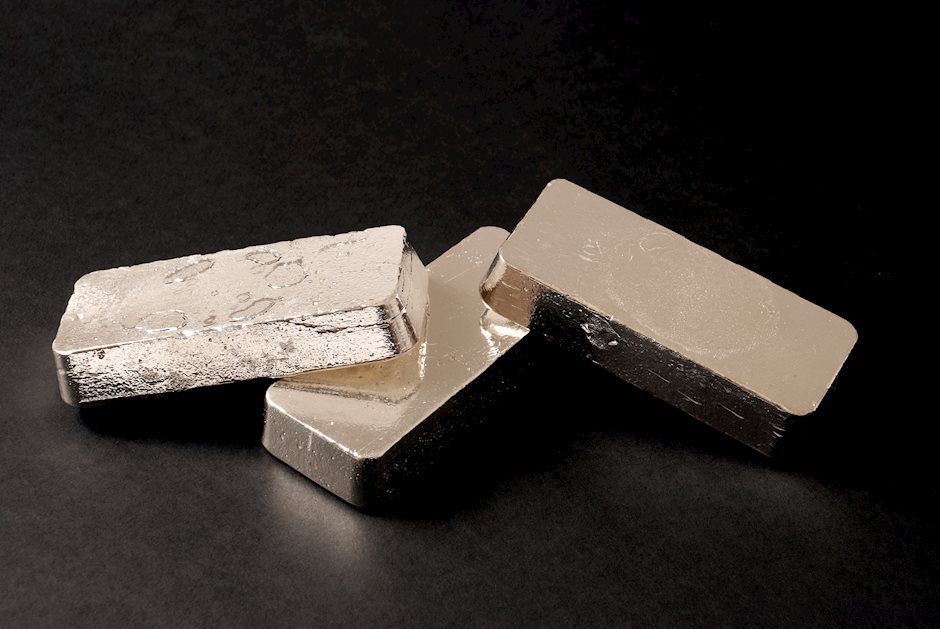

Physical precious metals serve a unique role in an investment portfolio. Unlike stocks and bonds, gold and silver coins can be held entirely outside of the financial system. They carry zero counterparty risk. They are the ultimate “buy and hold” safe-haven assets.
Unfortunately, investors must often navigate through a barrage of fake news, myths, misinformation, and fraudulent pitches surrounding precious metals before arriving at the simple truth.
Investing in metals isn’t complicated; nor are the reasons for doing so. Gold and silver are hard money with centuries’ long track records.
You don’t buy bullion to get rich quick. You buy it to preserve wealth over time against the threats of currency depreciation and financial crisis. Opting for common, low-premium bullion products that sell close to spot prices is the most efficient way to invest.
That’s precious metals investing in a nutshell. But if you listen to financial and monetary establishment mouthpieces, you’ll likely be misled.
Lie #1: Gold Isn’t Money
Neither brokers, bankers, nor central bankers particularly want the investing public to view precious metals as a core holding. They prefer we think of gold as a “barbarous relic” of the past that no longer serves as money.
In an infamous exchange in 2011 between then Federal Reserve Chairman Ben Bernanke and pro-gold Congressman Ron Paul, Bernanke stated flatly that gold is “not money.” This is the big lie of fiat money pushers and their ideological allies.
It flies not only in the face of history, but also of the fact that central bankers themselves continue to hold and accumulate gold as monetary reserves. In 2018, central banks around the world, led by Russia and China, added hundreds of tons of gold to their reserves. In the first quarter of 2019, Russia boosted its pace of gold buying by a whopping 68%.
Gold isn’t a “barbarous relic” to major world powers seeking to divest themselves from U.S. dollars and insulate themselves from perceived threats out of Washington, D.C.
Lie #2: Silver Isn’t Money
Some misinformers will concede that gold is money… but claim silver isn’t.
The Founding Fathers of the United States would disagree strongly. They originally defined a “dollar” in terms of grains of silver (Coinage Act of 1792) which simply codified what was nearly universally in practice.
Specifically, a dollar was to be 371.25 grains (equivalent to about three-fourths of an ounce) of silver, in harmony with the Spanish milled dollar. Thus, the true foundation for U.S. circulating currency was silver.
On Wednesday, the central bank’s “Open Market Committee” released the minutes from its March meeting. Participants decided the Fed will soon stop selling Treasuries and other paper assets on its $4 trillion balance sheet and stand pat on rates.
It’s true that silver has since been removed from circulating coins and replaced with cheaper metals. It’s also true that silver generally isn’t held in monetary reserves by central banks.
Silver, however, remains the go-to tangible money of the masses. In the event of a currency collapse that causes the public to ditch fiat dollars, silver is more likely than gold to be used as barter money in everyday transactions.
Lie #3: Precious Metals Are Too Risky for the Typical Investor
This lie is propagated by Wall Street and by Main Street financial advisors who have bought into anti-gold propaganda. Their conflict of interest is obvious. The financial industry loses out on commissions and fees when investors park wealth in hard assets. So they portray gold and silver as “exotic” and “risky” investments.
Or, as in a recent documentary financed and distributed by The Financial Times, they deride gold as “shiny poo.”
It would indeed be risky to bet everything on gold and silver. But no responsible voices in the precious metals community advocate that for the typical investor. Instead, they advocate a prudent allocation to the precious metals sector – from around 10%, perhaps up to 25% of a portfolio.
A study by Ibbotson Associates found that investors who put 7.1% to 15.7% of their portfolios in precious metals enjoy superior risk-adjusted returns. Gold shows virtually no correlation to stocks and bonds, meaning it can rise when paper assets fall.
Yet the average investor has nowhere near even the bare minimum suggested by Ibbotson Associates to hedge against risks in financial assets.
When the stock market crashed in 2002, precious metals shined. When the financial sector melted down in 2008, gold finished the year with a modest gain. When the U.S. suffers a debt-driven currency crisis, as many economic forecasters think is inevitable, the biggest risk of all will be not having adequate exposure to precious metals.
Lie #4: Cryptocurrency Is More Valuable Than Hard Currency
The crypto coin craze has spawned a number of misconceptions, such as the notion that Bitcoin is “digital gold.” Whatever their merits (and there are certainly some), cryptocurrencies backed only by digits cannot be equated to gold and will never replace it.
Unfortunately, some cryptocurrency promoters are trying to sell their digital storylines by bashing gold.
Grayscale Investments, which runs an exchange-traded Bitcoin product, recently launched a “drop gold” campaign. It even produced an anti-gold TV commercial, portraying gold buyers as “living in the past” and out of step with the “digital world.” The commercial’s narrator states, “Digital currencies like Bitcoin are the future… and unlike gold, they actually have utility.”
The lie that gold lacks utility is an old one propagated by the financial establishment. It’s now being regurgitated by overzealous Bitcoin bugs.
The truth is that gold came to be recognized as money precisely because it has utility outside of monetary use. Gold is useful not just to jewelers and artisans, but also to rocket scientists in space technology applications.
What exactly would a Bitcoin be useful for outside of its own digital ecosystem? Nothing.
Cryptocurrency enthusiast James Altucher went so far as to claim in a recent interview, “Gold is just a rock. Bitcoin has real value.”
Cryptos certainly have a role to play, and, in fact, Money Metals Exchange is leader in offering customers the ability to using digital currencies when buying or selling the monetary metals.
But here’s a reality check: Bitcoin has market value, which can be fleeting. Bitcoin might be worthless 100 years from now if new technologies supplant it. Gold’s value, on the other hand, is real, immutable, and eternal. Its unique physical properties combined with its rarity ensure it will always be worth something substantial.
Lie #5: “Collectible” Coins Are Better Investments than Bullion Coins
Sadly, some of the misinformation being spread about gold and silver investing comes from bad actors within the precious metals industry.
The biggest culprits are numismatic coin promoters who try to trick people into paying huge markups for supposedly “rare” or “collectible” coins. High-pressure salesmen will sometimes pitch nonsense about numismatics being “confiscation proof” or fantasies about how they’ll appreciate more than ordinary coins.
They almost certainly won’t after factoring in bid/ask spreads. The truth is that these high-premium and relatively illiquid products are suitable only for those with a particular interest in, and knowledge of, numismatics.
For the vast majority of precious metals investors who are simply looking to acquire ounces of gold and silver, common, low-premium bullion products are better investments.
To receive free commentary and analysis on the gold and silver markets, click here to be added to the Money Metals news service.
Author
Stefan Gleason
Money Metals Exchange
Stefan Gleason is President of Money Metals Exchange, the national precious metals company named 2015 “Dealer of the Year” in the United States by an independent global ratings group.

















