WTI pulls back sharply from session highs above $83.00, OPEC+ agrees to 400K output hike
- WTI has dropped sharply from earlier session highs above $83.00 to the mid-$81.00s.
- OPEC+ has agreed, as widely expected, to go ahead with a 400K oil output hike in December.

According to sources cited by Reuters, OPEC+ has, as widely anticipated, agreed to stick to their existing plan to increase output by 400K barrels per day/month in December. Despite this news, trade has been choppy over the last hour or so, with oil prices having fallen back sharply from earlier highs. Front-month WTI futures, which were above $83.00 less than two hours ago, have now dropped back to the mid-$81.00s, though that still leaves WTI higher by well over $1.0 on the day.
The recent emergence of selling pressure could be technical; on Wednesday, during oil’s sharp sell-off, WTI dropped below a long-term uptrend that had been supporting the price action all the way back to 20 August and had been respected on multiple occasions. When prices recovered back above the $83.00 level on Thursday and retested this prior uptrend, technical sellers might have used this as an opportunity to load up on short-positions again, perhaps to target a move back lower towards weekly lows around $80.00.
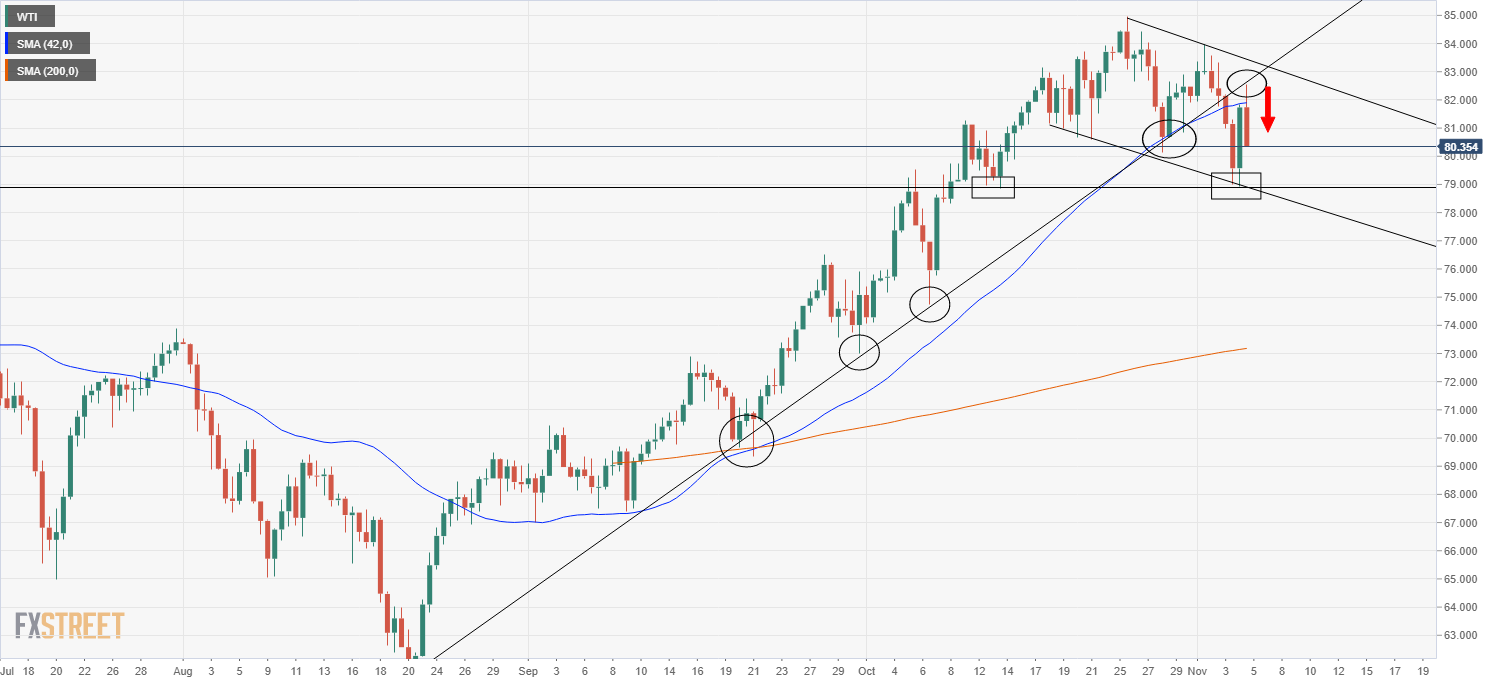
To recap, oil markets were under pressure on Wednesday due to a bearish combination of 1) bigger than expected build in US crude oil inventories, according to the latest weekly data from the US EIA and 2) news that Iran and the EU will restart nuclear deal negotiations at the end of the month, which could open the door to the removal of US sanctions on Iranian crude oil exports. Another factor cited to have been weighing on oil prices this week is the deteriorating Covid-19 situation in China; citizens are being advised not to go abroad for non-essential/urgent reasons and the current outbreak has now spread to 19 of China’s 33 provinces, more than during any other outbreak since the initial outbreak in Wuhan in early 2022.
Looking ahead, it will be key to watch 1) the outbreak in China (does it get worse and threaten oil demand, thus dragging prices lower?) and 2) the US response to OPEC+’s refusal not to hike output at a faster rate – they might start released crude oil from their strategic petroleum reserve to surpress US prices and the government is also threatening an oil export ban.
Author

Joel Frank
Independent Analyst
Joel Frank is an economics graduate from the University of Birmingham and has worked as a full-time financial market analyst since 2018, specialising in the coverage of how developments in the global economy impact financial asset














