|

Warsh stays on message as inflation remains the Fed's top priority

  • Warsh reaffirmed that returning inflation to 2% remains the Fed's top priority.
  • He expressed optimism on US growth, labour markets and the long-term benefits of AI.
  • He also reiterated the Fed's independence and offered no new policy signals.
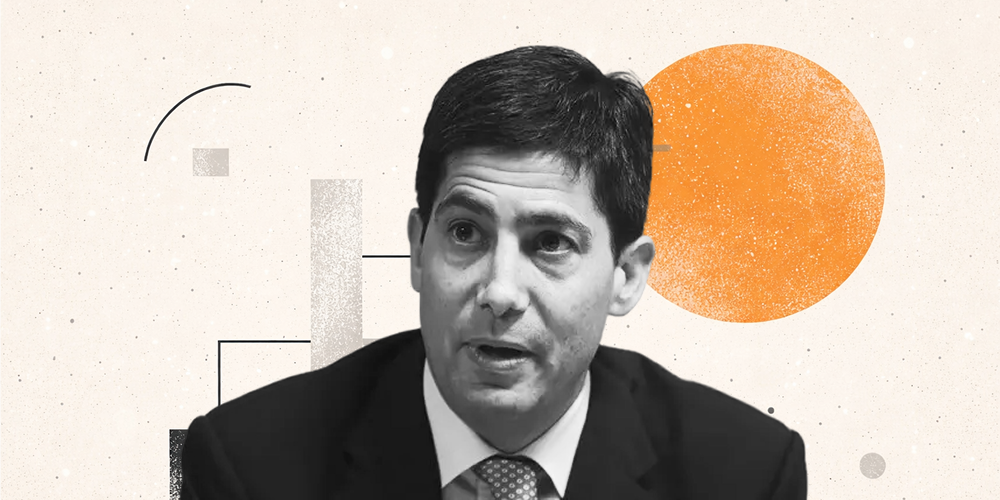
At the ECB Forum in Sintra, Fed Chair Kevin Warsh largely followed the script, offering little to change the market’s current view on monetary policy. He said inflation risks and short-term inflation expectations had eased in recent weeks, but he reiterated that prices remain too high and stressed that the central bank remains steadfast in its commitment to bring inflation back down to its 2% target.

Warsh also offered a mostly optimistic view on the US economy, saying labour market conditions were stable and the outlook for growth may have improved. He sounded optimistic about artificial intelligence, saying the US is well-placed to gain from the technology but warning it was too soon to know whether AI would ultimately prove inflationary or disinflationary.

On the institutional front, the Fed Chair reiterated the independence of the central bank and confirmed that the ongoing review of its communications framework and policy tools remains on track. He also reaffirmed his longstanding preference for interest rates to be the Fed's main policy tool, while indicating that any future adjustments to balance sheet policy would be carefully considered and clearly communicated.

Overall, the comments did not provide any new information but reaffirmed last week’s hawkish policy message. The Fed remains optimistic on the medium-term outlook for the US economy even as the global backdrop has grown more uncertain. But price stability remains the “overriding priority” for the Fed.

Author

Pablo Piovano

Born and bred in Argentina, Pablo has been carrying on with his passion for FX markets and trading since his first college years.


More from Pablo Piovano
Share:

Editor's Picks

AUD/USD cracks 0.7000 as Bullock dulls RBA hike, CPI looms

The Aussie Dollar tumbled over 0.40% against the US Dollar on Tuesday, even though the Reserve Bank of Australia raised rates to 4.60%, but a mild-dovish tilt by RBA Governor Bullock cleared the path to push the pair below the 0.7000 threshold.

USD/JPY consolidates near 157.50 as a bullish USD counters intervention risks

USD/JPY struggles to capitalize on the overnight bounce from a one-week low, consolidating around 157.50 in the Asian session on Tuesday. Trump's concerns about the Japanese Yen's weakness fueled speculation about another US-Japan joint intervention. This, along with the hawkish BoJ, underpins the JPY and caps the currency pair. Meanwhile, rising Fed rate-hike bets and oil-driven inflation fears continue to push US bond yields to multi-year highs, keeping the US Dollar pinned near a two-month high and supporting the pair.

Gold trims gains; back toward $4,150

Gold now surrenders some of its initial advance and retests the $4,150 zone per troy ounce on Tuesday. Meanwhile, the move higher in the yellow metal comes despite the firmer US Dollar and rising US Treasury yields across the board, while escalating geopolitical tensions appear to limit the downside potential.

Ethereum sees profit-taking near $2,700 ahead of key US economic data
Ethereum (ETH) has shown signs of profit-taking near $2,700 over the past few days, with rising exchange deposits and a slowdown in exchange-traded fund (ETF) inflows ahead of US inflation and labor market data releases. The top altcoin's Exchange Reserves, which track the total amount of a crypto asset held across exchange wallets, have increased by roughly 125K ETH since Friday.
Silver is more volatile than Gold ahead of PCE and NFP. This chart shows the positioning gap
The market’s attention is focused on American data this week, but there’s something only those with a trained eye may be looking at: Gold and Silver positioning gap. Financial markets are moving on fears, mostly related to persistently high energy prices driven by the Middle East war. Sure, the US Dollar (USD) is strong, but at what cost?
Silver is more volatile than Gold ahead of PCE and NFP. This chart shows the positioning gap
The market’s attention is focused on American data this week, but there’s something only those with a trained eye may be looking at: Gold and Silver positioning gap. Financial markets are moving on fears, mostly related to persistently high energy prices driven by the Middle East war. Sure, the US Dollar (USD) is strong, but at what cost?