Why are Netflix (NFLX Stock) shares down 30% in 2022?

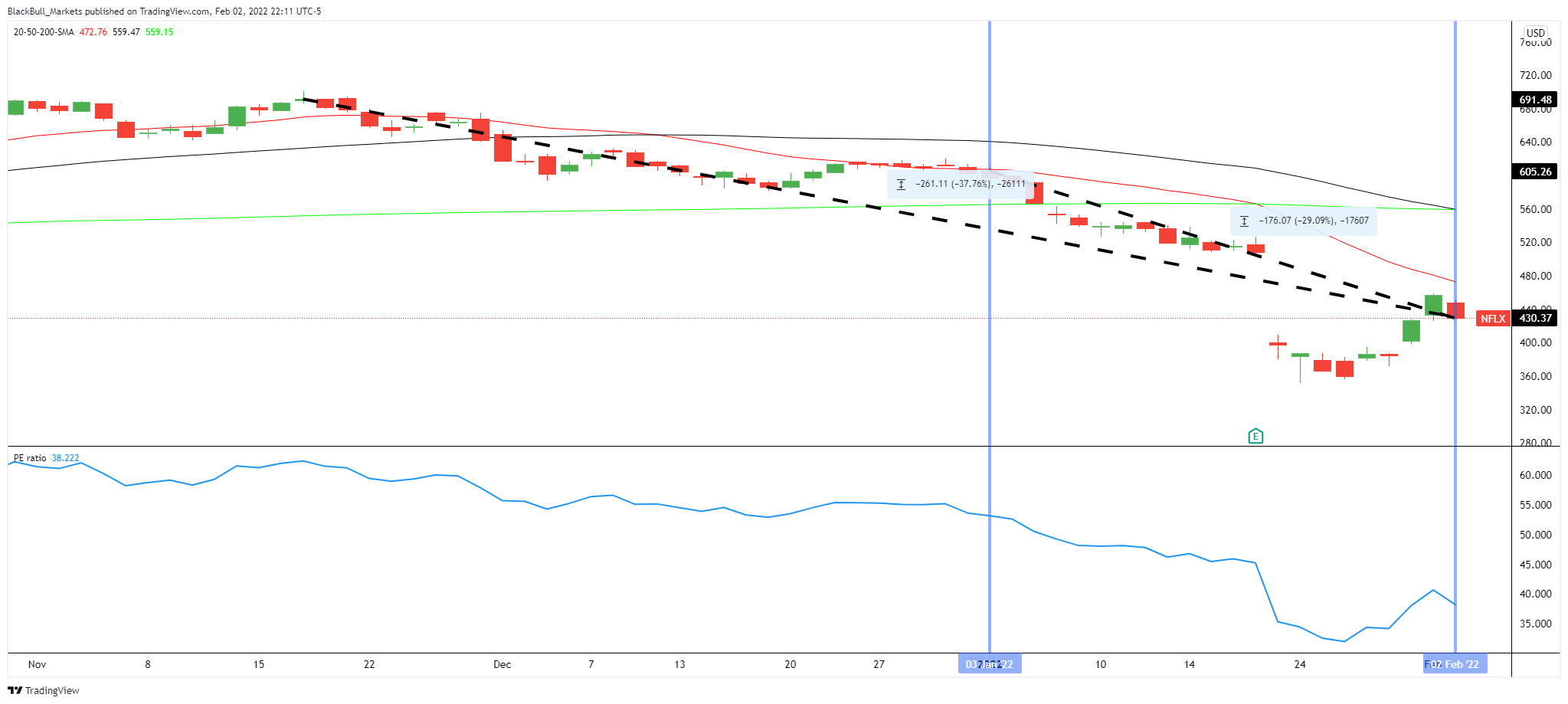
Netflix (NASDAQ: NFLX) shares have tumbled 30% YTD, similar to its tech brethren, who have by-in-large, been facing huge downward pressure. For interest sake, NFLX was down 37% from its all-time high in November 2021.
Two major events have eaten into the gains that NFLX made in 2021. The first is investor confidence waning in growth stocks in the face of looming interest rate rises. And the second has perhaps had a greater impact; a tepid earnings report.
Netflix shares experienced a significant sell-off two weeks ago, after releasing its Q4 2021 earnings report. The report noted that the pace at which Netflix is adding subscribers is slowing. Such a declaration typically spooks Netflix investors, who steadfastly hold the streaming platform still has plenty of room to grow and shrink its price-to-earnings ratio.
Before Netflix’s share price dipped by 30%, its PE ratio was ~60.0. As it stands, with Netflix trading at US $429.48 per share, its PE ratio is now ~38.0.
Netflix finally admits it is facing tougher competition
Typically shying away from doing so, Netflix has finally revealed that competition is hurting its subscriber growth. It is this admission that caught a lot of investors off guard.
In the past three years, Netflix has had to contend with a wave of competitors entering the streaming market, such as (in order of appearance) Apple TV+, Disney+, Peacock, HBO Max, and Paramount+.
The penultimate newcomer on the above list, the premium-placed HBO Max, has been the fastest-growing service of late, vastly outpacing Netflix and adding 73.8 million subscribers last year.
Similarly, Netflix is hurting from older streaming services increasing the appeal of their content libraries and raising investment in content creation. One such competitor, Amazon Prime, increased its spending on content by 41% to US $11 billion in 2020 from the previous year and have recently bid US $8.5 billion to acquire MGM studios and its content catalogue.
2022 looks to be a pivotal year for streaming
Will 2022 be the year that consumers start weaning off the numerous streaming services to which they are subscribed? As prices climb, this may be the likely outcome.
In this respect, Netflix may be on the back foot, having recently pushed its prices up to US $15.50 per month for its standard package. Netflix is now more expensive than the more ‘premium’ HBO Max at this price point.
One factor that could influence the price of Netflix shares over the year is whether their competition hikes their respective prices. For one, Disney+ might be expected to raise its prices before June, as its bargain pricing (introduced one year ago) becomes increasingly unsustainable. However, its attempt to hit ambitious growth targets may delay price hikes from the company.
If pricing over the different streaming services become more equitable, content becomes the deciding factor for consumers. Netflix, and Netflix’s share price, will be in a better position in this scenario as consumers by far prefer Netflix content over its competitors. As such, In 2021, even as competitors pumped funds into content creation, Netflix’s hosted 14 of the top 15 most popular TV shows and Movies.
Premium
You have reached your limit of 3 free articles for this month.
Start your subscription and get access to all our original articles.
Author

Mark O’Donnell
Blackbull Markets Limited
Mark O’Donnell is a Research Analyst with BlackBull Markets in Auckland, New Zealand.