What does Elon Musk want out of his Twitter stake?

After being a staunch critic of Twitter for years, Elon Musk has acquired a 9.2% stake in the company for an estimated $2.9 billion in a deal that is widely seen as an attempt to shake things up at the social media platform.
Twitter’s stock surged 27% on April 4 following the ownership announcement.
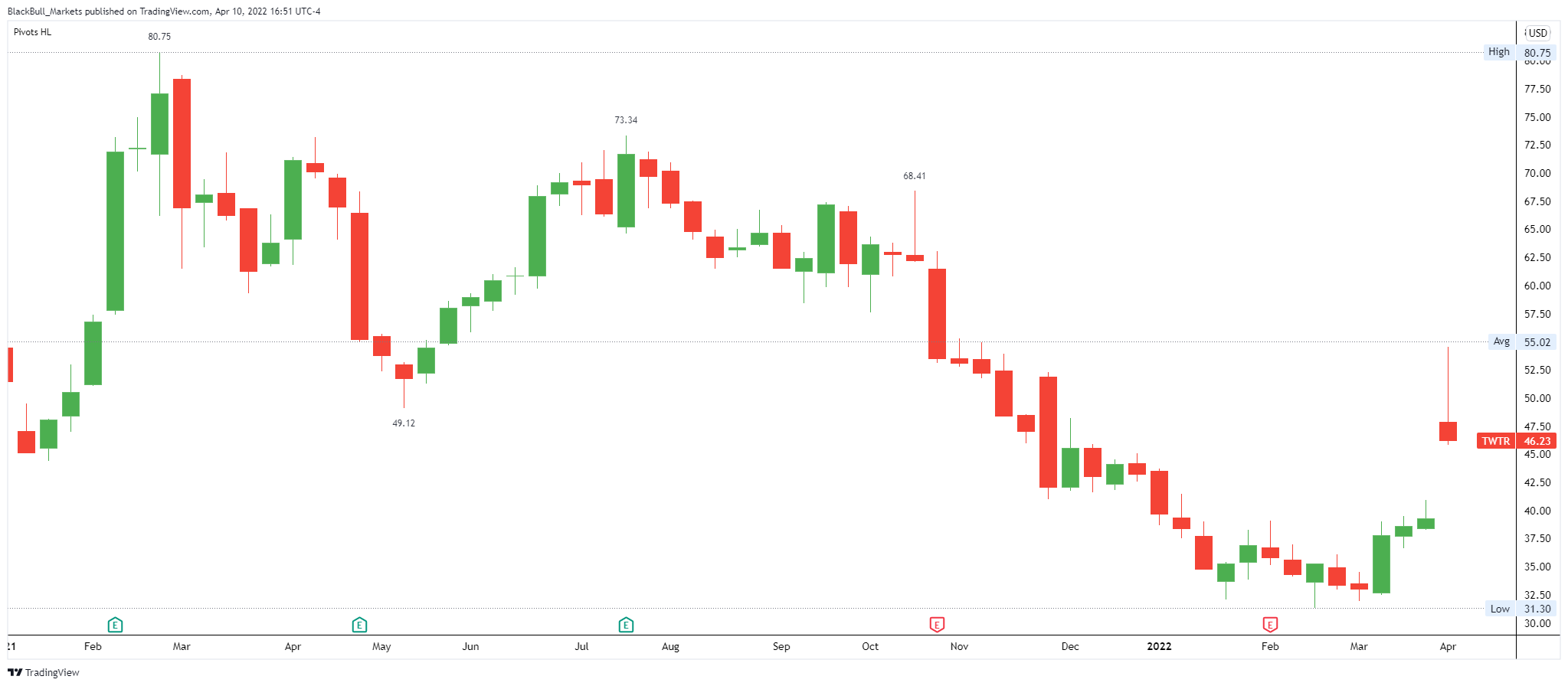
Figure 1. TWTR W1
Currently the world’s richest person with a net worth of over $270 billion, Musk became the platform’s largest shareholder and landed a seat on Twitter’s board of directors shortly after the ownership disclosure. The appointment would allow the Tesla and SpaceX chief executive officer to pitch ideas like adding an edit button to tweets and advocating free speech.
Free speech vision
Even before building his stake in Twitter, Musk has long criticized the platform for its restrictive policies. The self-proclaimed “free speech absolutist” in late March put out a controversial free speech poll asking his more than 80 million followers if they believe Twitter adheres to the principle of free speech as a key to “a functioning democracy.”
Musk also stressed the importance of the poll, urging his followers to vote carefully. Majority — or 70.4% — of Musk’s followers said “no” to the survey.
In a tweet two days after the poll, Musk said that “given that Twitter serves as the de facto public town square, failing to adhere to free speech principles fundamentally undermines democracy. What should be done?”
Weeks later, Twitter came out with an ownership filing disclosing Musk’s stake.
Musk now owns a bigger stake than Twitter founder Jack Dorsey, who still owns just over 2% of the company. Dorsey is known to be pro-censorship. Prior to Dorsey stepping down as CEO in November, Twitter moved to permanently suspend the Twitter account of former US President Donald Trump after the attack on the US Capitol Building on January 6 2021, with Dorsey saying it was “the right decision” for the company.
The question now lies on whether Musk will reinstate Trump’s Twitter account. But more than that, the acquisition will make Twitter’s stock more sensitive to tweets by Musk.
Market-moving tweets
Musk's excessive usage of Twitter triggered warnings, subpoenas and lawsuits by the US Securities and Exchange Commission in recent years. In 2018, he stepped aside as chairman of Tesla as part of a settlement with the SEC and agreed to pay a $20 million fine over past market-moving tweets that affected the carmaker’s stock price.
The billionaire’s tweets in mid-March about owning cryptocurrencies Bitcoin, Ethereum or Doge and having no intentions to sell his positions pushed up the market price of these digital tokens.
With his position in Twitter, Musk’s criticisms against the microblogging site will likely have an impact on its share price movement. His investment in Twitter provided a lifeline to the company as its shares have fallen to below $40 apiece in recent months.
Latest challenge for Twitter
After being targeted by activist shareholder Elliott Management for years, leading to Dorsey relinquishing his role as CEO, Twitter will now be up against Musk, who according to New York Times’ Opinion writer Kara Swisher, is an active investor.
"Elon Musk doesn’t take a 9.2% interest in a company like Twitter simply for passive income… he was never going to sit on the sidelines of the fight over Twitter,” Swisher said in an opinion piece on Thursday.
In a sign of his plan to take on a more active role on Twitter’s board, Musk filed a more detailed Schedule 13D filing with the SEC three days after submitting a Schedule 13G, which is intended for investors that do not plan to engage with the company’s management. A 13D filing makes passive investors transition into activist status.
Musk’s exact plans for Twitter remain uncertain, but Twitter’s stock will surely be one to watch in the coming days. Over the past 24 hours, Musk put out more polls including asking his followers whether or not to “convert Twitter SF HQ to homeless shelter since no one shows up anyway.”
The Tesla CEO also wants Twitter to remove advertisingfor subscribers of its Twitter Blue paid subscription service, he said in a tweet on Saturday. The plan is expected to be met with opposition from Twitter’s board as 89.8% of Twitter’s revenue in the fourth quarter of 2021 was from advertising.
Author

Mark O’Donnell
Blackbull Markets Limited
Mark O’Donnell is a Research Analyst with BlackBull Markets in Auckland, New Zealand.