Silver Price Forecast: XAG/USD rises above $62.50 as Fed rate hike bets ease
- Silver stands to rebound strongly due to a less hawkish Fed, lower inflation risks, and depressed oil prices.
- Silver prices rise as a cooling US job market forces Wall Street to rethink interest rates.
- The CME FedWatch tool shows September rate hike odds dropped to 52% from 66% after the release.
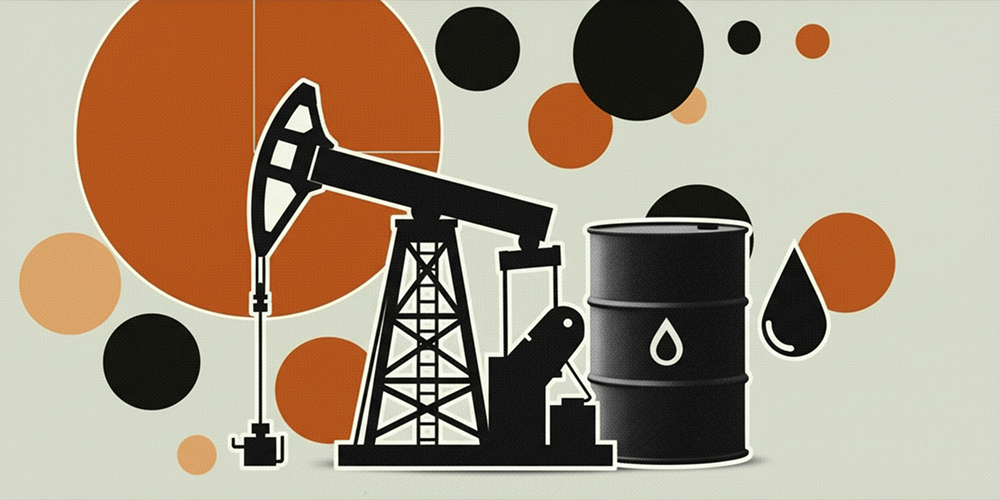
XAG/USD gains ground for the fourth consecutive day, trading around $62.60 per troy ounce during the Asian hours on Friday. For non-yielding Silver, a combination of lower inflation risks, depressed oil prices, and a less hawkish Federal Reserve (Fed) creates a highly supportive environment for a sustained rebound.
Silver prices are catching a much-needed bid, shaking off recent pressure as a cooling United States (US) labor market forces Wall Street to aggressively rethink its interest rate outlook. The primary catalyst for this shift was the June Nonfarm Payrolls (NFP) report released on Thursday. The US economy added just 57,000 jobs last month, completely missing the market consensus of 110,000. While the headline unemployment rate managed an unexpected tick downward to 4.2% from May's 4.3%, the severe hiring slowdown heavily signals a cooling broader economy.
Consequently, traders used the data to scale back their hawkish bets; according to the CME FedWatch tool, financial markets are now pricing in a 52% chance of a September interest rate hike, down sharply from the 66% priced in right before the release.
Recent remarks from Federal Reserve Chair Kevin Warsh at the ECB's Sintra conference firmly reaffirmed the central bank’s independent commitment to a 2% price stability target; he also acknowledged that inflation risks and expectations have begun to moderate over the past month.
Beyond the macroeconomic factors, Silver is benefiting from an easing inflation environment driven by a collapse in energy costs. Crude oil prices have slid as commercial shipping traffic successfully recovers through the vital Strait of Hormuz waterway. This maritime normalization is a direct result of tangible progress in US-Iran diplomatic talks in Doha, which has significantly lowered the geopolitical risk premium that previously kept energy markets inflated.
(The story was corrected on July 3 at 3:35 GMT to say in the title, Fed rate hike bets, not rate cuts.)
Silver FAQs
Silver is a precious metal highly traded among investors. It has been historically used as a store of value and a medium of exchange. Although less popular than Gold, traders may turn to Silver to diversify their investment portfolio, for its intrinsic value or as a potential hedge during high-inflation periods. Investors can buy physical Silver, in coins or in bars, or trade it through vehicles such as Exchange Traded Funds, which track its price on international markets.
Silver prices can move due to a wide range of factors. Geopolitical instability or fears of a deep recession can make Silver price escalate due to its safe-haven status, although to a lesser extent than Gold's. As a yieldless asset, Silver tends to rise with lower interest rates. Its moves also depend on how the US Dollar (USD) behaves as the asset is priced in dollars (XAG/USD). A strong Dollar tends to keep the price of Silver at bay, whereas a weaker Dollar is likely to propel prices up. Other factors such as investment demand, mining supply – Silver is much more abundant than Gold – and recycling rates can also affect prices.
Silver is widely used in industry, particularly in sectors such as electronics or solar energy, as it has one of the highest electric conductivity of all metals – more than Copper and Gold. A surge in demand can increase prices, while a decline tends to lower them. Dynamics in the US, Chinese and Indian economies can also contribute to price swings: for the US and particularly China, their big industrial sectors use Silver in various processes; in India, consumers’ demand for the precious metal for jewellery also plays a key role in setting prices.
Silver prices tend to follow Gold's moves. When Gold prices rise, Silver typically follows suit, as their status as safe-haven assets is similar. The Gold/Silver ratio, which shows the number of ounces of Silver needed to equal the value of one ounce of Gold, may help to determine the relative valuation between both metals. Some investors may consider a high ratio as an indicator that Silver is undervalued, or Gold is overvalued. On the contrary, a low ratio might suggest that Gold is undervalued relative to Silver.
Author

Akhtar Faruqui
FXStreet
Akhtar Faruqui is a Forex Analyst based in New Delhi, India. With a keen eye for market trends and a passion for dissecting complex financial dynamics, he is dedicated to delivering accurate and insightful Forex news and analysis.